What is Applied Behavior Analysis Therapy?
Applied Behavior Analysis (ABA) therapy uses the science of learning and behavior to study how behavior works. This treatment aims to help your child make positive behaviors into lasting habits.
At Early Autism Services, we understand each child is unique and tailor our ABA therapy program to fit your child’s specific needs. Our ABA services are available in various methods, such as center-based ABA therapy and telehealth. We also offer ABA therapy in home through our experienced therapists to provide support in the comfort of your own space.

How ABA Works
During your child’s Applied Behavior Analysis therapy session for autism, their therapist may use several techniques. The therapist may instruct your child on different focus areas in some sessions. For other sessions, your child may take the lead, with their therapist observing their reactions and behaviors.
One of the primary strategies used during an ABA therapy session is positive reinforcement. Each time your child exhibits a positive behavior, they will receive a reward that is meaningful to them. Over time, this behavior will become a habit and lead to lasting behavior change.
Another strategy used in ABA therapy is understanding antecedents, behaviors and consequences, or A-B-C’s. By understanding what happens before and after your child performs a behavior, our therapists can learn why this action is happening and how different consequences affect the likelihood of the behavior occurring again. To learn more about this approach, check out our blog on reinforcement and punishment. By frequently practicing and adjusting the program as needed, your child will eventually replace a negative behavior with a more helpful one.
Why We Use ABA Therapy for Children With Autism
ABA therapy is effective for many different kinds of learners who wish to gain skills ranging from adopting healthy eating habits to learning a new language. This therapy is effective as an evidence-based intervention for autism spectrum disorder treatment. ABA therapy programs have helped children in areas such as:
- Improving language or communication.
- Increasing attention or focus inside and outside the classroom.
- Decreasing behavior issues.
During our autism therapy at home or center sessions, one of our board-certified behavior analysts will customize your child’s program to best fit their learning preferences, needs and family situation. After assessing your child, our analysts will create treatment goals and a plan for the following sessions. Your child’s therapist will then break this goal down into small, actionable steps and collect data during each therapy session to determine if your child is meeting their goals or if their program requires some adjustments.
Our personalized plans are especially helpful for those who need additional support, including those with limited verbal communication. Learn more in our blog on how ABA therapy supports non-vocal children.
Is ABA Right for Your Child?
ABA therapy is an excellent therapy option for many children. Below are some situations to evaluate when considering if ABA therapy would be beneficial for your child.
- Does your child experience difficulty communicating or continuing conversations?
- Has your child had a hard time with transitions or changes to their routine?
- Have you noticed your child having little interest or difficulty learning self-care tasks?
- Does your child often exhibit negative behavior seemingly without reason?
If you answered yes to any of these questions, our ABA therapy services may be a good fit for your child. To support long-term success, our programs also involve caregiver training, empowering families to reinforce progress at home.
Explore your child’s therapy options, contact your local office today. We are happy to answer any questions or schedule a free consultation to understand your child’s needs.
Explore More

Behavior Is Communication: Understanding What Your Autistic Child May Be Telling You
Behavior can be an important form of communication, especially when a child cannot easily express their needs in words. This parent-friendly guide explores what an autistic child’s behavior may be communicating, how to recognize possible triggers and patterns, and supportive ways to build functional communication skills.

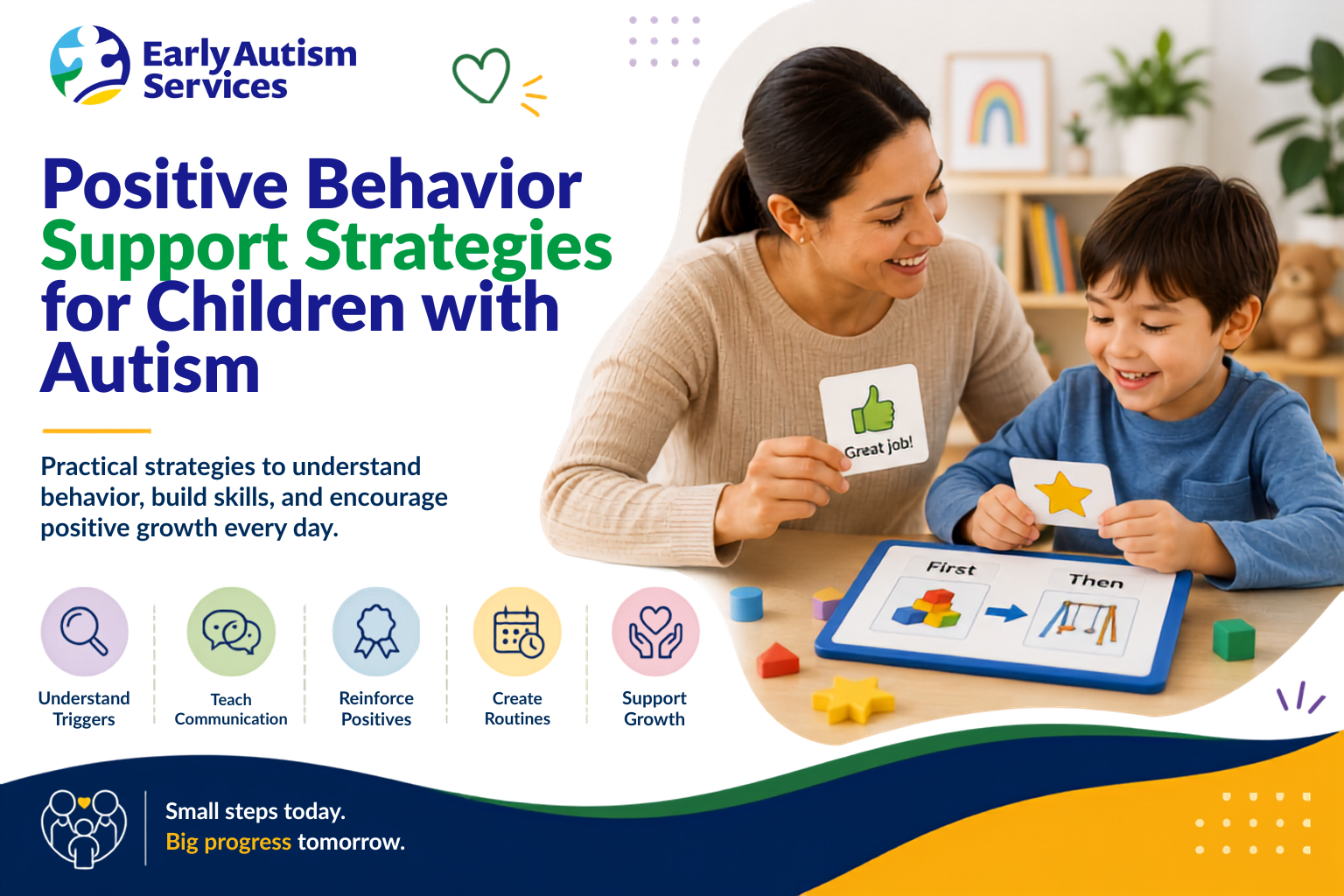
Positive Behavior Support Strategies for Children with Autism
Positive behavior support focuses on understanding why behaviors happen and helping children develop effective ways to communicate their needs. This parent-friendly guide explores practical strategies for identifying triggers, creating predictable routines, reinforcing positive skills, supporting transitions, and encouraging communication at home.
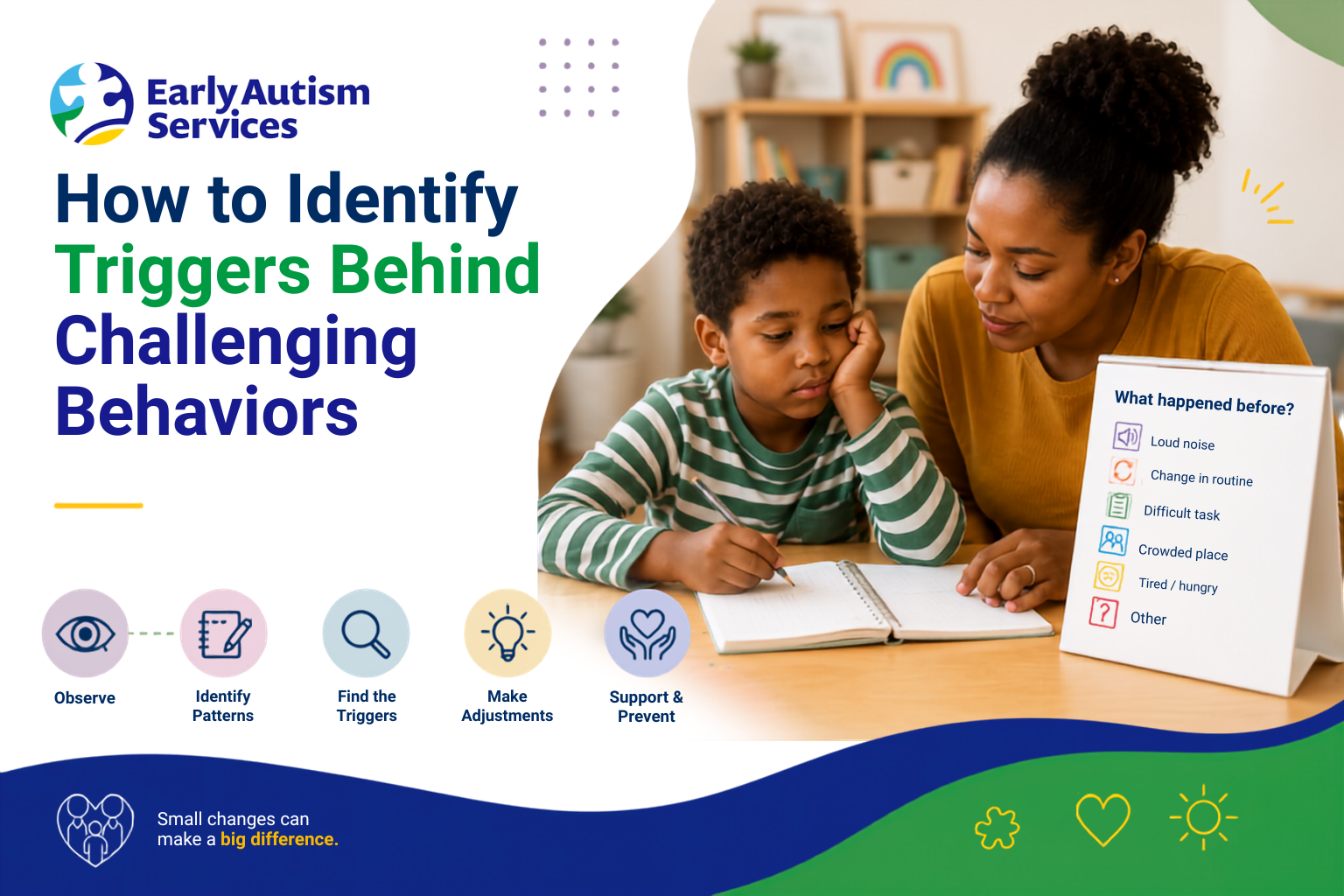
How to Identify Triggers Behind Challenging Behaviors
Challenging behaviors often have a trigger, even when they seem unpredictable. This parent-friendly guide explains how to recognize common autism behavior triggers, use the ABC method to spot patterns, and make supportive adjustments that can reduce stress and help children feel more understood.


