How Autism Affects the Brain: Structure, Connectivity, and Sensory Processing
Autism is a heterogeneous neurodevelopmental condition shaped by differences in brain structure, neural connectivity, and sensory processing. Research shows early variations in brain growth, local overconnectivity, and long-range underconnectivity, influencing communication, behavior, and perception. Sensory sensitivities and detail-focused strengths are common features. Understanding these neurological differences helps parents and educators move beyond one-size-fits-all approaches toward supportive, individualized, and neurodiversity-affirming care.

Introduction
You might be wondering, “Why is studying the brain structure of people with autism important?” The answer is simple: autism is a heterogeneous neurodevelopmental condition, meaning it presents differently in every autistic individual. Because no two autistic brains develop in exactly the same way, parents, caregivers, and educators need to understand that each person with autism benefits from a personalized and customized approach to support and learning.
Autism Spectrum Disorder (ASD) affects how individuals perceive the world, process information, communicate, and interact socially. These differences are deeply connected to variations in brain structure, neural connectivity, and sensory processing. Understanding these neurological foundations helps families and professionals move away from one-size-fits-all strategies and toward more compassionate, effective interventions.
In this article, we explore Autism Spectrum Disorder (ASD) by focusing on:
- Autism’s impact on brain structure
- Altered connections between brain regions
- Sensory processing changes in the autistic brain
Understanding Autism’s Impact on Brain Structure
Autism is a neurodevelopmental condition that typically begins early in life. Characteristic traits often appear within a child’s first two years and continue across the lifespan, although their expression may change over time.
Some common traits associated with ASD include challenges in social communication, a preference for routines, and sensory sensitivities. These traits are not behavioral choices; rather, they arise from differences in brain development and organization.
Children or adults with ASD may:
- Avoid or limit eye contact
- Prefer solitary activities or independent play
- Have difficulty understanding or expressing emotions
- Struggle with reading social cues such as tone of voice, facial expressions, or body language
- Show intense focus on specific interests or topics
- Engage in repetitive behaviors (e.g., rocking, hand-flapping, repeating words or phrases)
- Experience distress when routines change
- Be sensitive to sensory input such as light, sound, textures, clothing, or temperature
These features are often noticeable during early childhood (0–2 years), when the brain is undergoing rapid development.
Altered connections between brain regions
Early Brain Growth Patterns in Autism
Pediatric neurologists often measure head circumference in infancy because it serves as a reliable indicator of early brain growth. Research indicates that brain development in autism follows a different trajectory across the lifespan (Hazlett et al., 2017; Ohta et al., 2016).
Key findings include:
- Head circumference may shift from average or slightly below average at birth to above average within the first year
- Studies suggest that some autistic children experience early, rapid brain growth followed by differences in later brain maturation (Hazlett et al., 2017; Shen et al., 2013).
This accelerated growth has been linked to enlargement in specific brain regions, including:
- Cerebral cortex – involved in thinking, perception, and decision-making
- Cerebellum – supports motor coordination and cognitive processing
- Hippocampus – plays a role in memory and emotional regulation
These regions are critical for learning, movement, emotions, and memory, which helps explain why differences in their development can influence autistic traits.
Brain Development in Adolescence and Adulthood
Autism-related brain differences do not stop in childhood. Research indicates that brain development in autism follows a different trajectory across the lifespan.
In some autistic adults, especially during the mid-20s, studies suggest:
- Early rapid brain growth may be followed by slower or altered brain maturation
- Certain regions may show differences that resemble early brain aging, though this does not occur in all individuals
It is important to note that autism does not involve universal brain degeneration. Instead, it reflects diverse developmental pathways, reinforcing the idea that autism exists on a spectrum.
Altered Connections Between Brain Regions
One of the most widely studied neurological features of autism involves differences in neural connectivity—how various regions of the brain communicate with one another (Just et al., 2004; Belmonte et al., 2004).
Autistic brains are often characterized by a combination of:
- Local overconnectivity (strong connections between nearby brain regions)
- Long-range underconnectivity (weaker connections between distant brain regions)
This pattern can influence how information is processed, sometimes leading to strengths in detail-focused tasks while making broader integration—such as social communication or flexible thinking—more challenging (Just et al., 2004).
Effects of Local Overconnectivity
Enhanced short-range connections are associated with several commonly observed autistic strengths, including:
- Heightened attention to detail
- Strong pattern recognition abilities
- Intense focus on specific interests
- Enhanced memory for certain types of information
These traits can support talents in areas such as mathematics, music, art, technology, and data analysis.
Effects of Long-Range Underconnectivity
Reduced long-distance communication between brain regions may affect networks responsible for:
- Social communication
- Executive functioning and planning
- Emotional regulation
- Sensory integration
This helps explain why some autistic individuals may find multitasking, social interactions, or emotional regulation more challenging.
Sensory Processing Changes in the Autistic Brain
Sensory differences are now recognized as a core feature of autism. Many autistic individuals experience sensory hypersensitivity, meaning their brains respond more strongly to sensory input that neurotypical brains naturally filter out.
Common sensory experiences include heightened sensitivity to:
- Bright lights or visual clutter
- Loud or unpredictable sounds
- Certain textures or fabrics
- Strong smells or tastes
As a result, everyday environments such as classrooms, malls, or public transportation can feel overwhelming or exhausting.
Sensory Strengths and Enhanced Perceptual Abilities
While sensory sensitivity can be challenging, it can also be associated with unique strengths. Many autistic individuals demonstrate advanced visual and auditory processing abilities, such as:
- Exceptional attention to visual detail
- Strong visual memory and spatial awareness
- Ability to notice subtle changes others may overlook
- Sensitive auditory processing, supporting accurate detection of tones, frequencies, and musical patterns
These strengths highlight that sensory differences are not deficits but variations in perception and processing.
Key Takeaways

From the discussion above, it is clear that autism presents uniquely in each individual due to differences in brain structure, connectivity, and sensory processing. Patterns of local overconnectivity and long-range underconnectivity play a significant role in shaping autistic traits, including focused interests, sensory sensitivity, and differences in social communication.
Importantly, these neurological variations are not flaws or abnormalities. They are natural expressions of human neurodiversity. By understanding how autistic brains develop and function, parents, caregivers, and educators can create environments that respect individual needs, nurture strengths, and support meaningful participation in everyday life.
References
Hazlett, H. C., et al. (2017). Early brain development in infants at high risk for autism spectrum disorder. Nature, 542, 348–351.
Shen, M. D., et al. (2013). Increased extra-axial cerebrospinal fluid in high-risk infants who later develop autism. Brain, 136, 2825–2835.
Ohta, H., et al. (2016). Increased brain volume and altered brain growth trajectories in children with autism spectrum disorder. Autism Research, 9, 232–248.
Explore More

Behavior Is Communication: Understanding What Your Autistic Child May Be Telling You
Behavior can be an important form of communication, especially when a child cannot easily express their needs in words. This parent-friendly guide explores what an autistic child’s behavior may be communicating, how to recognize possible triggers and patterns, and supportive ways to build functional communication skills.

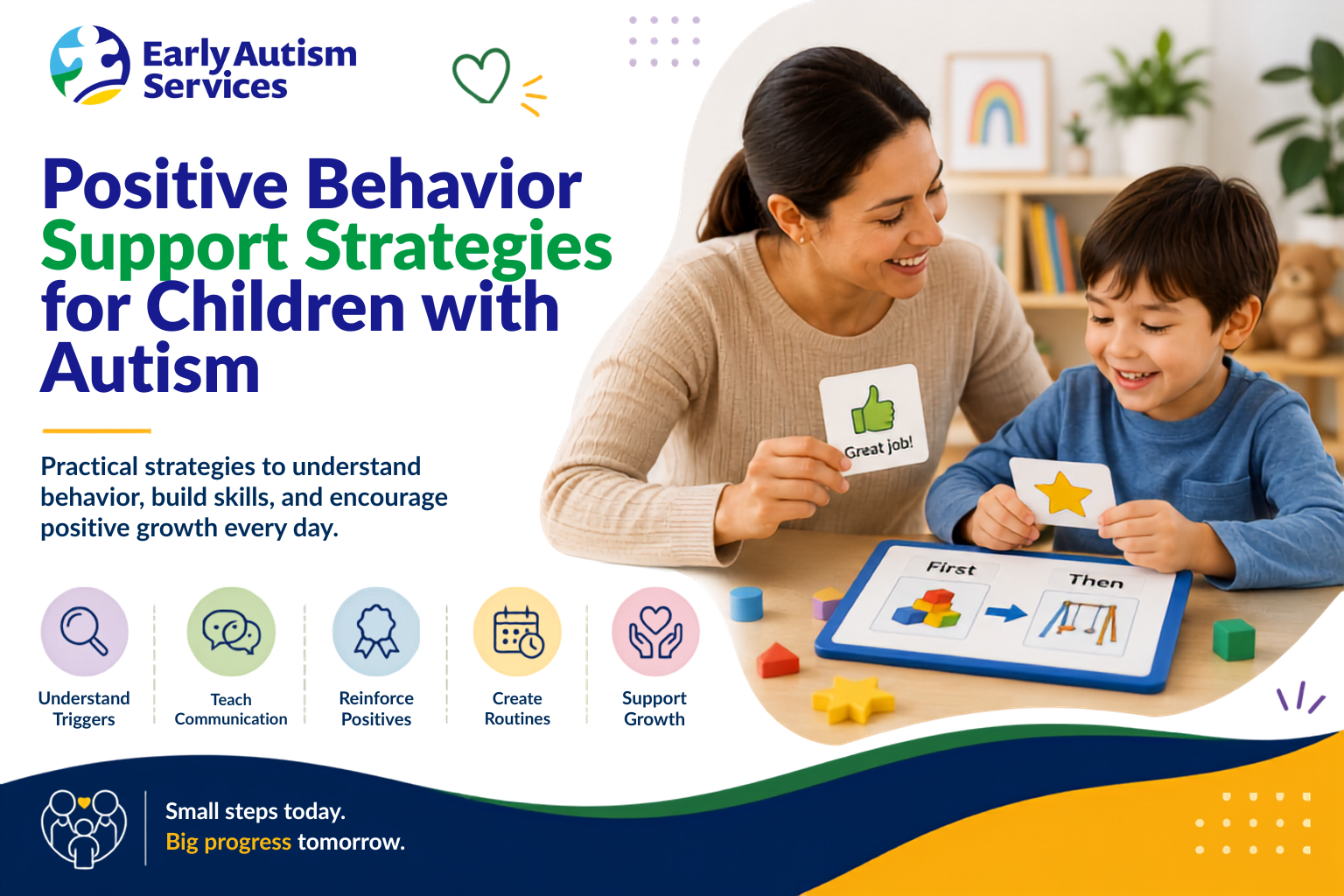
Positive Behavior Support Strategies for Children with Autism
Positive behavior support focuses on understanding why behaviors happen and helping children develop effective ways to communicate their needs. This parent-friendly guide explores practical strategies for identifying triggers, creating predictable routines, reinforcing positive skills, supporting transitions, and encouraging communication at home.
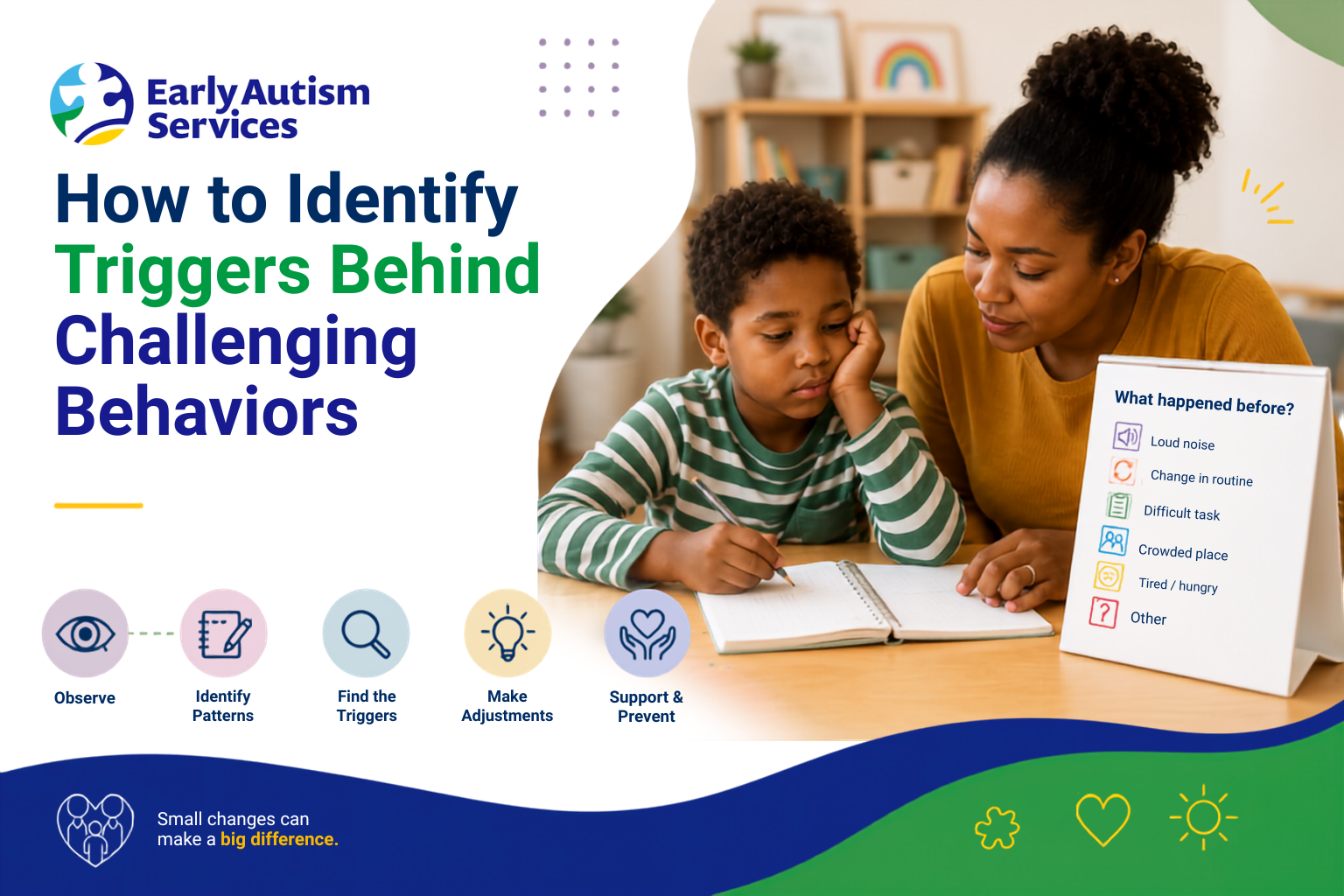
How to Identify Triggers Behind Challenging Behaviors
Challenging behaviors often have a trigger, even when they seem unpredictable. This parent-friendly guide explains how to recognize common autism behavior triggers, use the ABC method to spot patterns, and make supportive adjustments that can reduce stress and help children feel more understood.


