Supporting Communication Development Through ABA Therapy for Children with Autism
Communication is more than spoken words, and every child with autism has their own unique way of expressing themselves. This blog explores how ABA therapy helps children develop meaningful communication skills through individualized strategies, including gestures, picture communication, sign language, AAC devices, and spoken language. It also explains how ABA and speech therapy can work together to build confidence, independence, and stronger social connections across home, school, and community settings while empowering families to support their child's communication journey.

Supporting Communication Development Through ABA Therapy for Children with Autism
Every parent imagines the day they'll hear their child's voice.
Maybe it's hearing "Mama" for the first time. Maybe it's asking for a favorite toy or sharing an exciting story after school.
When those moments don't happen as expected, it's natural to feel worried, confused, or unsure about what comes next.
For some children with autism, communication develops differently. Some children may have limited spoken language, while others may be non speaking for a period of time. That does not mean they have nothing to say. Many children communicate through gestures, facial expressions, eye contact, pictures, sign language, or assistive communication devices long before spoken words emerge.
The goal is not simply teaching a child to talk. It is helping them communicate in meaningful ways so they can express their wants, needs, thoughts, and feelings.
This is where ABA therapy can make a meaningful difference.
Understanding Non Speaking Communication
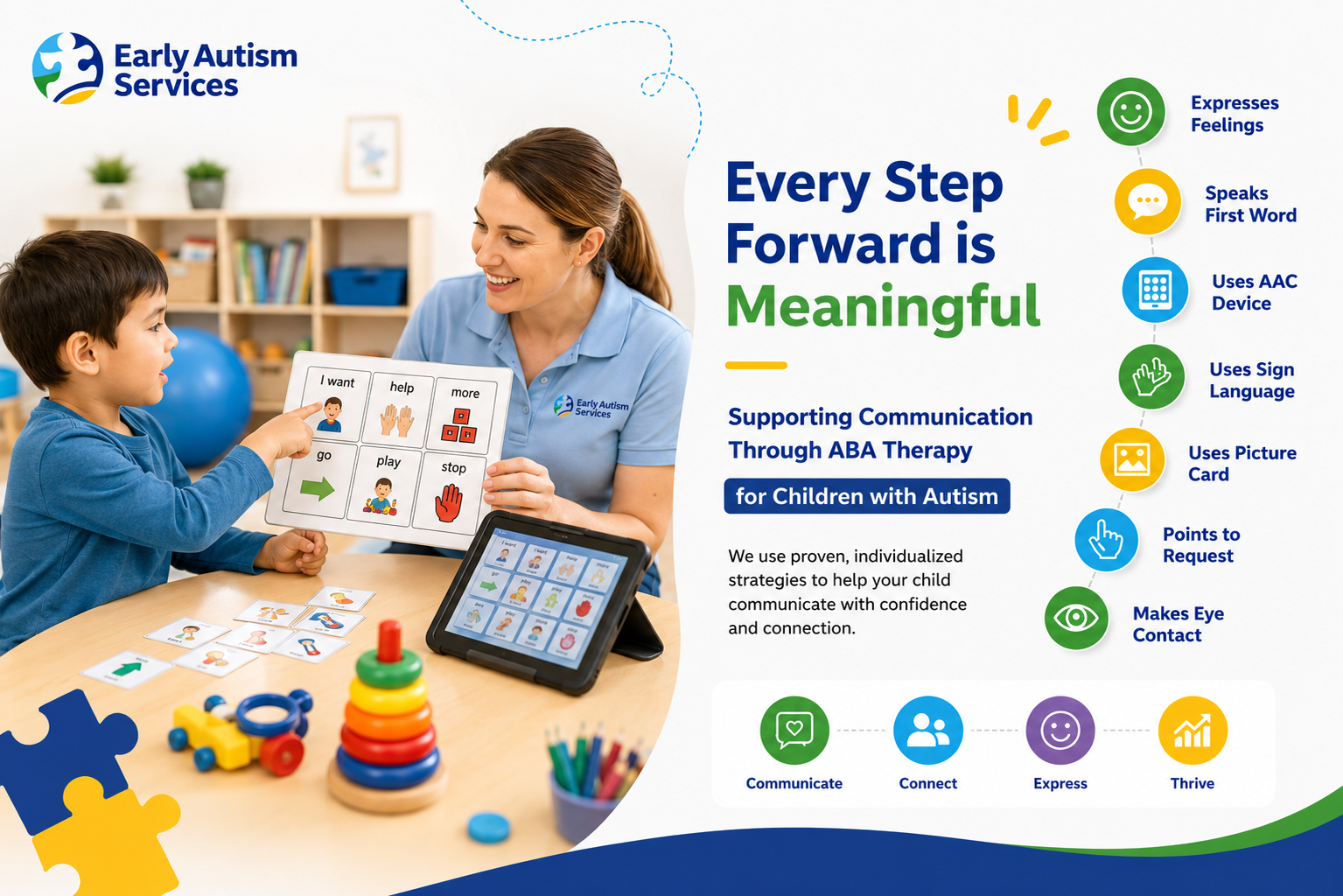
Communication is much more than spoken words.
Children who are non speaking may communicate using:
- Gestures
- Pointing
- Facial expressions
- Picture communication systems
- Sign language
- Speech generating devices
- Eye gaze
- Other forms of augmentative and alternative communication (AAC)
Children with limited spoken language may combine spoken words with these other forms of communication.
Every child's communication journey is unique. The goal is to help each child communicate in the way that works best for them.
Communication Is More Than Talking
Communication happens throughout the day.
Children communicate when they:
- Ask for help
- Request a favorite toy
- Express excitement
- Show frustration
- Answer questions
- Participate in play
- Build relationships
For children with autism, learning these communication skills may require individualized support.
Rather than focusing only on speech, ABA therapy communication skills programs teach functional communication that helps children become more independent in everyday life.
How ABA Therapy Supports Communication Development
Every ABA program begins with understanding how a child currently communicates.
Therapists then create individualized goals that build upon the child's strengths while supporting new communication skills.
Depending on each child's needs, therapy may focus on helping them:
- Request preferred items
- Ask for help
- Make choices
- Follow directions
- Answer questions
- Initiate interactions
- Participate in conversations
- Express emotions appropriately
Every new communication skill helps children participate more confidently at home, in school, and in the community.
Every Child's Communication Journey Is Unique
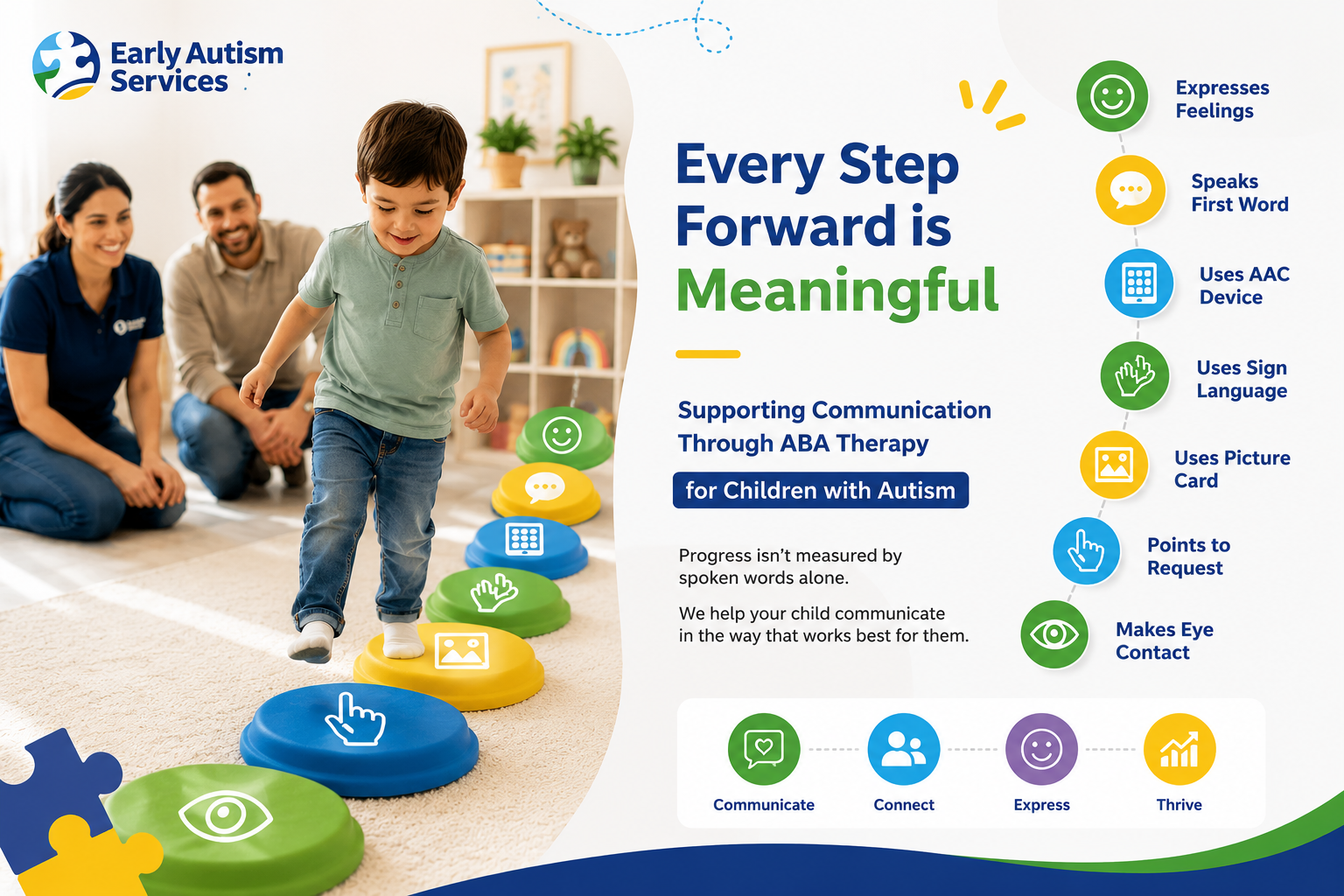
Progress looks different for every child.
For one child, progress may mean saying a first word.
For another, it may mean independently requesting a favorite snack using a picture card.
Another child may begin communicating through sign language or a speech generating device.
Each of these milestones represents meaningful communication.
Success is not measured by spoken words alone. It is measured by helping each child communicate more effectively and independently.
Supporting Functional Communication
Children often become frustrated when they cannot express what they need.
Helping children communicate effectively may reduce frustration while increasing opportunities for positive social interactions.
ABA therapy may teach children how to:
- Request favorite activities
- Ask for breaks
- Express discomfort
- Participate in play
- Respond to questions
- Engage with family members and peers
As communication grows, many children become more confident and independent across different environments.
ABA Therapy and Speech Therapy Can Work Together
Many families wonder whether they should choose ABA therapy or speech therapy.
In many cases, these services complement one another.
Speech language pathologists focus on speech production, language development, and oral motor skills.
ABA therapy helps children practice using those communication skills during everyday activities at home, school, and in the community.
Working together, both professionals help children build meaningful communication across multiple environments.
Why Early Intervention Matters
Communication begins long before a child's first spoken word.
Early support provides more opportunities to practice communication during everyday routines and interactions.
If you have concerns about your child's development, our guide on Developmental Milestones vs Autism: Understanding Early Signs in Toddlers explains common developmental milestones and signs that may indicate the need for further evaluation.
Parents beginning their journey may also find Autism Checklist for Parents helpful resources.
Communication Skills Support Success Beyond Therapy
Communication skills support children in every part of daily life.
As these skills develop, children may become more confident when they:
- Building friendships
- Participating in classroom activities
- Following routines
- Expressing emotions
- Solving problems
- Becoming more independent
Many of these same skills also contribute to classroom success. Learn more in our guide How ABA Therapy Supports Success in the Classroom.
How We Support Families
At Early Autism Services, we understand that every child's communication journey is different.
Our individualized ABA therapy programs focus on helping children develop meaningful communication based on their strengths, interests, and developmental goals.
Whether a child communicates through spoken words, gestures, picture communication, sign language, or assistive communication devices, our goal is to help them communicate with confidence.
Explore support near you:
ABA Therapy in Richmond
https://www.earlyautismservices.com/locations/richmond
Autism Services in Hoffman Estates
https://www.earlyautismservices.com/locations/hoffman-estates
Early Intervention Services in Georgia
https://www.earlyautismservices.com/locations/duluth
Ready to Learn More?
Every child deserves the opportunity to communicate in the way that works best for them.
If your child is non speaking or has limited spoken language, our team is here to help you explore individualized support through ABA therapy.
Contact Early Autism Services today to learn more about our programs and how we partner with families to build meaningful communication skills.
Frequently Asked Questions
Can ABA therapy help a child who is non speaking?
Yes. ABA therapy focuses on helping children develop meaningful communication based on their individual strengths and needs. Communication may include spoken words, gestures, sign language, picture communication systems, or speech generating devices.
Will every child eventually develop spoken language?
Every child's developmental journey is unique. Some children develop spoken language over time, while others communicate successfully using alternative methods. The goal is to support meaningful communication in whatever form works best for the child.
Does ABA therapy replace speech therapy?
No. ABA therapy and speech therapy often complement one another. Many children benefit from receiving both services as part of an individualized treatment plan.
When should parents seek help for communication delays?
If your child is non speaking, has limited spoken language, or is not meeting expected communication milestones, speaking with your pediatrician or seeking an evaluation early can help identify appropriate support options.
Explore More
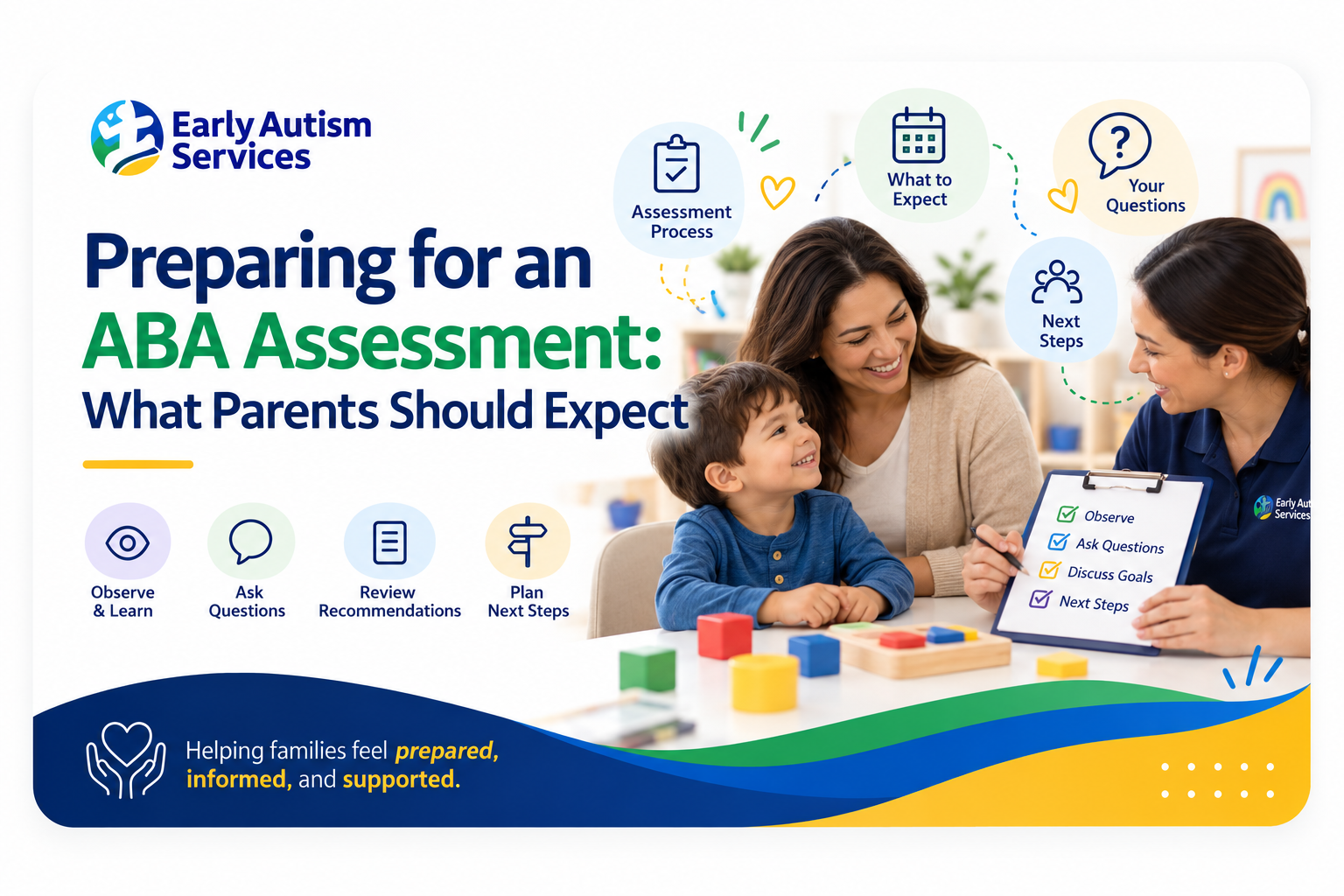
Preparing for an ABA Assessment: What Parents Should Expect
Accessing ABA therapy can feel overwhelming for families, especially when navigating service options, insurance, Medicaid, and the intake process. Early Autism Services works to make ABA therapy more accessible by offering different service settings, supporting families through insurance and intake, and providing individualized care based on each child’s needs.

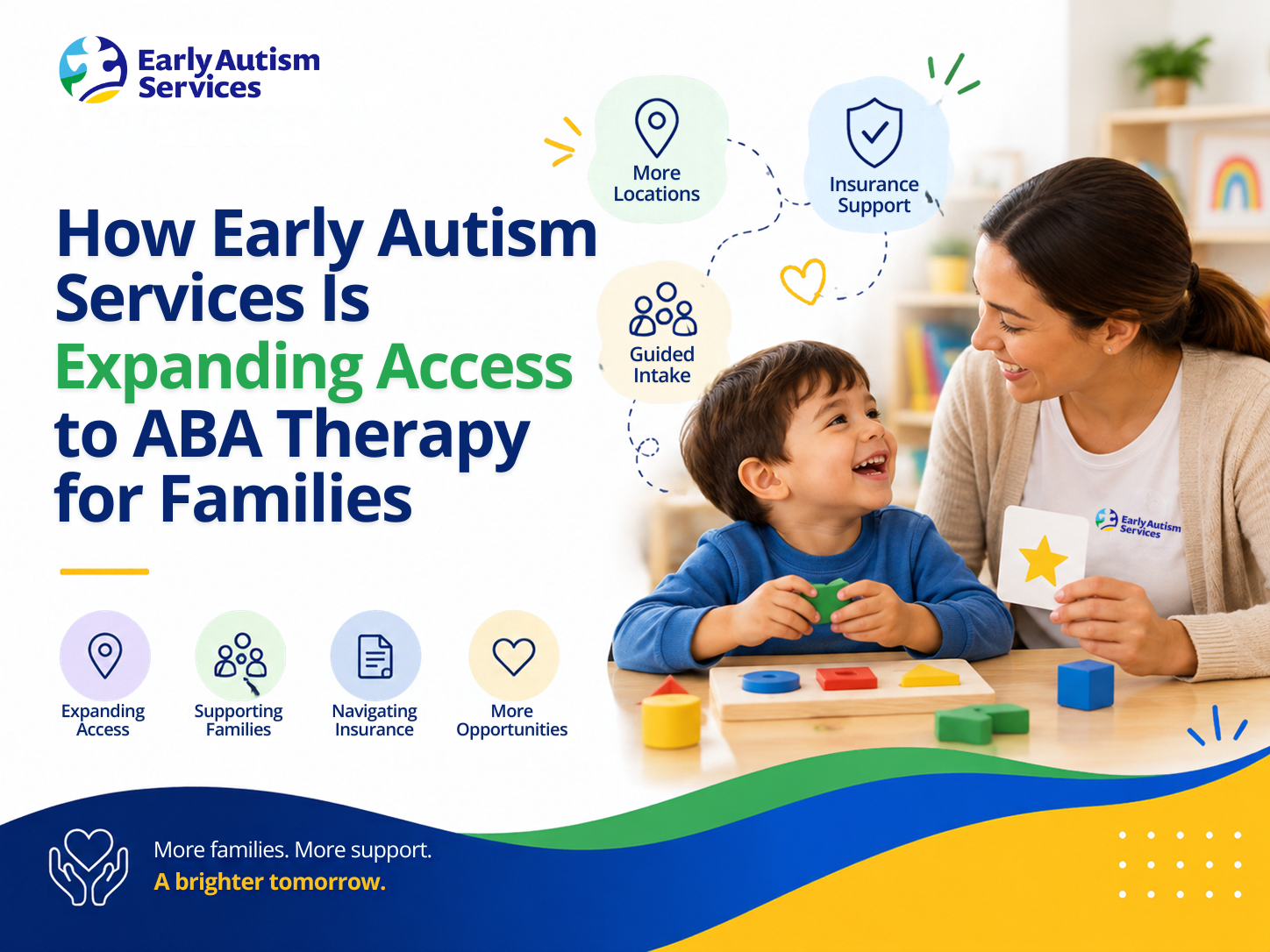
How Early Autism Services Is Expanding Access to ABA Therapy for Families
Accessing ABA therapy can feel overwhelming for families, especially when navigating service options, insurance, Medicaid, and the intake process. Early Autism Services works to make ABA therapy more accessible by offering different service settings, supporting families through insurance and intake, and providing individualized care based on each child’s needs.

Behavior Is Communication: Understanding What Your Autistic Child May Be Telling You
Behavior can be an important form of communication, especially when a child cannot easily express their needs in words. This parent-friendly guide explores what an autistic child’s behavior may be communicating, how to recognize possible triggers and patterns, and supportive ways to build functional communication skills.


