How ABA Therapy Helps Children Prepare for Group Activities, Sports, and Extracurricular Programs
Joining sports, dance classes, music lessons, or other extracurricular activities can be both exciting and challenging for children with autism. This blog explains how ABA therapy helps children develop the communication, social, emotional regulation, and participation skills needed to feel more confident in group settings. It also shares practical ways parents can prepare their child before starting a new activity, helping them build independence, confidence, and meaningful connections one step at a time.

How ABA Therapy Helps Children Prepare for Group Activities, Sports, and Extracurricular Programs
For many children, activities like gymnastics, ballet, soccer, basketball, swimming, or music class are exciting opportunities to play, learn, and connect with others. But for children with autism, joining a group activity can sometimes feel overwhelming.
New environments, loud sounds, unfamiliar routines, waiting for turns, following instructions, and interacting with peers can all bring challenges. The good news is that these skills can be built gradually with the right support.
Applied Behavior Analysis, or ABA therapy, can help children develop the communication, social, emotional, and participation skills they need to feel more confident in group settings.
Why Group Activities Matter
Group activities give children opportunities to practice important life skills outside of home, school, or therapy. Whether a child is joining a soccer team, attending a dance class, or participating in a small group game, they are learning much more than the activity itself.
They may be practicing how to:
- Follow group instructions
- Wait for their turn
- Share space with others
- Communicate wants and needs
- Handle changes in routine
- Participate alongside peers
- Celebrate progress and effort
For children with autism, these moments can support confidence, independence, and social development over time.
Common Challenges Children May Face
Before joining a group activity, some children may need extra support with the expectations that come with being part of a class or team.
A child may find it difficult to sit or stand with a group, wait while others take a turn, understand coach or instructor directions, transition between activities, or manage sensory input such as music, whistles, bright lights, or crowded spaces.
Some children may also struggle with knowing how to ask for help, join a peer activity, accept losing a game, or continue participating when something feels hard.
These challenges do not mean a child cannot participate. They simply show us which skills may need to be taught and practiced step by step.
How ABA Therapy Can Help
ABA therapy focuses on breaking skills down into smaller, teachable steps. Instead of expecting a child to immediately adjust to a full gymnastics class or soccer practice, therapists can help prepare the child by practicing the skills they will need in a more supportive setting first.
For example, if a child is preparing for basketball, therapy may include practicing how to follow “pass the ball,” wait in line, take turns shooting, and respond to a simple group direction.
If a child is preparing for ballet or gymnastics, therapy may focus on imitation, body awareness, following a visual schedule, transitioning between movements, and staying with the group.
Over time, these small steps can help the child feel more comfortable and successful in real-life activities.
Building Communication Skills
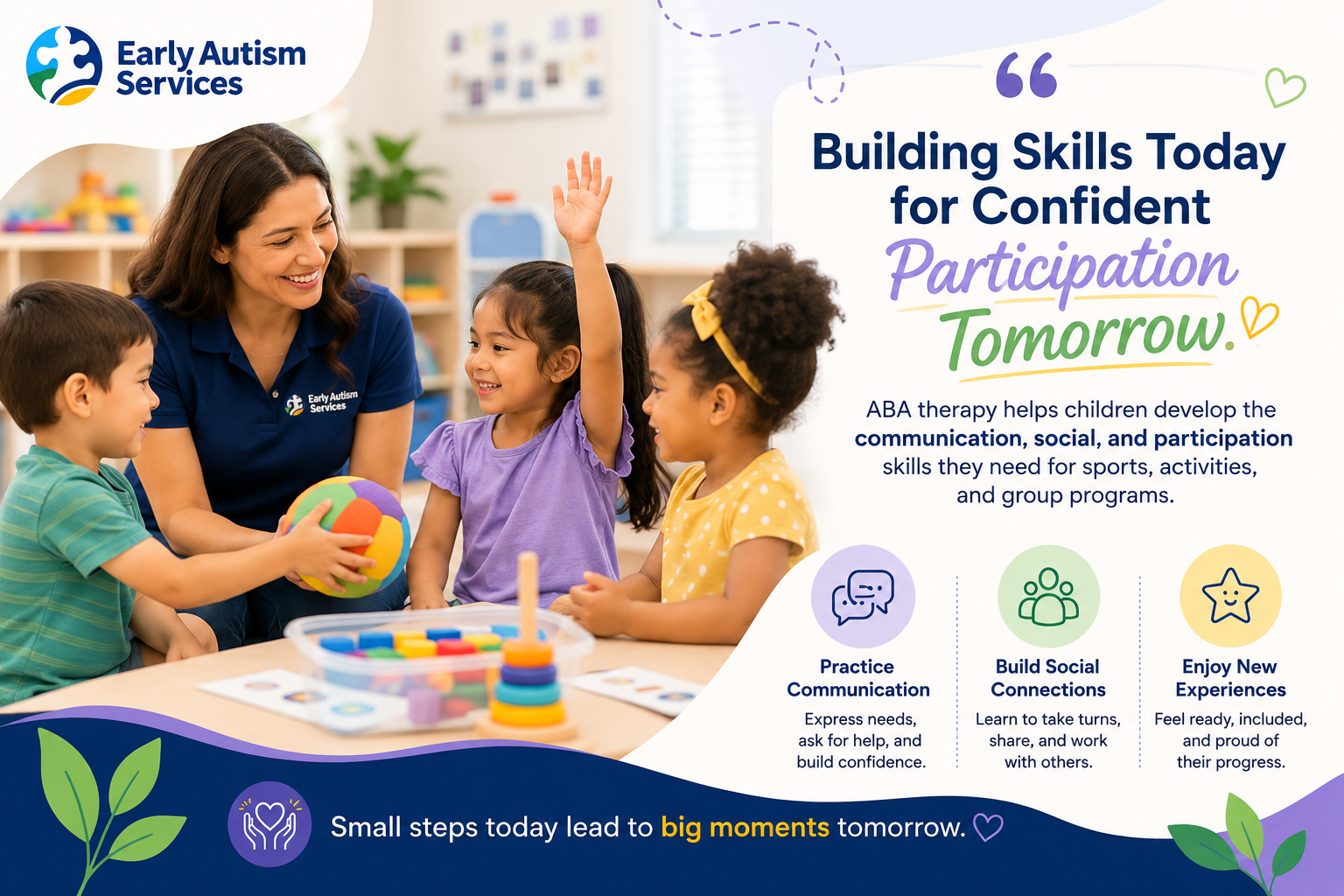
Communication is a big part of group participation. Children may need to ask for a break, say when something is too loud, request help, answer simple questions, or tell an adult when they are unsure.
ABA therapy can help children practice functional communication in ways that match their needs. This may include spoken words, gestures, visuals, or communication devices.
For example, a child may learn to say or show:
- “I need help.”
- “Can I have a break?”
- “My turn?”
- “Too loud.”
- “I want to try again.”
When children have a way to communicate, they are often better able to participate and less likely to feel frustrated or overwhelmed.
Supporting Social Skills
Sports and group activities involve many social moments. Children may need to greet peers, join a group, copy what others are doing, take turns, share materials, or respond when someone talks to them.
ABA therapy can support these skills through practice, modeling, role-play, and reinforcement. A therapist may help a child learn how to stand near a group, watch what others are doing, respond to their name, or participate in a simple back-and-forth activity.
These skills can make activities like soccer, basketball, dance, and gymnastics feel more predictable and less stressful.
Teaching Participation and Following Directions
Many group activities require children to follow instructions quickly. A coach might say, “Line up,” “Run to the cone,” “Pass the ball,” or “Try again.”
For some children, these directions may feel confusing, especially in a busy environment. ABA therapy can help by teaching children to follow one-step and multi-step directions gradually.
Therapists may also use visual supports, practice routines, and repetition to help children understand what is expected. The goal is not perfection. The goal is helping the child participate in a way that feels manageable and meaningful.
Helping with Emotional Regulation
Group activities can bring big feelings. A child may feel excited, nervous, frustrated, tired, or disappointed. They may become upset if they lose a game, miss a step, have to wait, or hear a loud noise.
ABA therapy can support emotional regulation by teaching coping strategies before these moments happen. Children may practice asking for a break, taking deep breaths, using a calm-down card, going to a quiet area, or trying again after a mistake.
When children learn how to manage emotions, they are more likely to stay engaged and enjoy the activity.
Preparing Before the First Day
Parents can also help make the transition smoother. Before starting a new activity, it may help to visit the location, show pictures or videos, talk about what will happen, and practice small parts of the routine at home.
You can also start with shorter sessions, choose a smaller group when possible, and speak with the instructor about your child’s needs. Simple supports like visual schedules, clear instructions, and planned breaks can make a big difference.
Progress Looks Different for Every Child
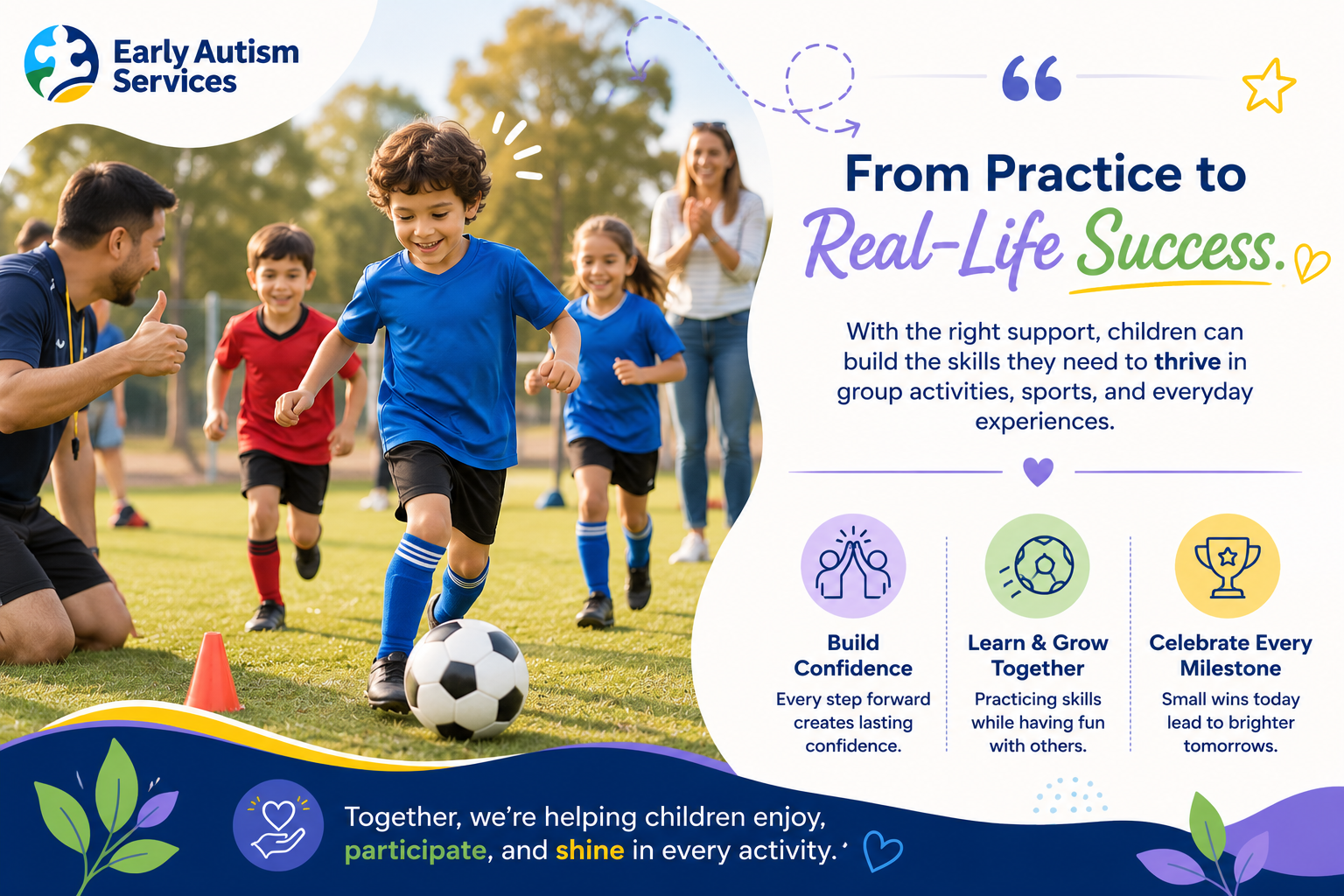
Success does not always mean scoring a goal, performing perfectly, or keeping up with every peer. For one child, success may mean walking into the class. For another, it may mean waiting for one turn, following one instruction, or staying with the group for five minutes longer than before.
Every step matters.
With consistent support, children can build the skills they need to participate more confidently in activities beyond therapy, school, and home.
Final Thoughts
Group activities like gymnastics, ballet, soccer, basketball, and other extracurricular programs can offer meaningful opportunities for children with autism to practice communication, social interaction, movement, independence, and confidence.
ABA therapy can help prepare children for these experiences by teaching skills in small, manageable steps and supporting each child’s unique needs.
With patience, practice, and the right support, children can learn to participate, connect, and enjoy new experiences in their own way.
Frequently Asked Questions
1. How does ABA therapy prepare children for group activities?
ABA therapy builds communication, social, emotional, and participation skills through individualized practice.
2. What activities can children with autism participate in?
Children can participate in sports, dance, swimming, music, and other extracurricular activities.
3. How can parents prepare their child for a new activity?
Practice routines, visit beforehand, use visuals, and communicate with instructors for smoother transitions.
Explore More
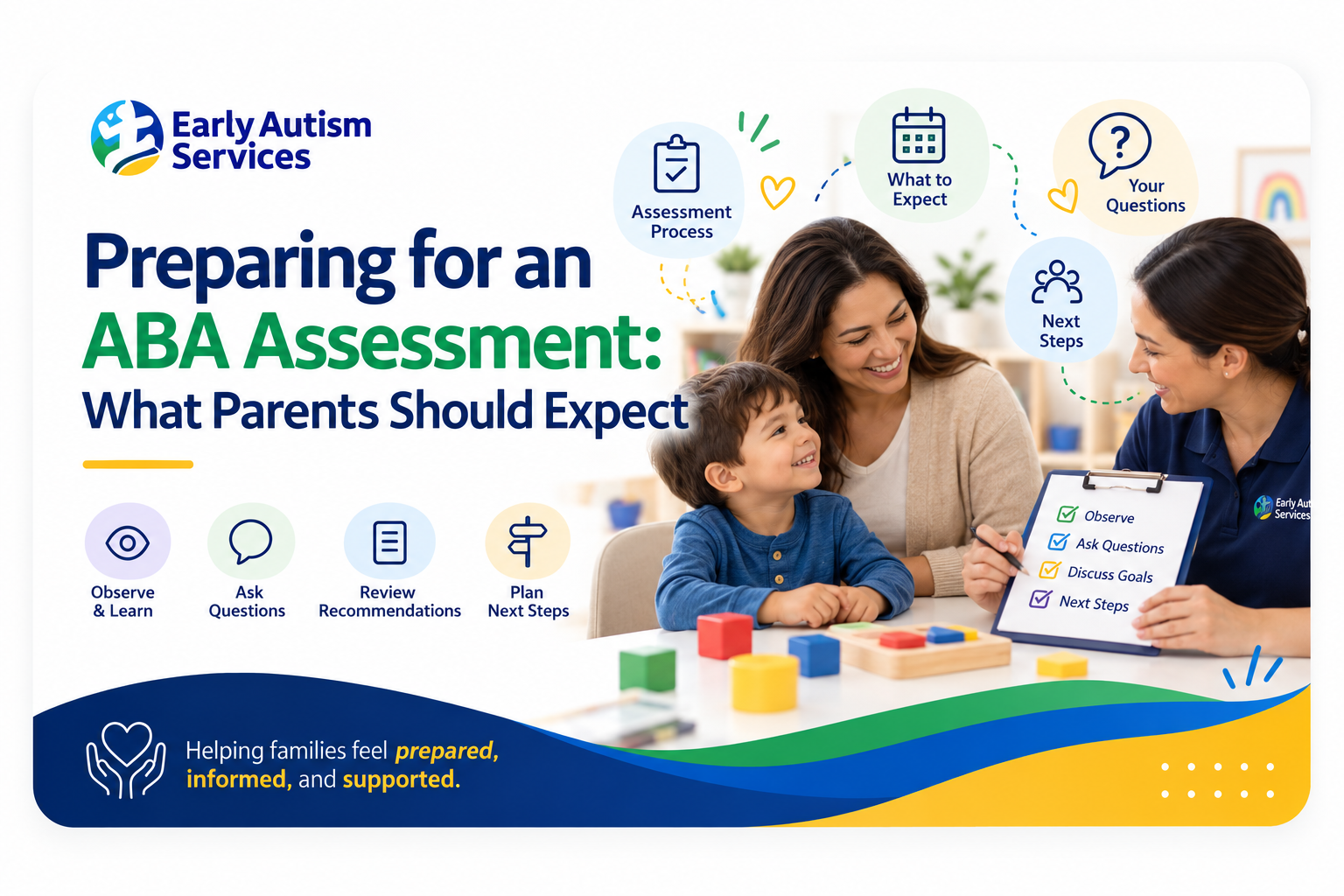
Preparing for an ABA Assessment: What Parents Should Expect
Accessing ABA therapy can feel overwhelming for families, especially when navigating service options, insurance, Medicaid, and the intake process. Early Autism Services works to make ABA therapy more accessible by offering different service settings, supporting families through insurance and intake, and providing individualized care based on each child’s needs.

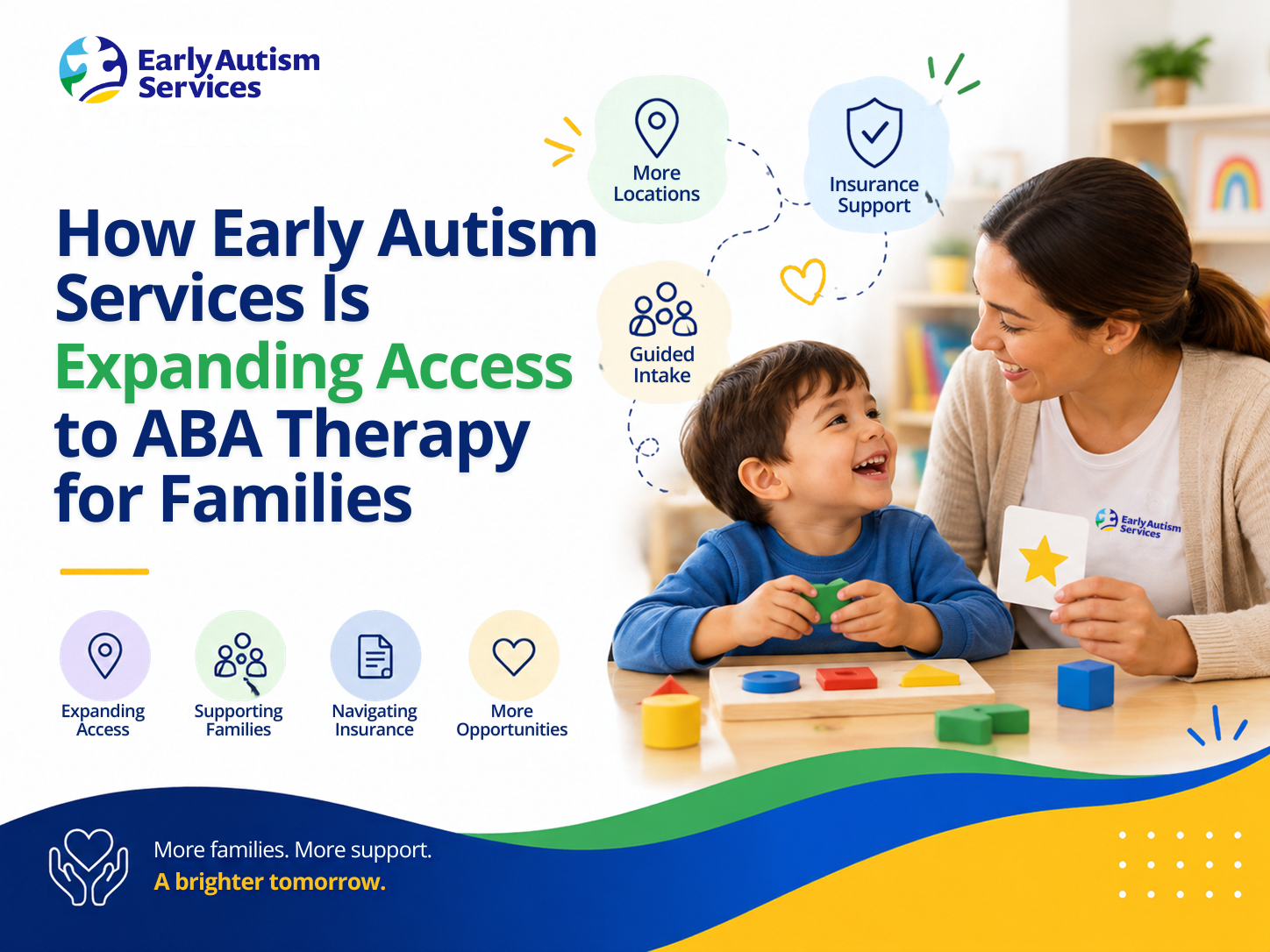
How Early Autism Services Is Expanding Access to ABA Therapy for Families
Accessing ABA therapy can feel overwhelming for families, especially when navigating service options, insurance, Medicaid, and the intake process. Early Autism Services works to make ABA therapy more accessible by offering different service settings, supporting families through insurance and intake, and providing individualized care based on each child’s needs.

Behavior Is Communication: Understanding What Your Autistic Child May Be Telling You
Behavior can be an important form of communication, especially when a child cannot easily express their needs in words. This parent-friendly guide explores what an autistic child’s behavior may be communicating, how to recognize possible triggers and patterns, and supportive ways to build functional communication skills.


