Autism Checklist for Parents: A Gentle Guide to Early Signs in Toddlers
This compassionate guide helps parents recognize early signs of autism in toddlers through everyday moments and behaviors. From delayed communication and repetitive play to sensory sensitivities and challenges with social interaction, the blog gently walks families through what to observe without fear or judgment. It also includes a simple autism checklist for parents, guidance on when to seek professional support, and information about early intervention services offered by Early Autism Services.
%20(1).png)
It usually starts with something small.
Maybe your child doesn’t respond when you call their name.
Or they seem more interested in spinning the wheels of a toy car than playing with it.
At first, you brush it off.
“Every child develops differently,” you tell yourself.
But then the thought comes back, quietly, often at the end of the day:
“Should I be worried?”
If you’ve ever felt this way, you’re not alone.
A Parent’s Instinct Notices First
Long before any checklist or milestone chart, there’s instinct.
You notice how your child plays, how they respond, how they connect, or sometimes, how they don’t.
This guide isn’t here to label your child.
It’s here to help you observe patterns gently, without fear or overwhelm.
Think of it as an autism checklist for parents, hidden inside everyday moments.
It Shows Up in the Little Things:
1.When You Call Their Name
You call them once. Then again.
Sometimes they look. Sometimes they don’t.
You pause and wonder:
“Are they just focused… or is something else going on?”
While many toddlers get absorbed in play, consistently not responding to their name can be one of the early signs of autism in toddlers.
2.When You Try to Share a Moment
You point to something exciting,a bird outside, a passing car, a balloon.
Do they follow your point?
Do they look back at you, as if to share the moment?
These small interactions are essential for social development, and differences here can be part of autism symptoms in toddlers.
3.When Words Take Longer
Every child develops language at their own pace.
But you might notice:
- Very few or no words by 18–24 months
- Repeating words without clear meaning
- Difficulty expressing needs
These may be early signs of autism in 2-year-olds or general developmental delays in toddlers.
4.How They Play
You hand them a toy.
Instead of playing with it the usual way, they might:
- Spin parts repeatedly
- Line up objects carefully
- Focus on one small detail
These patterns are often seen in autism behaviors in toddlers.
5.When Small Changes Feel Big
A new routine. A different cup. A change in plans.
For some children, these are small shifts.
For others, they can feel overwhelming.
A strong need for sameness is often included in an autism checklist.
6.Their Sensory World
Sometimes, the world feels louder, brighter, or more intense.
You may notice:
- Covering ears at sounds
- Avoiding certain textures or foods
- Fascination with lights or movement
These are commonly associated with early autism symptoms.
A Gentle Autism Checklist for Parents
As you reflect on these moments, ask yourself:
- Does my child consistently respond to their name?
- Do they try to share experiences with me?
- Are they using words or gestures to communicate?
- Do they engage in back-and-forth interaction?
- Are there repetitive behaviors or strong routines?
This simple autism checklist for parents is not a diagnosis, but it can help you identify patterns.
What Many Parents Do Next
At some point, many parents reach a quiet decision:
“I just want to understand this better.”
That’s when they begin exploring support.
If you're in areas like Illinois or Baltimore, you can explore early intervention services for autism near you:
- ABA therapy in Illinois, Hoffman Estates : https://www.earlyautismservices.com/locations/hoffman-estates
- Autism services in Baltimore, Maryland
:https://www.earlyautismservices.com/locations/baltimore
When Should You Reach Out?
You may consider speaking with a professional if:
- Your child isn’t meeting communication milestones
- Social interaction feels limited
- Repetitive behaviors happen frequently
- Your child has lost previously learned skills
Families across the U.S. are increasingly seeking early autism diagnosis and intervention to support their child’s development.
A Gentle Reminder
This isn’t about comparison.
It’s not about labeling your child.
It’s about understanding them.
And noticing these signs?
That doesn’t make you anxious.
It makes you aware.
How We Can Support You
At Early Autism Services, we provide compassionate, personalized support for families navigating early developmental concerns.
We focus on:
- Early intervention
- Parent guidance
- Individualized care
FAQs
Is this autism checklist a diagnosis?
No. This is a guide for parents to observe early patterns.
At what age can autism signs appear?
Some early signs of autism in toddlers may appear as early as 12–18 months.
What should I do if I’m unsure?
Speaking with a specialist can help you better understand your child’s development.
Explore More

Behavior Is Communication: Understanding What Your Autistic Child May Be Telling You
Behavior can be an important form of communication, especially when a child cannot easily express their needs in words. This parent-friendly guide explores what an autistic child’s behavior may be communicating, how to recognize possible triggers and patterns, and supportive ways to build functional communication skills.

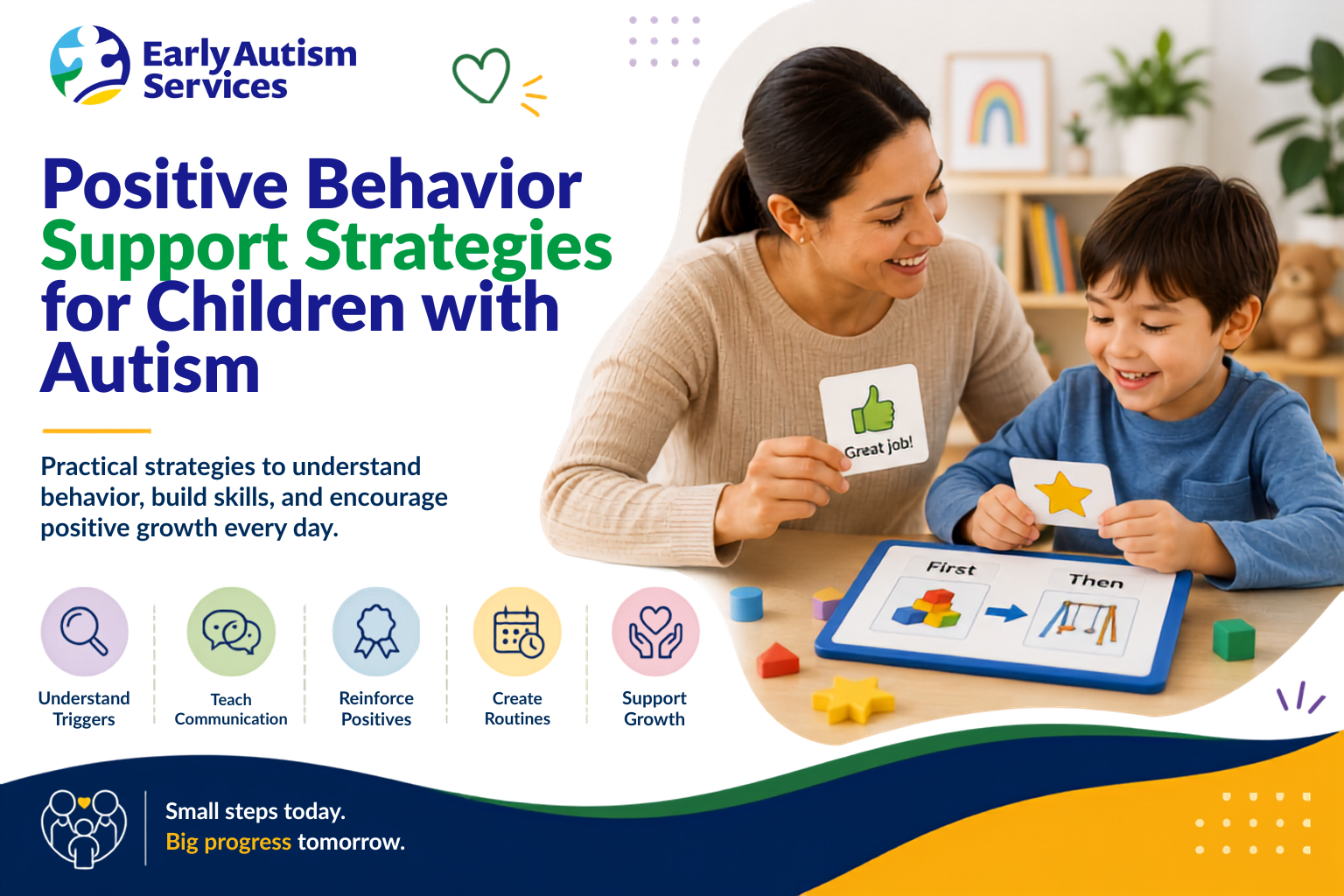
Positive Behavior Support Strategies for Children with Autism
Positive behavior support focuses on understanding why behaviors happen and helping children develop effective ways to communicate their needs. This parent-friendly guide explores practical strategies for identifying triggers, creating predictable routines, reinforcing positive skills, supporting transitions, and encouraging communication at home.
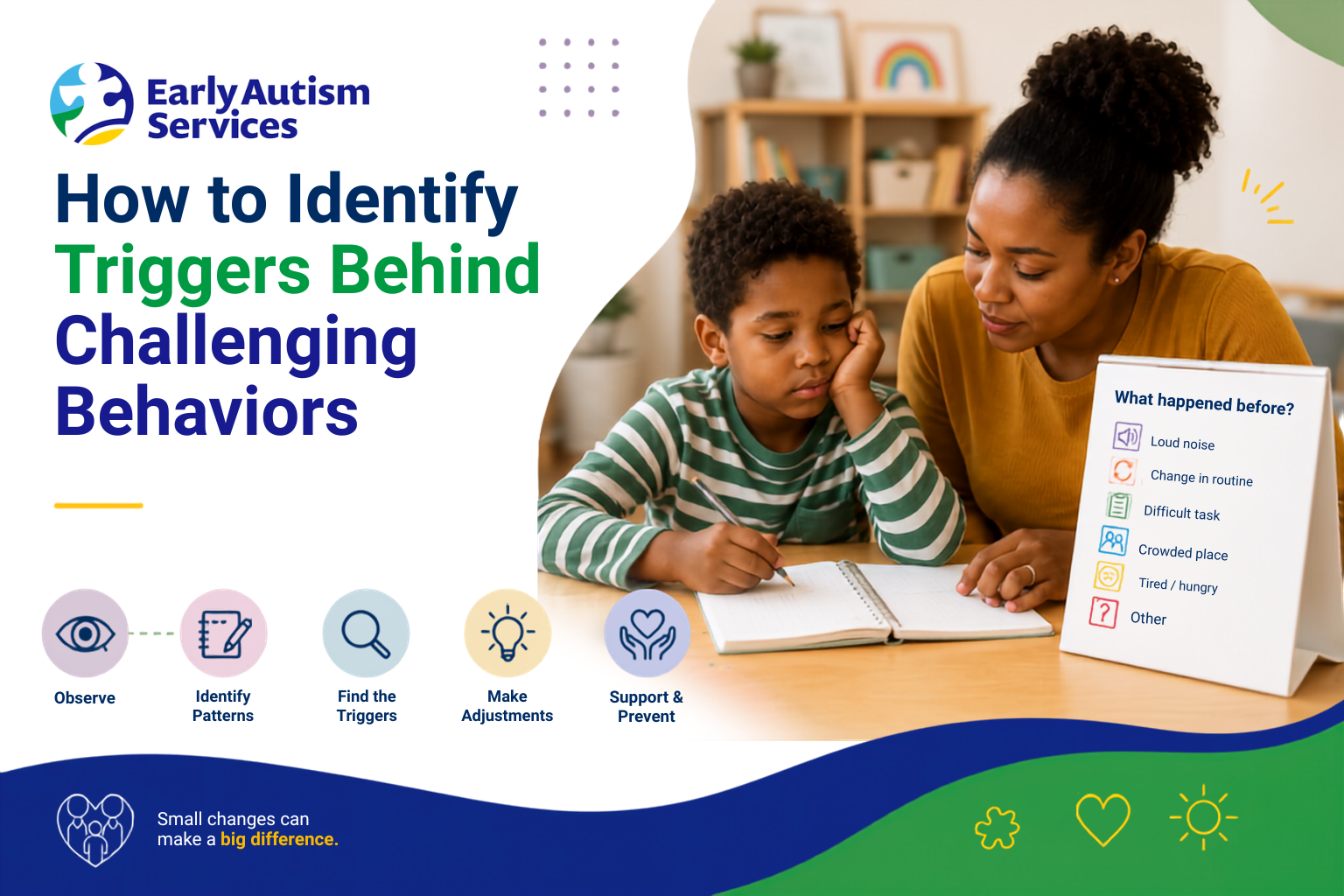
How to Identify Triggers Behind Challenging Behaviors
Challenging behaviors often have a trigger, even when they seem unpredictable. This parent-friendly guide explains how to recognize common autism behavior triggers, use the ABC method to spot patterns, and make supportive adjustments that can reduce stress and help children feel more understood.


