Navigating Autism Waitlists
If you suspect your child might need a diagnosis to receive extra support and services, it is important to receive proper therapies ASAP. You will soon find yourself stalled by waiting-lists upon waiting-lists.
Getting through the wait list as quickly as possible is your goal!
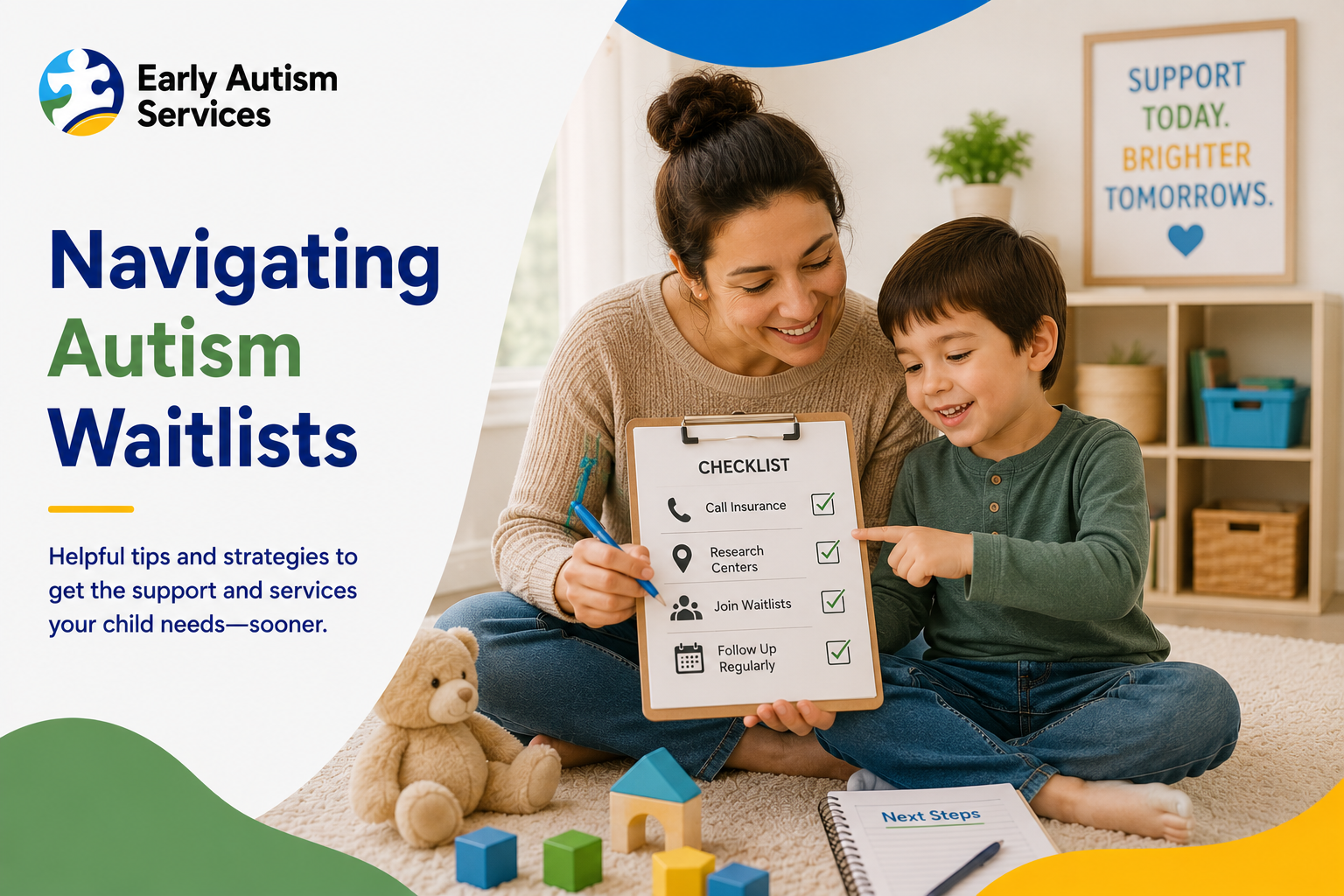
Tips on obtaining a quick diagnosis:
- Call your insurance provider to obtain a list of locations that provide diagnosis.
- Ask your insurance provider to give you diagnostic centers up to an hour away from your home. Provide them with a remote area (less likely to have a wait list).
- Call all of these diagnostic centers and tell them to place you on the waiting list (if they have one).
- Ask how long the wait list is.
- Intermittently call the diagnostic centers to see if they had any cancellations. This increases your chances of obtaining a quicker appointment.
- “The squeaky wheel gets the grease”
Another method on getting through the wait list:
- Research what type of therapies your child will benefit from once they obtain the diagnosis you suspect.
- Call local agencies that provide those services.
- Ask them if they refer any diagnostic centers with a short wait list- mention you are willing to drive up to an hour or two away (if possible).
If you would like to learn more about the aba services for autism we provide, visit our Services Page.
We also encourage families to contact our Intake Specialist today to explore the best therapy options for their child.
Additional Resources
At Early Autism Services, we specialize in both in home aba therapy and center based aba therapy, ensuring families receive the right support without unnecessary delays. Whether you are looking for an autism center near me or aba therapy for kids, our team is here to help.
Explore More
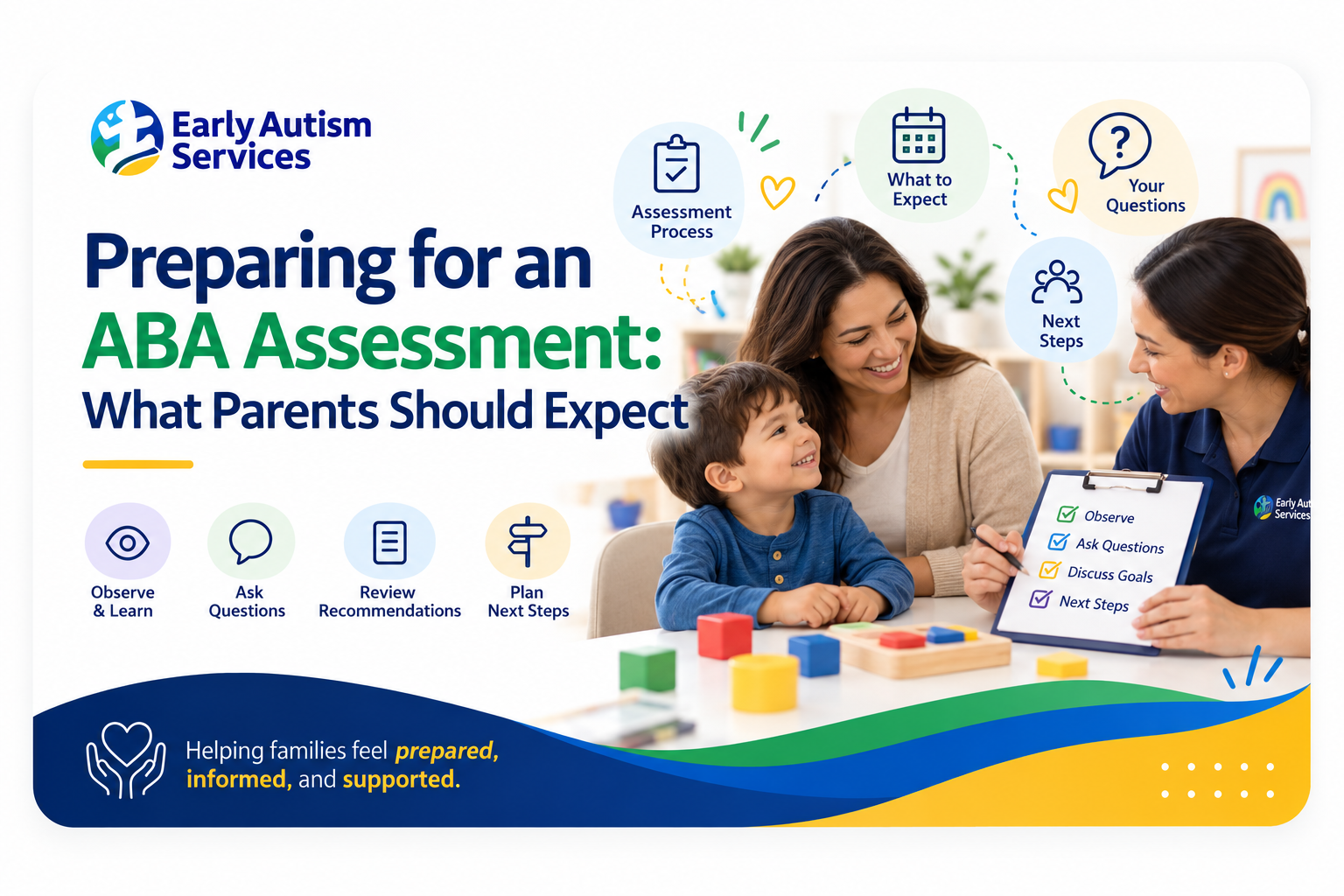
Preparing for an ABA Assessment: What Parents Should Expect
Accessing ABA therapy can feel overwhelming for families, especially when navigating service options, insurance, Medicaid, and the intake process. Early Autism Services works to make ABA therapy more accessible by offering different service settings, supporting families through insurance and intake, and providing individualized care based on each child’s needs.

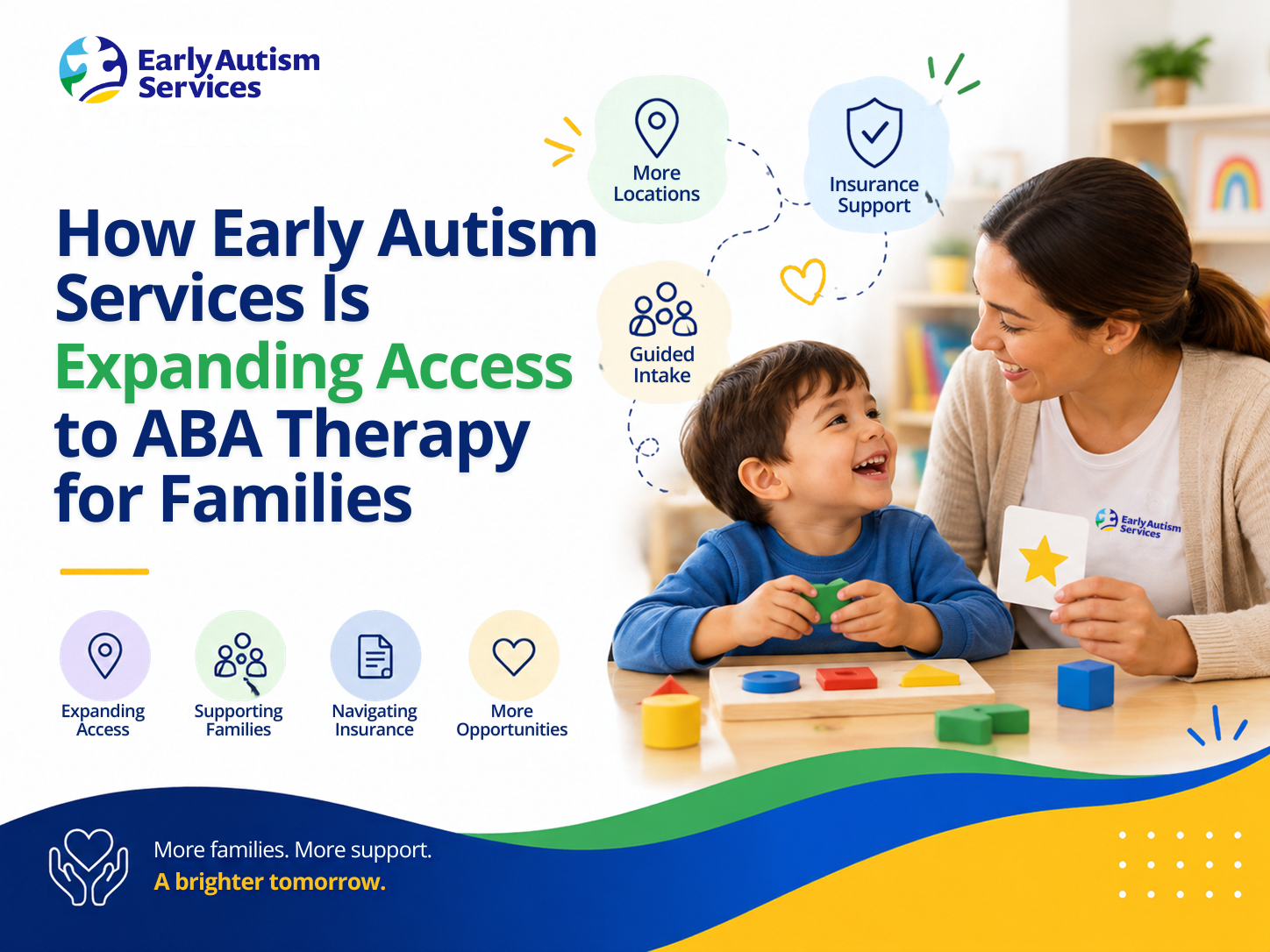
How Early Autism Services Is Expanding Access to ABA Therapy for Families
Accessing ABA therapy can feel overwhelming for families, especially when navigating service options, insurance, Medicaid, and the intake process. Early Autism Services works to make ABA therapy more accessible by offering different service settings, supporting families through insurance and intake, and providing individualized care based on each child’s needs.

Behavior Is Communication: Understanding What Your Autistic Child May Be Telling You
Behavior can be an important form of communication, especially when a child cannot easily express their needs in words. This parent-friendly guide explores what an autistic child’s behavior may be communicating, how to recognize possible triggers and patterns, and supportive ways to build functional communication skills.


