How ABA Therapy Helps Children Navigate Transitions and Routine Changes
ABA therapy helps autistic children manage transitions by building flexibility through predictable routines, visual supports, gradual changes, and positive reinforcement. With preparation and family-centered strategies, transitions become less stressful, empowering children to regulate emotions, adapt to routine changes, and navigate daily life with greater confidence and stability.

Introduction
Transitions and routine changes are a natural part of daily life, but for many autistic children, they can feel overwhelming. Changes in schedules, environments, or expectations can trigger stress, anxiety, and challenging behaviors.
The good news? With thoughtful ABA strategies, transitions don’t have to feel chaotic. They can become manageable, predictable, and even empowering for both children and families.
Why Transitions Can Be Challenging
Many autistic children rely on predictability to feel emotionally secure. When routines shift, whether due to school breaks, travel, schedule changes, or new environments, that sense of stability can be disrupted.
Common challenges include difficulty adjusting to altered schedules, increased anxiety in unfamiliar settings, resistance when transitioning between activities, and emotional dysregulation when expectations change. These responses are not misbehavior; they are natural reactions to sudden changes that feel overwhelming to a developing nervous system.
The Critical Role of Routine
Consistent routines act as a cognitive roadmap, helping children understand what comes next and feel safe in their environment. When routines change unexpectedly, children may struggle to regulate emotions or behavior.
The goal isn’t to eliminate change, but to prepare children for it. Advance notice, even for young children, supports smoother transitions and reduces anxiety by helping them mentally prepare for what’s coming.
How ABA Therapy Builds Flexibility
ABA therapy supports children in developing flexibility as a learned skill. Rather than enforcing rigid routines, ABA focuses on helping children tolerate and adapt to change while maintaining emotional regulation.
ABA providers work with families to:
- Maintain core structure wherever possible
- Teach transition skills in a systematic, supportive way
- Reinforce positive coping behaviors during change
- Equip caregivers with practical strategies they can use at home
Progress matters more than perfection, and even small improvements in flexibility are meaningful.
Evidence-Based Transition Strategies
Effective ABA strategies make transitions more predictable and less stressful:
- Gradual transitions allow children time to shift between activities
- Clear expectations help children understand what will happen next
- Consistent verbal or visual cues signal upcoming changes
- Positive reinforcement encourages adaptive behaviors
These strategies align with how autistic children process information, through clarity, repetition, and predictability.
Visual Supports: Making the Invisible Visible
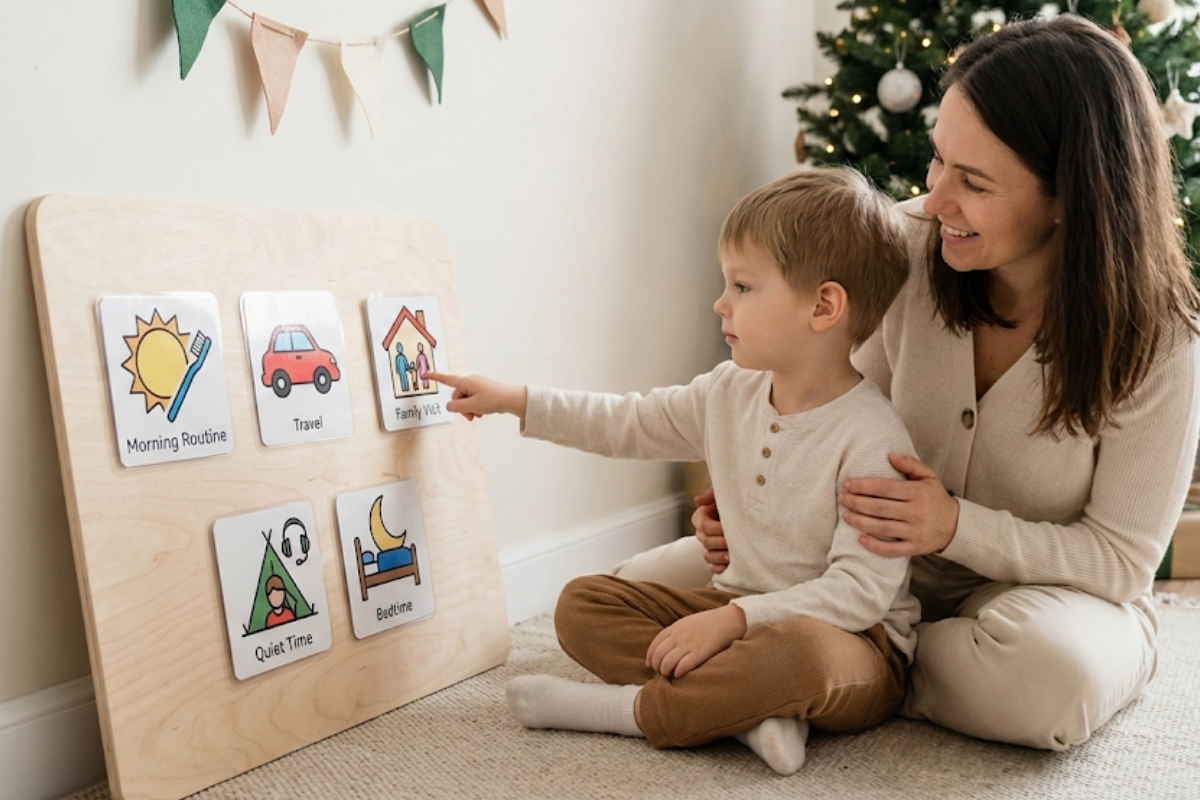
Visual supports help transform abstract concepts like time and sequence into concrete, understandable information.
Helpful tools include:
- Daily visual schedules
- “First–then” boards for short transitions
- Countdown visuals for upcoming changes
- Weekly calendars for anticipated routine shifts
When children can see what’s coming next, uncertainty decreases and emotional regulation improves.
The Power of Positive Reinforcement

Positive reinforcement helps children associate transitions with success rather than stress. This doesn’t mean forcing compliance, it means recognizing effort and growth.
Examples include verbal praise, access to preferred activities, or small rewards after successful transitions. Over time, children learn that flexibility leads to positive outcomes, making future transitions easier.
Navigating School Breaks and Schedule Changes
Extended breaks or changes in school or therapy schedules can remove familiar structure, making days feel unpredictable.
Families can help by:
- Creating simplified home schedules
- Maintaining consistent wake-up and bedtime routines
- Balancing preferred activities with necessary tasks
- Building in quiet or recovery time
Even loose structure provides essential predictability.
Creating Balanced, Flexible Routines
Supportive routines don’t eliminate spontaneity, they balance structure with flexibility.
Helpful approaches include:
- Keeping core routines consistent (sleep, meals)
- Preparing children in advance for changes
- Allowing breaks during overwhelming activities
- Adjusting expectations based on individual needs
Some families rely on “anchor routines” that stay the same no matter what else changes.
Supporting the Whole Family
Supporting a child through transitions also means supporting caregivers. Change can be emotionally demanding, and families benefit from realistic expectations and collaborative planning.
Working with ABA providers to prioritize regulation, flexibility, and family well-being, rather than perfection, helps create sustainable progress.
Moving Forward with Confidence
Transitions are inevitable, but with preparation and evidence-based ABA strategies, they don’t have to disrupt family well-being.
By using visual supports, reinforcing flexibility, and maintaining predictable yet adaptable routines, children can build confidence navigating change, one transition at a time.
Explore More
Preparing for an ABA Assessment: What Parents Should Expect
Accessing ABA therapy can feel overwhelming for families, especially when navigating service options, insurance, Medicaid, and the intake process. Early Autism Services works to make ABA therapy more accessible by offering different service settings, supporting families through insurance and intake, and providing individualized care based on each child’s needs.

How Early Autism Services Is Expanding Access to ABA Therapy for Families
Accessing ABA therapy can feel overwhelming for families, especially when navigating service options, insurance, Medicaid, and the intake process. Early Autism Services works to make ABA therapy more accessible by offering different service settings, supporting families through insurance and intake, and providing individualized care based on each child’s needs.

Behavior Is Communication: Understanding What Your Autistic Child May Be Telling You
Behavior can be an important form of communication, especially when a child cannot easily express their needs in words. This parent-friendly guide explores what an autistic child’s behavior may be communicating, how to recognize possible triggers and patterns, and supportive ways to build functional communication skills.


