Autism in Girls vs. Boys: A Guide to Different Symptoms and Signs
Autism presents differently in girls and boys, with girls often showing subtler signs and masking behaviors that delay diagnosis. While boys display more visible traits, girls may internalize challenges. Understanding these differences helps improve early identification, ensuring timely support, personalized care, and better outcomes for all children on the spectrum.

Why are boys more likely to be diagnosed with autism than girls? It’s not necessarily because fewer girls have autism, but because girls often show different, less visible traits. Many girls are better at “blending in” socially, which can make their challenges harder to identify.
Additionally, much of the early autism research was based on boys. This has led to diagnostic criteria that reflect male presentations more strongly, creating gaps in identifying female autism.
At Early Autism Services (EAS), we recognize that every child is unique. Our individualized approach, guided by board certified behavioral analysts(BCBA), ensures that each child receives personalized support based on their needs.
In this article, we will explore:
- How autism typically presents in boys
- How autism often appears in girls
- Why autism in girls is often misdiagnosed or missed
How Autism Typically Presents in Boys
.png)
Autism in boys is often easier to recognize because symptoms tend to be more externalized and visible. These behaviors are usually aligned with traditional diagnostic criteria.
Common ASD symptoms in boys include:
- Repetitive behaviors (hand-flapping, rocking, spinning)
- Speech repetition or echolalia
- Strong focus on objects (e.g., vehicles, screens, or parts of toys)
- Sensory sensitivities (avoiding loud noises or certain textures)
- Difficulty with social interaction and eye contact
Research consistently shows that boys are diagnosed with autism more frequently than girls, often cited as 3 to 4 times more likely. However, this difference may not fully reflect actual prevalence. Instead, boys may be identified earlier because their behaviors are more noticeable and less socially masked.
These traits are often observed in autism in early childhood, making early diagnosis and intervention more common in boys.
How Autism Often Appears in Girls
In contrast, autism in girls can be more subtle and internalized, which makes it harder to recognize. Many girls learn to observe and imitate social behaviors, a process known as masking.
Common traits associated with female autism include:
- Mimicking peers to fit in socially
- Strong desire to form friendships, despite difficulties maintaining them
- Less obvious repetitive behaviors
- Intense but socially acceptable interests (e.g., books, animals, or art)
- Internalized struggles such as anxiety or emotional overwhelm
Girls may also show similar ASD symptoms, such as echolalia, toe-walking, or sensory sensitivities, but these are often less disruptive and therefore less noticeable.
Because of this, many girls go undiagnosed in early childhood and are only identified later, often during adolescence, when social demands increase. This can affect their experience of living with autism, as they may struggle without proper support during key developmental stages.
Why Autism in Girls Is Often
Misdiagnosed or Missed
.png)
There are several reasons why autism in girls is frequently overlooked or misdiagnosed:
1. Masking and Social Camouflage
Girls are often better at hiding their difficulties by copying others. While this helps them fit in, it also makes their challenges less visible to parents and teachers.
2. Diagnostic Bias
Traditional diagnostic criteria were developed based on studies of boys. As a result, they may not fully capture how autism presents in girls.
3. Misdiagnosis
Girls are sometimes diagnosed with conditions such as:
- Anxiety disorders
- ADHD
- Depression
These may coexist with autism, but they can also delay an accurate diagnosis.
4. Subtle Behavioral Differences
Research suggests that repetitive and restrictive behaviors may be less intense or less visible in girls compared to boys. While brain imaging studies show some differences in neural patterns, these findings are still evolving and should be interpreted cautiously.
The Role of Social Expectations in Shaping Behaviors
Social expectations also play a significant role in how autism presents in boys and girls.
From a young age, girls are often encouraged to:
- Be socially engaged
- Communicate effectively
- Show empathy and emotional awareness
Because of these expectations, girls may feel more pressure to “fit in,” which increases masking behaviors.
Boys, on the other hand, are often given more flexibility in social behavior, which may make their differences more visible and easier to identify.
Understanding these societal influences is essential when evaluating ASD symptoms and ensuring fair and accurate diagnosis.
How Early Support Can Make a Difference
Early identification and intervention are key to supporting children with autism, regardless of gender.
Approaches like applied behavior analysis for autism help children:
- Build communication and social skills
- Develop independence in daily routines
- Learn emotional regulation strategies
- Improve adaptability during transitions
Providing support early in autism in early childhood can significantly improve long-term outcomes and confidence.
Closing Thoughts
Autism is a spectrum, and it does not look the same in every child. The differences between boys and girls highlight the importance of awareness, early identification, and individualized support.
Recognizing female autism is especially important, as many girls go unnoticed due to subtle signs and social masking. By understanding these differences, we can create more inclusive environments and ensure that every child receives the support they need.
Want to learn more about early signs of autism and available support? Speak with our specialists and take the first step toward clarity and care.
Explore More

Behavior Is Communication: Understanding What Your Autistic Child May Be Telling You
Behavior can be an important form of communication, especially when a child cannot easily express their needs in words. This parent-friendly guide explores what an autistic child’s behavior may be communicating, how to recognize possible triggers and patterns, and supportive ways to build functional communication skills.

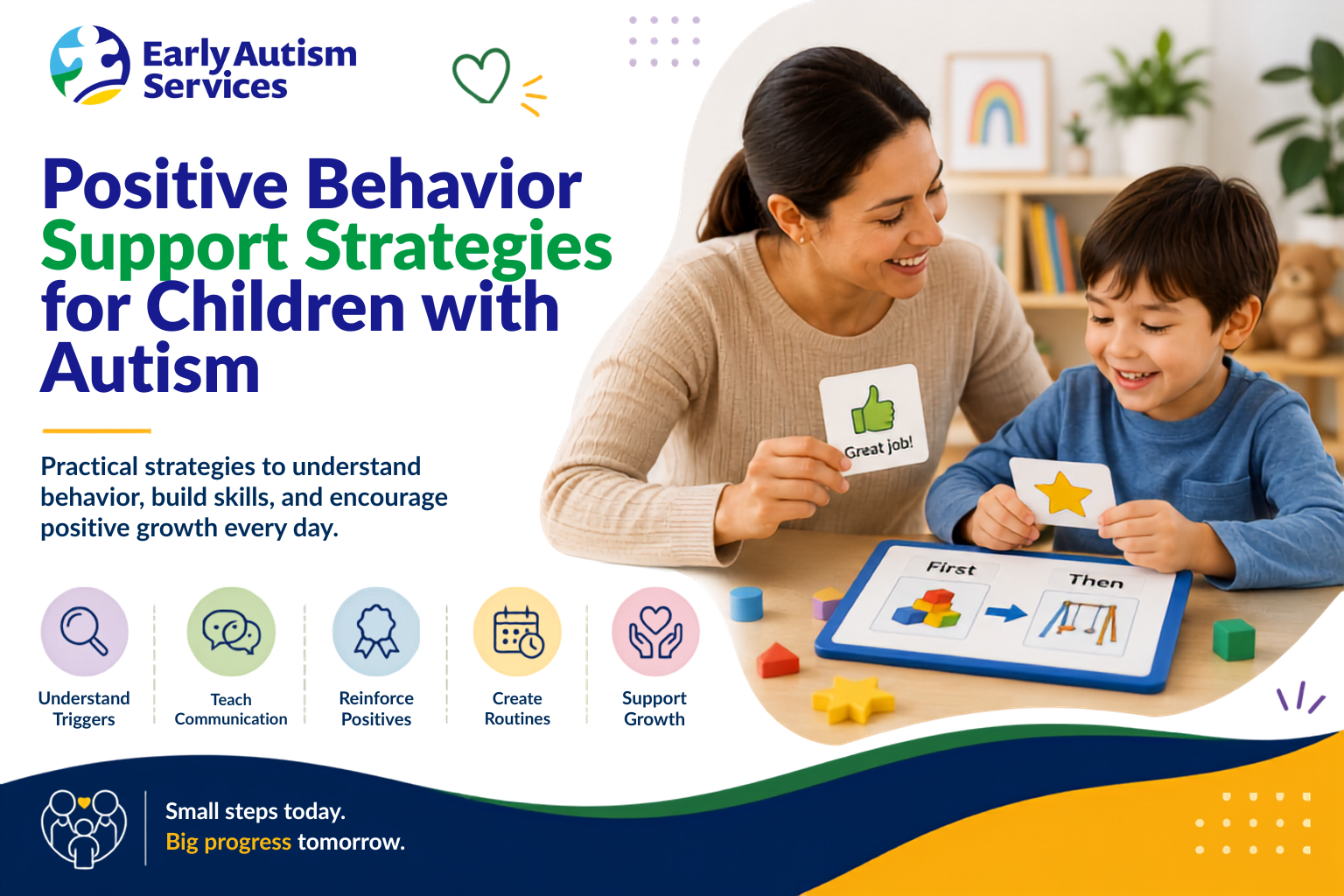
Positive Behavior Support Strategies for Children with Autism
Positive behavior support focuses on understanding why behaviors happen and helping children develop effective ways to communicate their needs. This parent-friendly guide explores practical strategies for identifying triggers, creating predictable routines, reinforcing positive skills, supporting transitions, and encouraging communication at home.
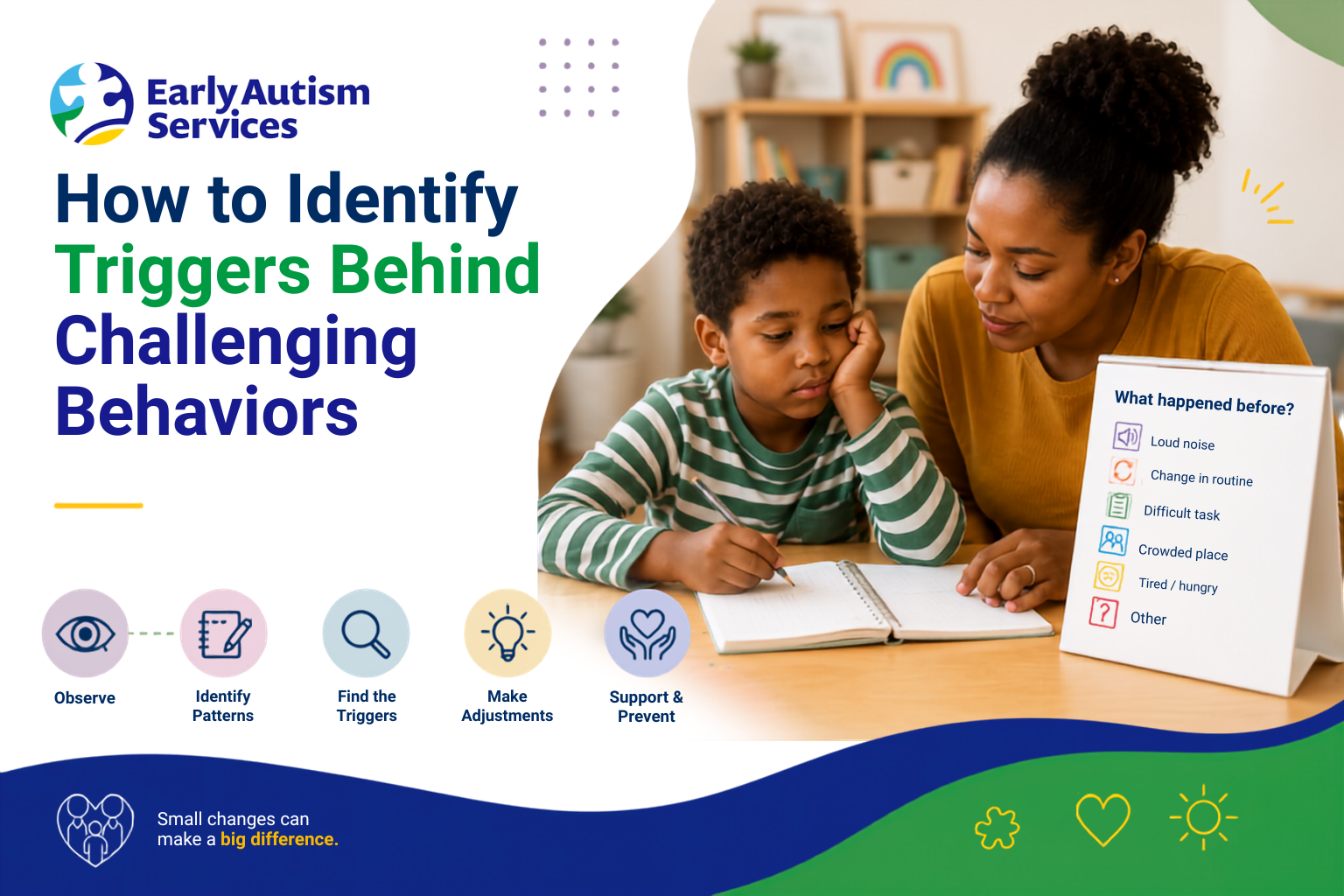
How to Identify Triggers Behind Challenging Behaviors
Challenging behaviors often have a trigger, even when they seem unpredictable. This parent-friendly guide explains how to recognize common autism behavior triggers, use the ABC method to spot patterns, and make supportive adjustments that can reduce stress and help children feel more understood.


