Key Terms in ABA - A Parent-Friendly Guide 1
Autism is a neurodevelopmental condition marked by differences in brain structure, connectivity, and sensory processing. Early brain growth variations and unique neural patterns influence communication, behavior, and perception. While challenges exist, strengths like attention to detail are common. Understanding these differences supports personalized, compassionate approaches that respect neurodiversity and individual needs.
%20(1).png)
.png)
When your child begins ABA therapy, it can feel like you’ve stepped into a world with a completely new language. During therapy sessions, parent meetings, or progress updates, you may hear terms that sound unfamiliar or even overwhelming at first. Many parents wonder if they should already understand these words, but the truth is, learning takes time.
This guide explains the most important ABA terms parents should know, using simple, everyday language. You don’t need a background in therapy to follow along, just a desire to better understand and support your child.
Differential Reinforcement
.png)
Differential reinforcement is a strategy used in ABA therapy to encourage positive behaviors while reducing challenging ones. Instead of focusing only on what a child should stop doing, therapists focus on reinforcing behaviors they want to see more often.
For example, if a child learns to ask for help using words, gestures, or pictures, that behavior is reinforced through praise, attention, or access to a preferred activity. Over time, the child learns that positive communication leads to better outcomes, making those behaviors more likely to occur again.
Direct ABA Therapy
Direct ABA therapy refers to one-on-one sessions where a trained therapist works directly with your child. These sessions are highly individualized and based on your child’s unique strengths, needs, and goals.
During direct therapy, children may work on communication, social interaction, play skills, daily routines, or behavior support strategies. This focused approach allows therapists to provide consistent support, track progress closely, and adjust strategies as your child grows and develops.
Discrete Trial Training (DTT)
Discrete Trial Training, often called DTT, is a structured teaching method used in ABA therapy. Skills are broken into small, manageable steps, making learning clear and achievable.
Each teaching moment includes a clear instruction, the child’s response, and immediate feedback or reinforcement. DTT is commonly used to teach early learning skills such as matching, identifying objects, or following simple directions. While structured, DTT is just one part of a comprehensive ABA program and is often combined with more natural teaching approaches.
Functional Communication Training (FCT)
.jpg)
Functional Communication Training helps children express their needs in appropriate and effective ways. Many challenging behaviors occur because a child struggles to communicate frustration, needs, or wants.
Through FCT, children are taught alternative ways to communicate, such as using words, gestures, sign language, or picture-based systems. For example, a child may learn to request a break instead of crying or running away. Improving communication often reduces frustration and helps children feel more understood.
Natural Environment Teaching (NET)
Natural Environment Teaching focuses on teaching skills during everyday activities and play, rather than only in structured settings. Learning happens during moments that naturally occur throughout the day.
This may include practicing communication during playtime, following directions during clean-up, or learning social skills during family routines. NET helps children apply what they learn in real-life situations, making skills more meaningful and easier to generalize beyond therapy sessions.
Generalization in ABA
Generalization refers to a child’s ability to use a learned skill across different people, places, and situations. Learning a skill in therapy is important, but being able to use that skill in daily life is the ultimate goal.
For example, a child who learns to ask for help during therapy and also does so at home, school, or in the community is demonstrating generalization. ABA programs intentionally plan for generalization so skills carry over into real-world settings.
Picture Exchange Communication System (PECS)
The Picture Exchange Communication System, or PECS, is a communication approach that uses pictures to help children express their needs and wants. Children learn to exchange a picture for an item or activity they want, allowing them to communicate even before verbal speech develops.
PECS is especially helpful for children who are non-speaking or have limited verbal communication. It supports communication development and can also encourage spoken language over time.
Why These ABA Terms Matter for Parents
Understanding these key ABA terms can help parents:
- Feel more confident during therapy discussions
- Better understand progress updates and goals
- Support learning at home and in daily routines
- Build stronger collaboration with the therapy team
You don’t need to know every technical detail to support your child. Familiarity with these core concepts helps you stay informed, involved, and empowered throughout the ABA therapy journey.
Supporting Your Child’s ABA Journey
Understanding a few key ABA terms can go a long way in helping you feel more confident and involved in your child’s therapy journey. While you don’t need to learn everything at once, having a basic understanding of these commonly used terms can make conversations with your therapy team clearer and less overwhelming.
As your child continues ABA therapy, you may encounter additional terms and strategies that weren’t covered here. To support you further, we’ve created Part 2 of this guide, which explains other ABA terms you may hear over time. Think of it as a next step, available whenever you’re ready to explore more.
Every child’s journey is unique, and learning at your own pace is more than okay. The most important part is staying informed, supported, and connected as your child grows.
Explore More

Behavior Is Communication: Understanding What Your Autistic Child May Be Telling You
Behavior can be an important form of communication, especially when a child cannot easily express their needs in words. This parent-friendly guide explores what an autistic child’s behavior may be communicating, how to recognize possible triggers and patterns, and supportive ways to build functional communication skills.

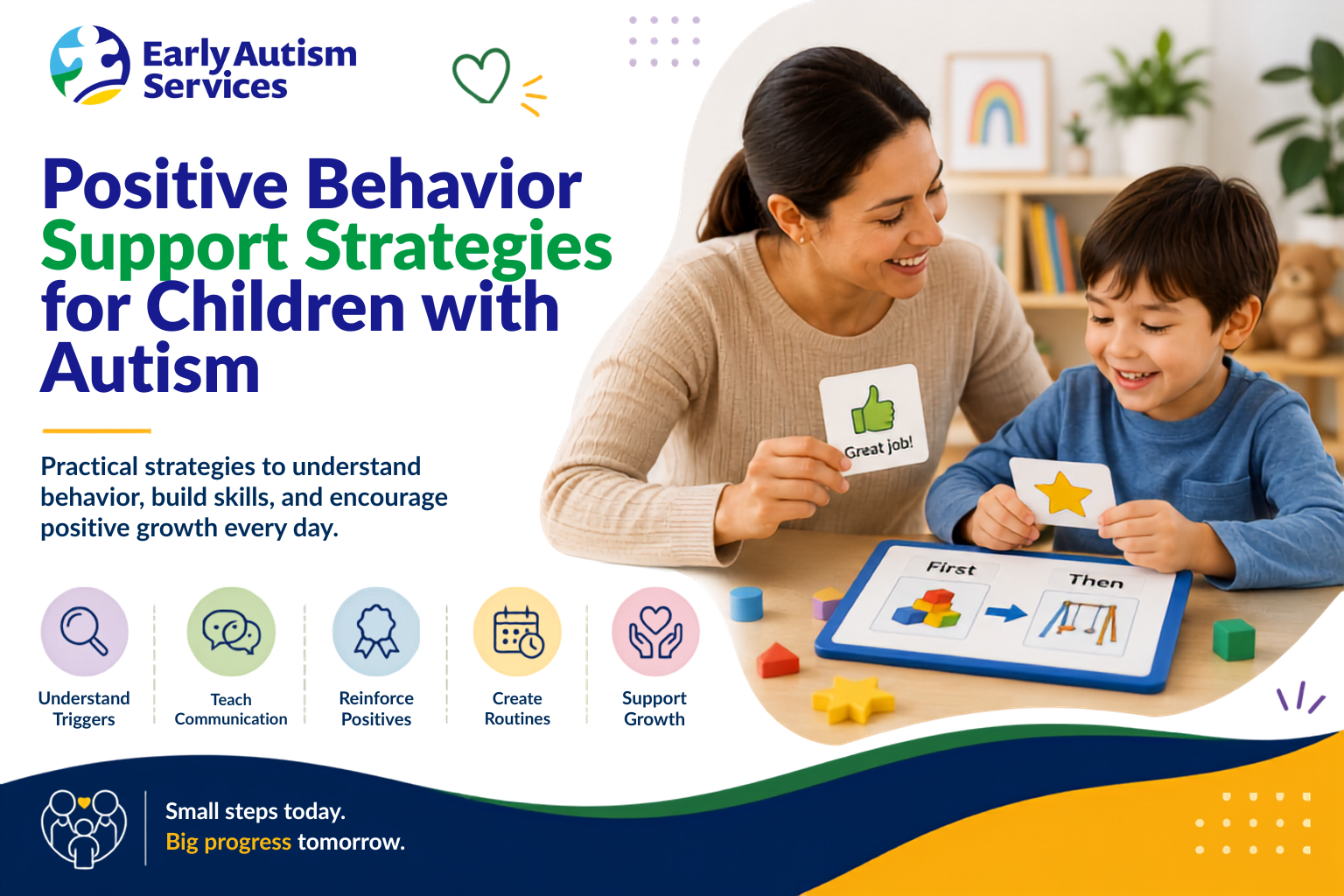
Positive Behavior Support Strategies for Children with Autism
Positive behavior support focuses on understanding why behaviors happen and helping children develop effective ways to communicate their needs. This parent-friendly guide explores practical strategies for identifying triggers, creating predictable routines, reinforcing positive skills, supporting transitions, and encouraging communication at home.
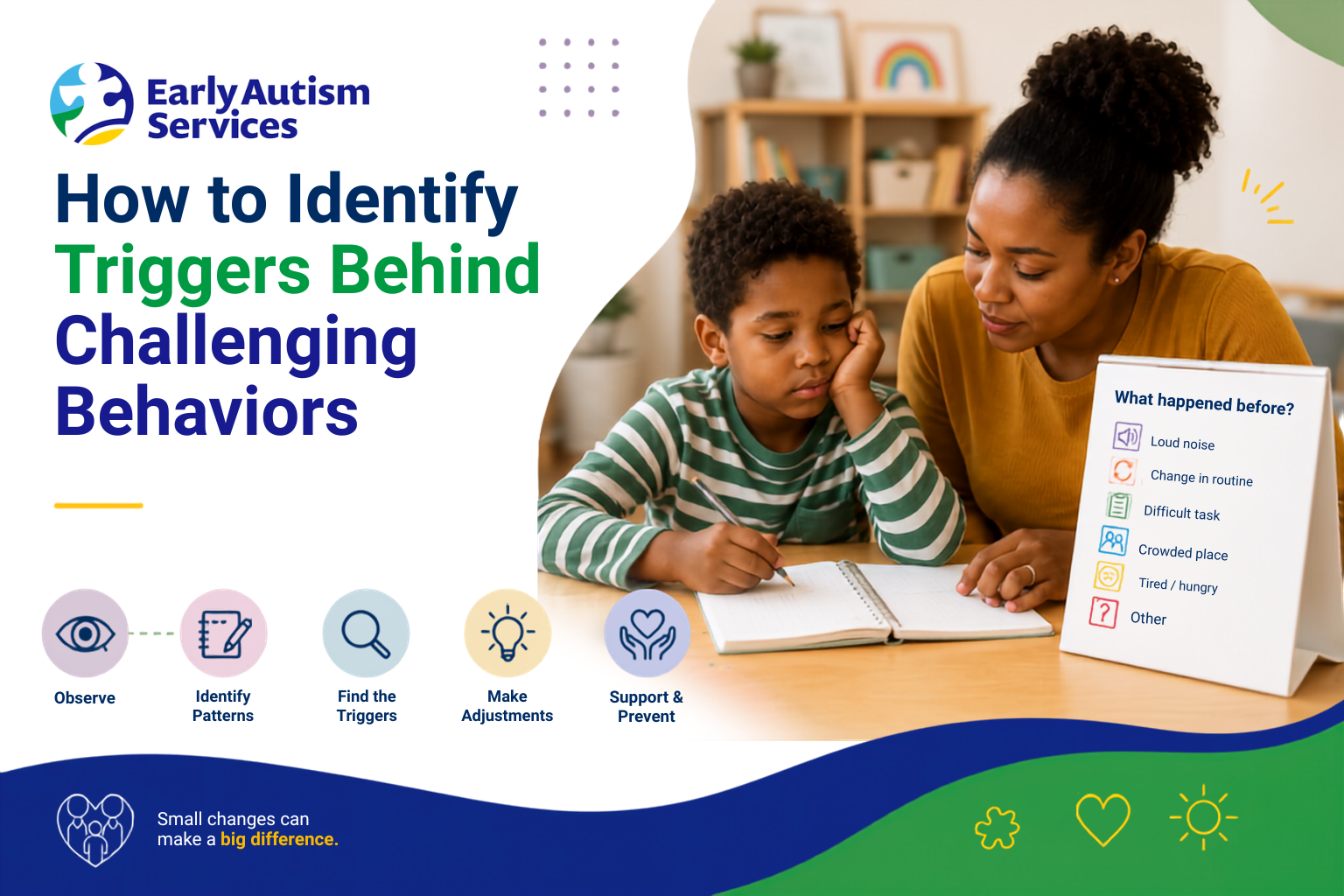
How to Identify Triggers Behind Challenging Behaviors
Challenging behaviors often have a trigger, even when they seem unpredictable. This parent-friendly guide explains how to recognize common autism behavior triggers, use the ABC method to spot patterns, and make supportive adjustments that can reduce stress and help children feel more understood.


