Understanding ABA Therapy in Hoffman Estates: A Caregiver’s Roadmap
Explore ABA support in Hoffman Estates, caregiver involvement, what to ask about insurance, and practical next steps for finding a program that fits your child.

Introduction
If you're a caregiver in Hoffman Estates or surrounding area, starting ABA therapy can feel overwhelming. You might be wondering: What is ABA therapy? Will it truly help my child? And how do I find a provider I can trust nearby? You're not alone.
This guide will walk you through the fundamentals of Applied Behavior Analysis (ABA), how it works, and how it can make a real difference in your child’s development. Learn what to expect during the process, how major insurance works with these services, and read about families who have found progress with Early Autism Services. Whether you are starting out or want to better understand options in your area, this resource aims to help you make informed choices for your child.
What is ABA Therapy and How Does It Work?
ABA therapy is a trusted and effective approach that helps children grow in areas like communication, social interaction, self-care, and learning. Using positive reinforcement, therapists encourage kids to build healthy habits while gently reducing behaviors that may hold them back.
At Early Autism Services (EAS), every child gets a personalized therapy plan tailored to their unique strengths, needs, and goals.
Each program is led by a Board Certified Behavior Analyst (BCBA) and delivered through structured sessions either at home or at our Hoffman Estates center. Many pediatricians, educators, and child psychologists recommend ABA therapy for children on the autism spectrum disorder (ASD) because of its proven ability to support long-term growth, confidence, and independence.
Why Caregivers in Hoffman Estates Trust ABA Therapy
Many parents choose ABA therapy because it delivers real, lasting progress. In Hoffman Estates, families often notice meaningful changes, like their child becoming more expressive, following daily routines more easily, or engaging more confidently with others.
One local caregiver shared,
“My son is happy attending therapy here, he walks in and out with a smile, and that gives me so much peace of mind.”
ABA therapy isn’t just about structured sessions, it’s about building a strong support system. Therapists and families work closely together, regularly reviewing progress, setting new goals, and sharing tools to continue the growth at home. It’s this collaborative, family-centered approach that makes ABA therapy not only effective but also deeply personal and empowering.
The Role of Caregivers in ABA Therapy

As a caregiver, you’re not just on the sidelines, you’re a key part of your child’s progress. At Early Autism Services, we believe in working hand-in-hand with families every step of the way. From setting meaningful goals to understanding the strategies used during sessions, you’ll always be in the loop.
You’ll have the chance to attend parent meetings, look over your child’s progress, and share your thoughts with the care team. For many families, being involved like this brings a sense of confidence and clarity. It’s not just about what happens during therapy sessions, it’s about helping your child carry those new skills into your home, your routines, and the real world.
Real-Life Success from Hoffman Estates Families
Families in Hoffman Estates often speak warmly about the changes they’ve seen since starting therapy at EAS. One parent shared,
“My daughter attends therapy here and it's truly an excellent place.”
Another reflected,
“My son is receiving therapy here, and so far, everyone has been incredibly kind and welcoming.”
These heartfelt stories reflect the kind of care we strive to provide personalized, compassionate, and rooted in understanding every child’s unique journey. Whether it’s a new word spoken, steady eye contact, or joining a group activity for the first time, every milestone matters. And at EAS, we make sure no achievement goes unnoticed, we celebrate them side by side with our families.
Insurance Providers and Coverage in Hoffman Estates

Figuring out insurance can feel like a maze, but you don’t have to go through it alone. At Early Autism Services, we partner with most major insurance providers in Illinois, including Blue Cross Blue Shield, UnitedHealthcare, Aetna, Cigna, and more.
Our friendly admin team is here to walk you through each step, whether it’s checking your coverage, handling paperwork, or helping you understand your benefits. That way, you can stay focused on what matters most: your child’s care and progress.
ABA therapy is often covered under medical benefits for kids with an autism diagnosis, but since every plan is different, we offer a free consultation and insurance check to help you get started with confidence.
Inside Our Center: What You’ll Find at EAS Hoffman Estates

Right in the heart of Hoffman Estates, our EAS center is a place where children can feel safe, supported, and ready to grow. The space is thoughtfully designed to be welcoming and engaging, with bright, child-friendly rooms and areas tailored for learning and play.
We offer both center-based and in-home therapy, depending on what works best for your child and family. Every session is structured with clear goals in mind and led by caring, trained therapists under the guidance of a Board Certified Behavior Analyst (BCBA).
Whether your child is working on communication, social play, or everyday skills, we’ve created an environment that helps them thrive.
Curious to learn more about our Hoffman Estates location and services?
Getting Started in Hoffman Estates
If you’re thinking about ABA therapy for your child in Hoffman Estates, we’d love to connect with you. Speak to an intake specialist, and we’ll guide you through every step, answering your questions, easing any worries, and helping you explore the best therapy options for your child.
At Early Autism Services, we’re here to support you with compassion, clarity, and care, because every family’s journey matters, and you don’t have to take it alone.
Conclusion
Every child is unique and so is every caregiver’s journey. At Early Autism Services, we understand that no two families are the same, which is why our ABA therapy programs are built to fit your child’s needs and your family’s goals.
With compassionate care, expert guidance, and help navigating insurance, you’ll have the support you need every step of the way.
You don’t have to do this alone.
Reach out today to schedule your free consultation and take the first step toward meaningful progress for your child, and for your family.
Frequently Asked Questions (FAQs)
Q1: How soon can my child start ABA therapy at EAS Hoffman Estates?
A: Once we complete your free consultation and verify your insurance, we do our best to get things moving quickly. Ask intake for the current timeline; starting services depends on assessment, any required authorization, and provider availability.
Q2: Do you offer in-home therapy in Hoffman Estates?
A: Absolutely. We provide both in-home and center-based therapy options, depending on what best supports your child’s needs and your family’s routine.
Q3: What age groups do you work with?
A: We generally serve children between the ages of 1 and 10+, but every child is different. We’re happy to talk with you and see if our program is the right fit.
Q4: Is ABA therapy covered by insurance?
Coverage depends on the specific plan. Ask intake and your insurer to confirm benefits, network participation, authorization requirements, and any family costs.
Explore More
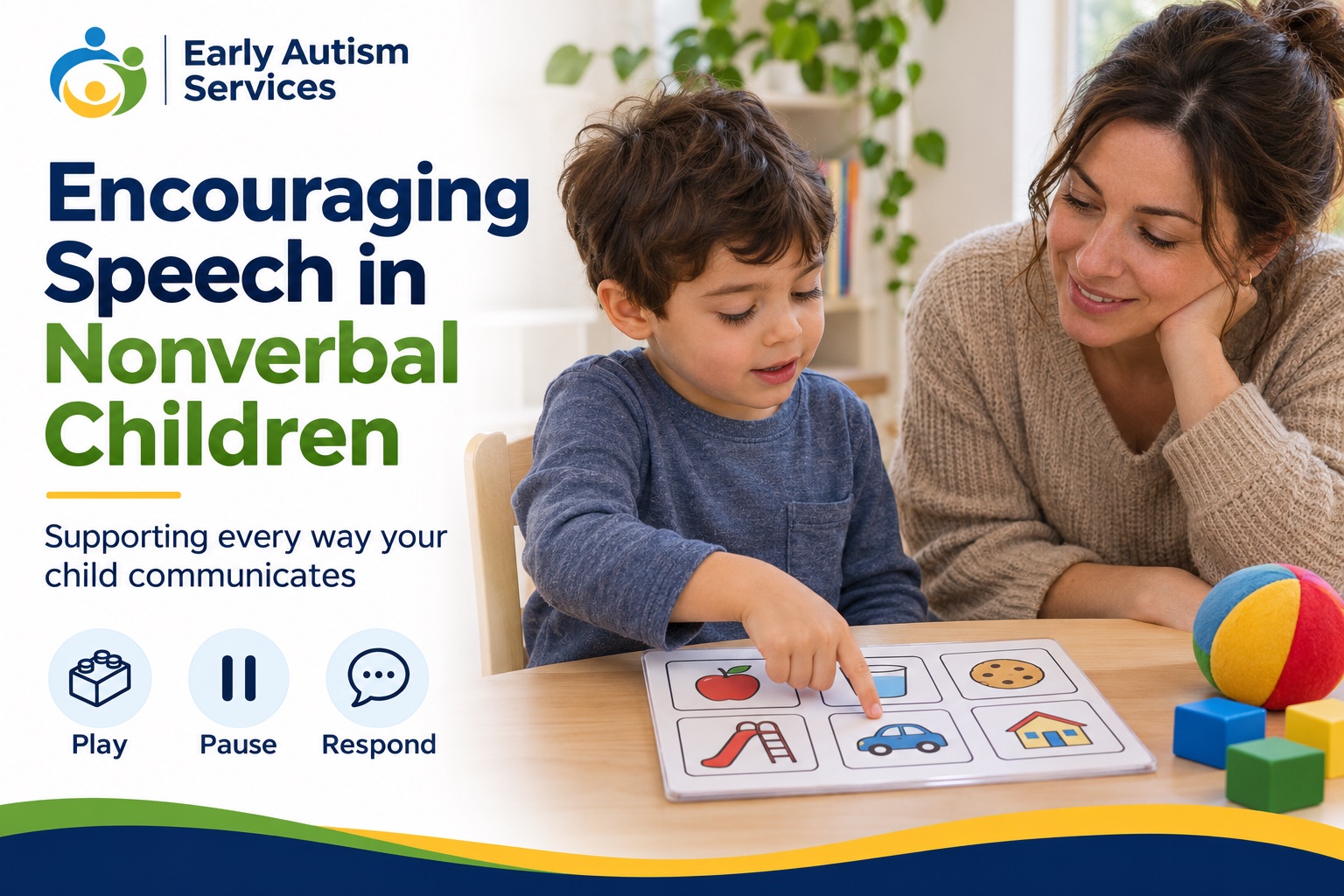
Encouraging Speech in Nonverbal Children
When a child uses few or no spoken words, parents often want to know what they can do to help. Encouraging speech in nonverbal children begins with understanding how the child already communicates and making those messages easier to express and understand.
Some families use “nonverbal,” while others prefer “nonspeaking” or “minimally speaking.” These terms describe speech use; they do not tell us everything about a child's understanding or ideas. The practical goal is reliable communication, with support for speech development when it fits the child's needs.


School Readiness Skills for Children with Autism
School readiness skills help children take part in the routines, relationships, and learning opportunities of the school day. For a child with autism, useful goals might include asking for help, recognizing a familiar routine, or becoming comfortable using a communication system with a new adult.
Readiness is not a pass-or-fail checklist. Children enter school with different abilities and support needs. The American Academy of Pediatrics emphasizes that schools need to be prepared for children at different levels of development, including children with disabilities. [1]
Families can practice useful skills while working with the school to arrange the support their child needs now.


(312) 386-6820
(312) 929-0324