Medicaid and ABA Therapy Guide: A Parent’s Roadmap to Understanding Coverage
Medicaid can help eligible families access ABA therapy for children with autism, but coverage requirements vary by state. This guide explains eligibility, authorization steps, covered services, and common questions about Medicaid ABA therapy. Learn how to navigate the process, understand benefits, and access early support for your child’s development.

For many families, seeking autism support begins with one important question:
“Does Medicaid cover ABA therapy?”
And often, that question comes during an already emotional time.
You may be navigating evaluations, learning new terminology, and trying to understand what support your child needs, all while wondering how you’ll afford it.
If that feels familiar, you’re not alone.
The good news is that in many states, Medicaid does cover ABA therapy for eligible children.
But understanding how coverage works, and what steps to take next, can feel overwhelming at first.
This guide will walk you through it clearly and simply.
What Is ABA Therapy?
Applied Behavior Analysis (ABA) therapy is a widely used, evidence-based therapy that helps children build meaningful skills related to:
- Communication
- Social interaction
- Daily routines
- Emotional regulation
- Learning and behavior development
ABA therapy is often recommended as part of early intervention services for autism, especially when developmental differences are identified early.
Does Medicaid Cover ABA Therapy?
In many cases, yes.
Most state Medicaid programs provide ABA therapy coverage for eligible children diagnosed with autism spectrum disorder.
This coverage often includes:
- Diagnostic assessments
- ABA evaluations
- Direct therapy sessions
- Parent training
- Ongoing progress monitoring
However, exact benefits vary depending on your state’s Medicaid program.
Who Qualifies for Medicaid ABA Therapy Coverage?
Eligibility often depends on several factors, including:
- Your child’s formal autism diagnosis
- Medical necessity documentation
- State Medicaid eligibility requirements
- Authorization approval
Some states may also require referrals or additional assessments before services begin.
How Do Families Access ABA Therapy Through Medicaid?
The process usually includes several steps:
1. Obtain a Formal Diagnosis
Most Medicaid plans require an official autism diagnosis from a qualified healthcare provider.
2. Complete a Therapy Evaluation
An ABA provider may assess your child’s needs and create a treatment recommendation.
3. Submit Authorization Requests
The provider typically works with Medicaid to request approval for therapy services.
4. Begin Services
Once approved, therapy sessions can begin based on your child’s individualized plan.
How Long Does Approval Take?
Approval timelines vary by state and provider.
Some families receive authorization within a few weeks, while others may experience longer wait times depending on:
- Documentation requirements
- Medicaid processing timelines
- Provider availability
This waiting period can feel frustrating, but staying in contact with your provider often helps move the process forward.
What Medicaid May Cover
Depending on your state, Medicaid ABA therapy coverage may include:
- Full or partial therapy costs
- Clinical supervision
- Parent coaching
- Progress evaluations
- Telehealth ABA services (in some cases)
Coverage limits and session approvals vary by plan.
What If Medicaid Doesn’t Fully Cover Services?
If coverage is limited, families may explore:
- Secondary insurance
- State waiver programs
- Supplemental autism funding resources
- Flexible scheduling options
Many providers can help families understand available alternatives.
Why Medicaid Coverage Matters
Access to ABA therapy through Medicaid gives many families the opportunity to begin support earlier, without overwhelming financial barriers.
Early support may help children:
- Strengthen communication skills
- Improve social development
- Build confidence and independence
- Learn meaningful daily routines
For many families, early access creates opportunities for long-term growth.
Support for Families Navigating Medicaid
At Early Autism Services, we understand how confusing Medicaid processes can feel.
That’s why our team helps families:
- Verify Medicaid benefits
- Understand eligibility requirements
- Navigate authorizations
- Explore next steps for care
Families across Richmond, Hoffman Estates, Georgia, and Illinois often begin with one simple conversation.
Explore support near you:
- ABA therapy in Richmond → https://www.earlyautismservices.com/locations/richmond
- Autism services in Hoffman Estates → https://www.earlyautismservices.com/locations/hoffman-estates
- Early intervention in Georgia → https://www.earlyautismservices.com/locations/duluth
- ABA therapy in Illinois → https://www.earlyautismservices.com/locations/hoffman-estates
Need Help Understanding Medicaid Coverage?
If you’re trying to understand whether Medicaid covers ABA therapy for your child, you don’t have to figure it out alone.
Contact our team for guidance:
✔ Medicaid benefit verification
✔ Parent-friendly support
✔Clear next steps for families
FAQs
Does Medicaid cover ABA therapy in every state?
Coverage exists in many states, but exact benefits and eligibility requirements vary.
Do I need an autism diagnosis for Medicaid ABA therapy?
Most Medicaid plans require a formal autism diagnosis and documentation of medical necessity.
How long does Medicaid approval take for ABA therapy?
Approval timelines vary but may range from a few weeks to several months depending on your state and provider.
Explore More
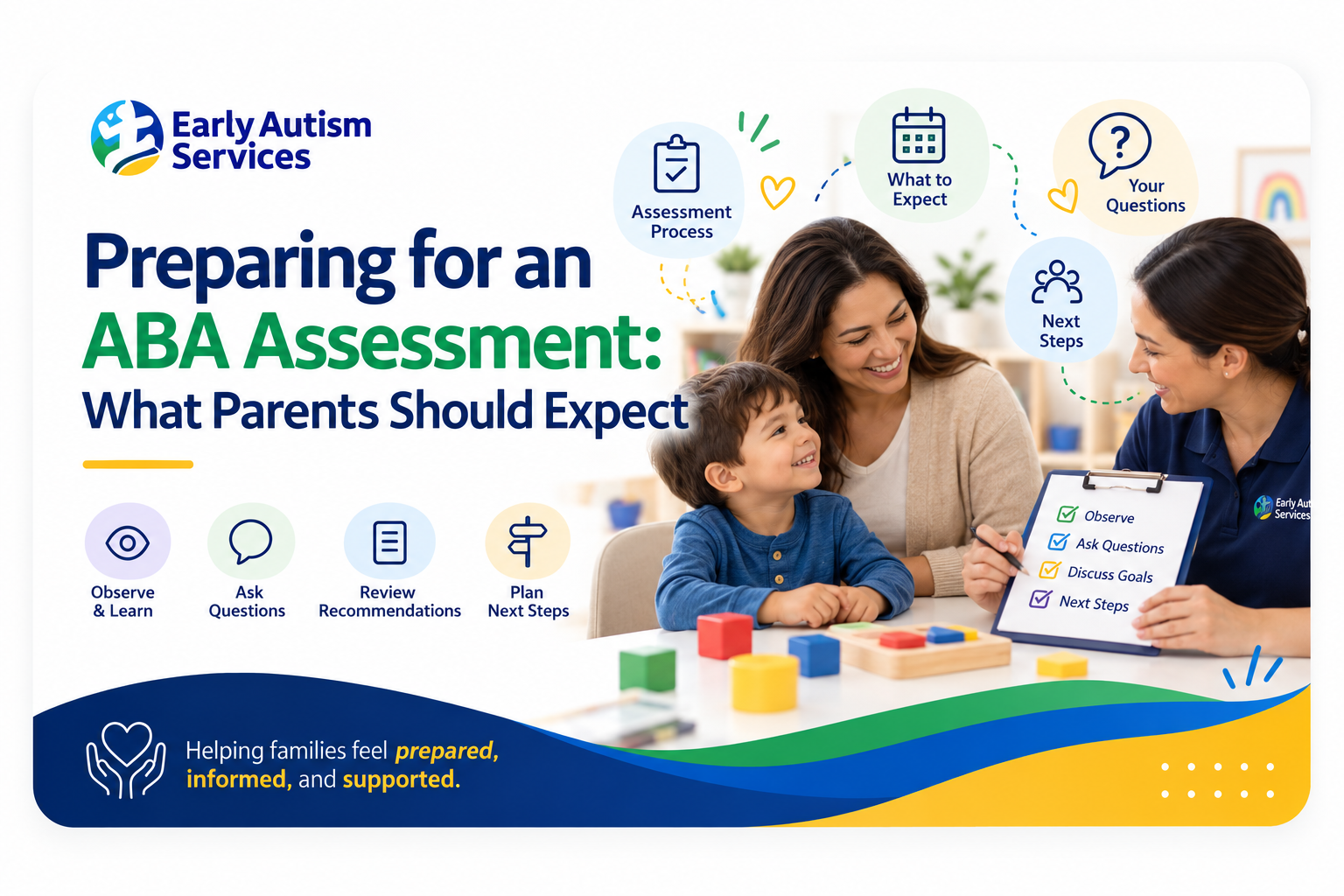
Preparing for an ABA Assessment: What Parents Should Expect
Accessing ABA therapy can feel overwhelming for families, especially when navigating service options, insurance, Medicaid, and the intake process. Early Autism Services works to make ABA therapy more accessible by offering different service settings, supporting families through insurance and intake, and providing individualized care based on each child’s needs.

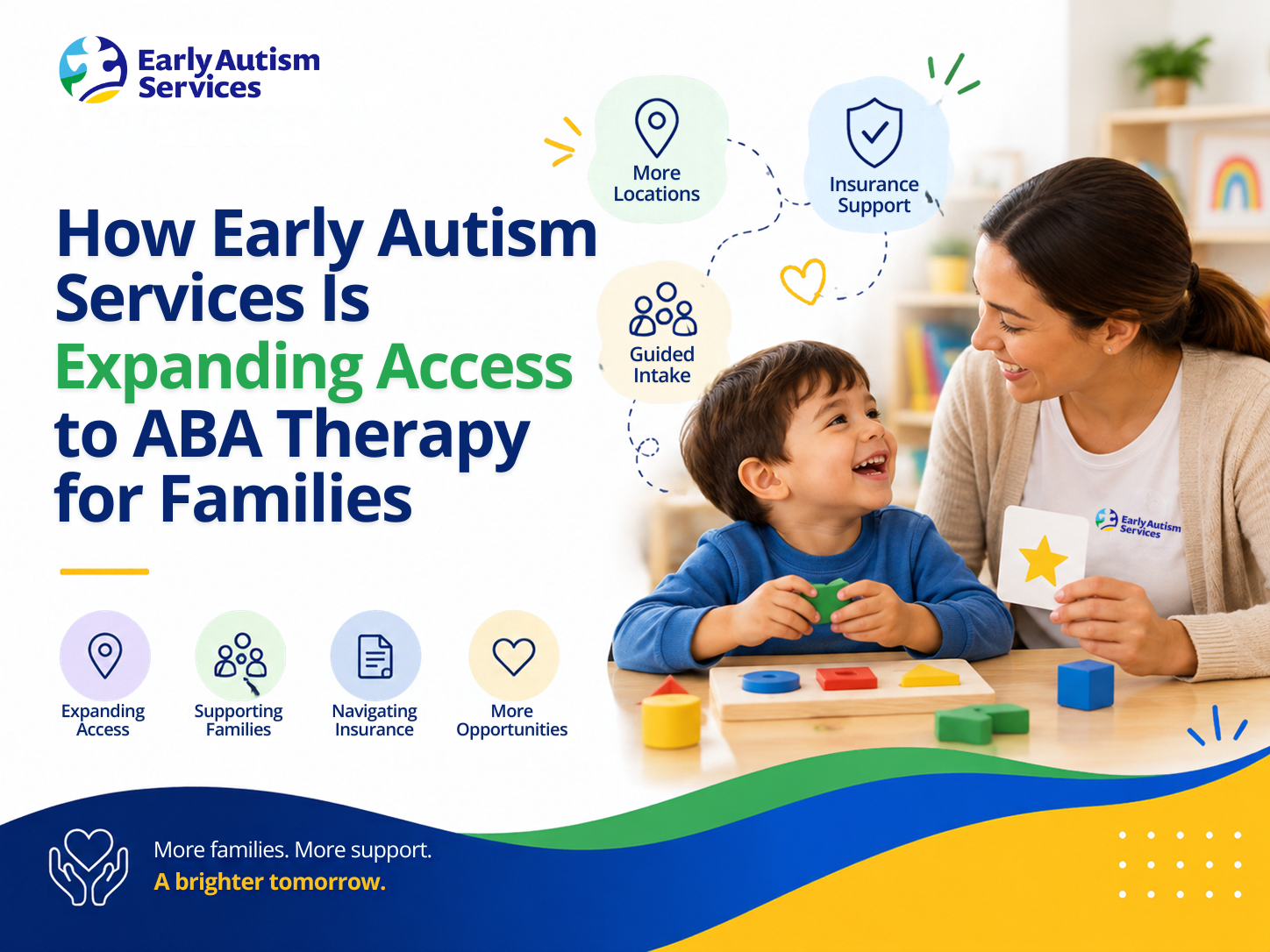
How Early Autism Services Is Expanding Access to ABA Therapy for Families
Accessing ABA therapy can feel overwhelming for families, especially when navigating service options, insurance, Medicaid, and the intake process. Early Autism Services works to make ABA therapy more accessible by offering different service settings, supporting families through insurance and intake, and providing individualized care based on each child’s needs.

Behavior Is Communication: Understanding What Your Autistic Child May Be Telling You
Behavior can be an important form of communication, especially when a child cannot easily express their needs in words. This parent-friendly guide explores what an autistic child’s behavior may be communicating, how to recognize possible triggers and patterns, and supportive ways to build functional communication skills.


