A caregiver's guide to emotional and behavioral changes for children 5-6 with autism
Ages 5–6 mark a key transition for autistic children as they move into structured school environments. This phase often brings behavioral changes due to new routines, social demands, and communication challenges. With consistent support, simple communication, and strategies like ABA, children can build emotional regulation, adapt to change, and develop confidence effectively.
.png)
What are the most pivotal years for children on the autism spectrum? For many families, ages 5 to 6 mark a significant transition. This is often when children move from preschool into elementary school: a shift that brings new routines, expectations, and social environments.
Autism is a spectrum condition, meaning every child develops differently. However, this stage commonly introduces noticeable behavioral changes in autistic children, especially as they adapt to structured learning environments and increased social interaction.
In this piece, we will dive into the following topics:
- Understanding behavioral changes at ages 5–6
- Common behavioral patterns in autistic children
- Supporting emotional regulation and daily routines
Understanding Behavioral Changes at Ages 5–6
The transition from preschool to elementary school can be overwhelming for any child. For children on the spectrum, these autism school transition challenges may feel even more intense.
Some key changes children experience include:
- New physical environments (larger classrooms, structured schedules)
- Increased social interaction with peers
- Expectations for independence and focus
- Exposure to unfamiliar routines and instructions
These changes can lead to emotional dysregulation, where children may struggle to manage or express their feelings.
Children living with autism may also find it harder to:
- Understand social cues (like tone or facial expressions)
- Communicate needs clearly
- Adapt quickly to unexpected changes
This is why early support, whether from caregivers, teachers, or an ABA therapist, can make a meaningful difference during this phase.
Common Behavioral Patterns in Autistic Children
.png)
During this stage, some behaviors may become more noticeable. These are not signs of “misbehavior,” but rather ways children express discomfort, stress, or unmet needs.
Common behavioral changes in autistic children include:
- Emotional sensitivity:
Children may have more frequent moments of frustration or overwhelm, especially during transitions.
- Repetitive behaviors:
Actions like hand-flapping, rocking, or repeating words (echolalia) can help children self-soothe.
- Communication challenges:
Difficulty expressing needs may lead to withdrawal or visible frustration.
- Aggressive responses:
Some children may hit, bite, or throw objects when they feel overwhelmed or unable to communicate.
- Social withdrawal:
Avoiding group activities, zoning out, or isolating themselves can occur when situations feel too demanding.
It’s important to remember that these behaviors are signals, not problems. Understanding their root cause is key to effective support.
Supporting Emotional Regulation and Daily Routines
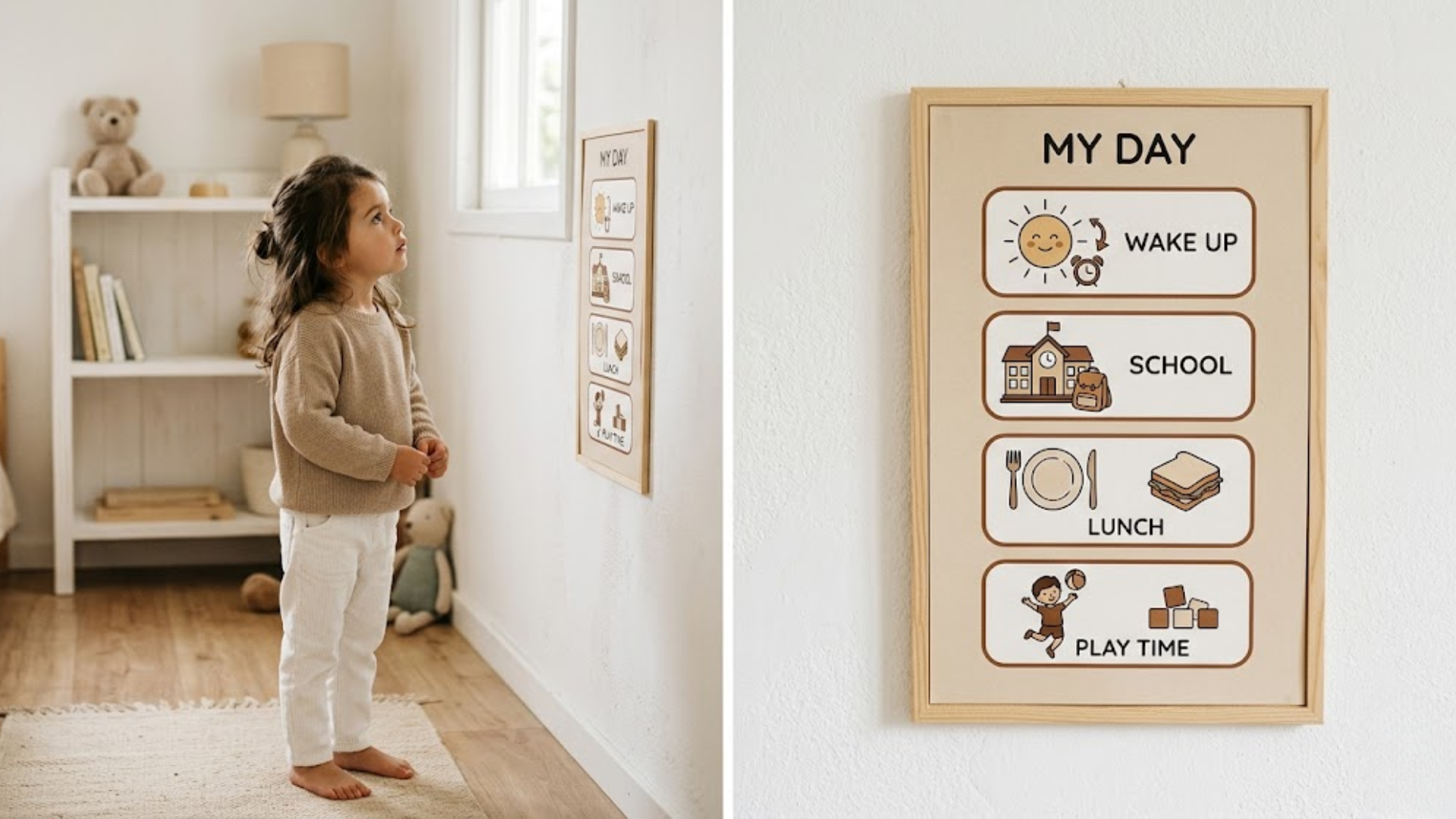
Supporting children through this stage requires patience, consistency, and structured strategies. These approaches are often guided by applied behavior analysis, a well-established method for supporting children on the spectrum.
Here are some practical strategies for parenting with autism:
1. Use Visual Supports
Visual aids help children understand expectations more clearly than verbal instructions alone.
- Use picture schedules for daily routines
- Show step-by-step visuals for tasks
- Use symbols to explain safety rules (e.g., “hot,” “stop,” “danger”)
2. Keep Language Simple and Direct
Children may interpret language literally, so clarity is essential.
- Avoid sarcasm or figurative expressions
Use direct phrases like:
- “Stand here” instead of “Wait a second.”
- “Walk slowly” instead of “Don’t run like that.”
This reduces confusion and improves communication.
3. Reinforce Positive Behavior
Positive reinforcement is a core principle of applied behavior analysis.
- Praise specific actions (“Great job sitting calmly!”)
- Reward effort, not just outcomes
- Encourage repetition of positive behaviors
4. Allow Time to Adjust
Transitions take time, especially during autism school transition challenges.
- Introduce new routines gradually
- Provide advance notice before changes
- Maintain consistency at home and school
5. Use Sensory Supports
Sensory tools can help children regulate their emotions in overwhelming environments.
Examples include:
- Soft toys or comfort objects
- Noise-canceling headphones
- Fidget tools or calming items
These supports help children feel safe and grounded.
6. Seek Professional Support When Needed
Working with an ABA therapist can provide structured strategies tailored to your child’s needs.
If you are searching for autism centers near me, look for providers who offer individualized programs and family involvement. Early and consistent support can improve communication, behavior, and independence.
Conclusion
Ages 5–6 are a significant developmental phase for children on the autism spectrum, especially as they transition into structured school environments. During this time, many children experience noticeable behavioral changes due to new routines, social expectations, and communication challenges. These behaviors are often expressions of overwhelm rather than intentional misbehavior.
You don’t have to navigate this alone; you can connect with a qualified ABA therapist or explore trusted autism centers near you!
Explore More
How Early Autism Services Is Expanding Access to ABA Therapy for Families
Accessing ABA therapy can feel overwhelming for families, especially when navigating service options, insurance, Medicaid, and the intake process. Early Autism Services works to make ABA therapy more accessible by offering different service settings, supporting families through insurance and intake, and providing individualized care based on each child’s needs.


Behavior Is Communication: Understanding What Your Autistic Child May Be Telling You
Behavior can be an important form of communication, especially when a child cannot easily express their needs in words. This parent-friendly guide explores what an autistic child’s behavior may be communicating, how to recognize possible triggers and patterns, and supportive ways to build functional communication skills.
Positive Behavior Support Strategies for Children with Autism
Positive behavior support focuses on understanding why behaviors happen and helping children develop effective ways to communicate their needs. This parent-friendly guide explores practical strategies for identifying triggers, creating predictable routines, reinforcing positive skills, supporting transitions, and encouraging communication at home.


