How EAS Keeps Your Child’s Reports Confidential: A Deep Dive into Our Process
Early Autism Services prioritizes confidentiality by ensuring every child’s therapy report and personal data are kept secure, private, and accessible only to authorized professionals. Through strict privacy practices, secure systems, and transparent communication with families, EAS builds trust with parents while safeguarding sensitive information so that you can focus on your child’s progress with complete peace of mind.

Introduction
When parents choose Early Autism Services (EAS), they are trusting us with some of the most sensitive and personal information about their child. From therapy progress reports to evaluation results, these documents hold important details about a child’s journey. Naturally, parents want to know: Who sees this information? How is it stored? Is it truly safe?
In this blog, we’ll walk you through exactly how EAS protects your child’s reports and personal information, the ethical and legal standards we follow, and why confidentiality is at the heart of everything we do.
Why Confidentiality Matters in Autism Care
For many families, starting therapy is a big step. Reports and assessments often include sensitive details, not just about a child’s development, but also about medical history, behavioral challenges, and family background. Protecting this information is critical for two reasons:
- Trust between families and providers: Parents need to feel confident that private details remain private.
- Protecting the child’s dignity and safety: Confidential records ensure that your child’s personal information does not end up in the wrong hands.
At EAS, we recognize that confidentiality isn’t just about compliance, it’s about showing families that their trust in us is well-placed.
The Legal & Ethical Framework (Simplified)
Confidentiality in therapy isn’t optional; it’s a requirement. EAS follows all relevant laws and regulations that govern how health and therapy information is stored and shared.
- HIPAA compliance: Just like a doctor’s office, we handle reports and health information under strict privacy standards.
- Ethical responsibility: Beyond laws, our therapists and staff are trained to uphold confidentiality as part of their professional code of ethics.
- Parental consent: No report or personal information is ever shared outside of your child’s care team unless you provide permission, or it is legally required.
In short: your child’s reports are treated with the highest level of security and respect.
How EAS Protects Your Child’s Data

Here’s a closer look at the safeguards in place to protect your child’s information:
- Secure storage systems: Reports and data are stored in secure digital systems designed to keep information private.
- Restricted access: Only authorized staff who are directly involved in your child’s care can access their records.
- Trained professionals: Every team member is trained on confidentiality protocols and understands the importance of protecting client information.
- No unnecessary sharing: Your child’s reports are not shared with schools, agencies, or other parties unless you request it or the law requires it.
Our Commitment to Privacy and Compliance
We know that parents don’t always want to sift through lengthy legal documents to understand how their data is handled. That’s why we’ve made our Privacy Policy simple:
- Your information is kept private: Details shared with us, whether online or in therapy, are protected and never shared without your consent (unless required by law).
- Medical information is handled with care: Any diagnostic or medical information is treated with strict confidentiality.
- Data is used only to serve your child: We use the information you provide solely to deliver and improve services.
- Transparency: We follow federal and state laws on data protection and update our practices regularly.
For families who would like to read the full version, you can always review our official Privacy Policy.
Open Communication with Families

We believe that confidentiality also means being transparent with you as parents. That’s why we:
- Explain how your child’s reports are used and who will see them.
- Make sure parents know they can request copies of their child’s records.
- Encourage families to ask questions about data security at any time.
We also want to be clear that information submitted through our website does not create a medical record or patient relationship. Formal records are created only when your child begins services with EAS, ensuring that sensitive data is always properly protected.
What This Means for You as a Parent

For you, this all adds up to peace of mind. Choosing therapy for your child is a big decision, one that requires full trust. With EAS, you can feel confident that:
- Your child’s reports are private and secure.
- Information is only shared with people directly involved in their care.
- You have full control and transparency over how your child’s data is used.
Protecting your child’s confidentiality isn’t just part of our process, it’s part of our promise to every family we work with.
Conclusion
At EAS, confidentiality goes beyond compliance; it’s about building trust and safeguarding your family’s journey. From the moment you share information with us, through every step of therapy, we treat your child’s reports with the highest level of security and care.
If you’re ready to explore how we can support your child while ensuring their information stays safe, we invite you to learn more about our Services or request a Consultation.
Your child’s growth and privacy will always remain our top priorities.
Frequently Asked Questions (FAQs)

1. Who can see my child’s ABA therapy reports at EAS?
Only professionals directly involved in your child’s care have access to their reports. This includes your therapy team and supervising clinicians. Information is never shared outside of EAS unless you provide written consent or it is required by law.
2. Are my child’s reports kept confidential if I request school collaboration?
Yes. If you ask us to share reports with your child’s school, we do so only with your permission. We ensure the information is shared securely and only with the designated staff members you approve.
3. Does EAS share client information with third parties?
No, EAS does not sell or share personal data with third parties for marketing purposes. Reports and sensitive information are used solely to deliver and improve your child’s services.
4. How does EAS store client reports securely?
Reports are stored in secure, password-protected systems. Access is restricted to trained professionals who are responsible for your child’s care.
Explore More

Behavior Is Communication: Understanding What Your Autistic Child May Be Telling You
Behavior can be an important form of communication, especially when a child cannot easily express their needs in words. This parent-friendly guide explores what an autistic child’s behavior may be communicating, how to recognize possible triggers and patterns, and supportive ways to build functional communication skills.

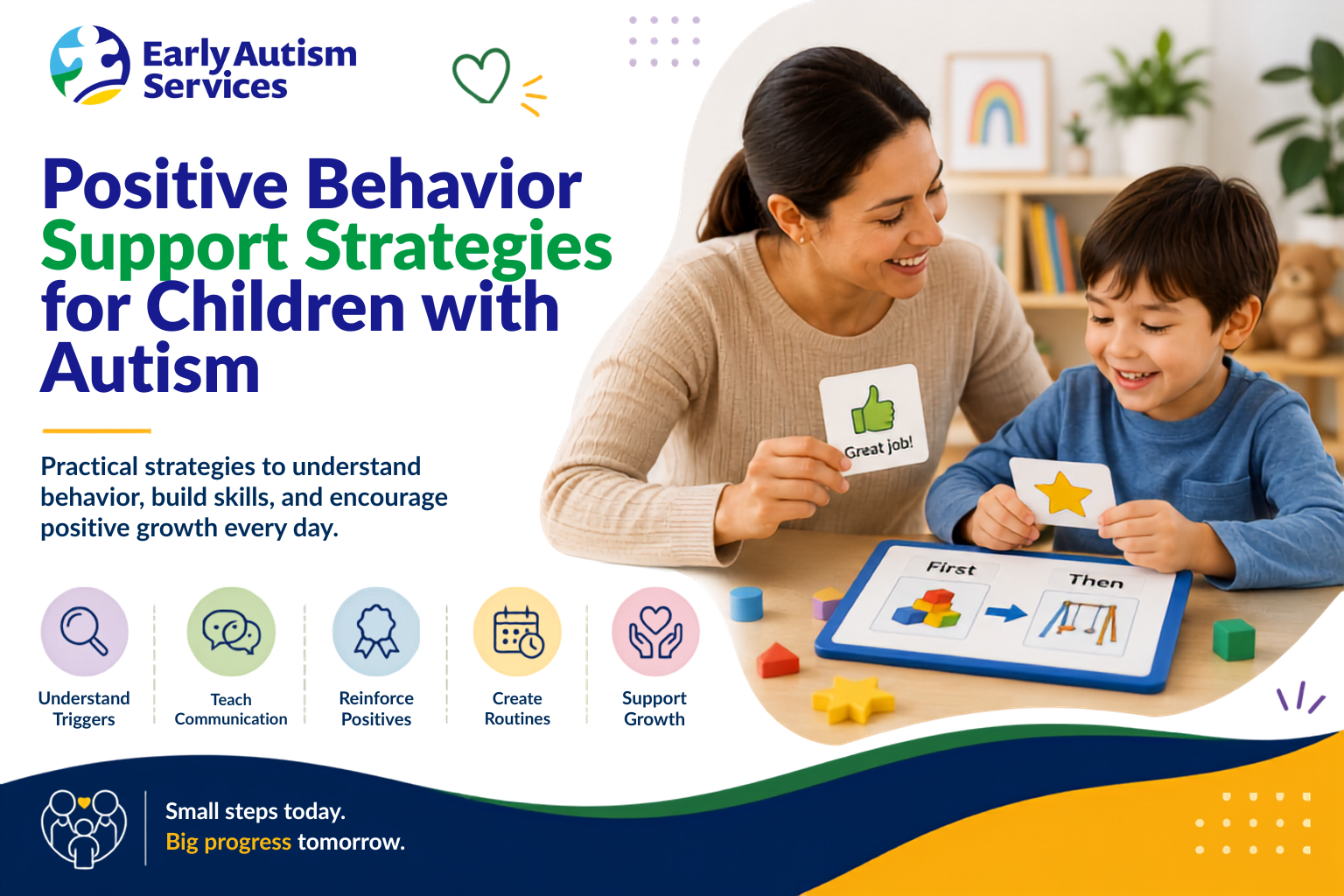
Positive Behavior Support Strategies for Children with Autism
Positive behavior support focuses on understanding why behaviors happen and helping children develop effective ways to communicate their needs. This parent-friendly guide explores practical strategies for identifying triggers, creating predictable routines, reinforcing positive skills, supporting transitions, and encouraging communication at home.
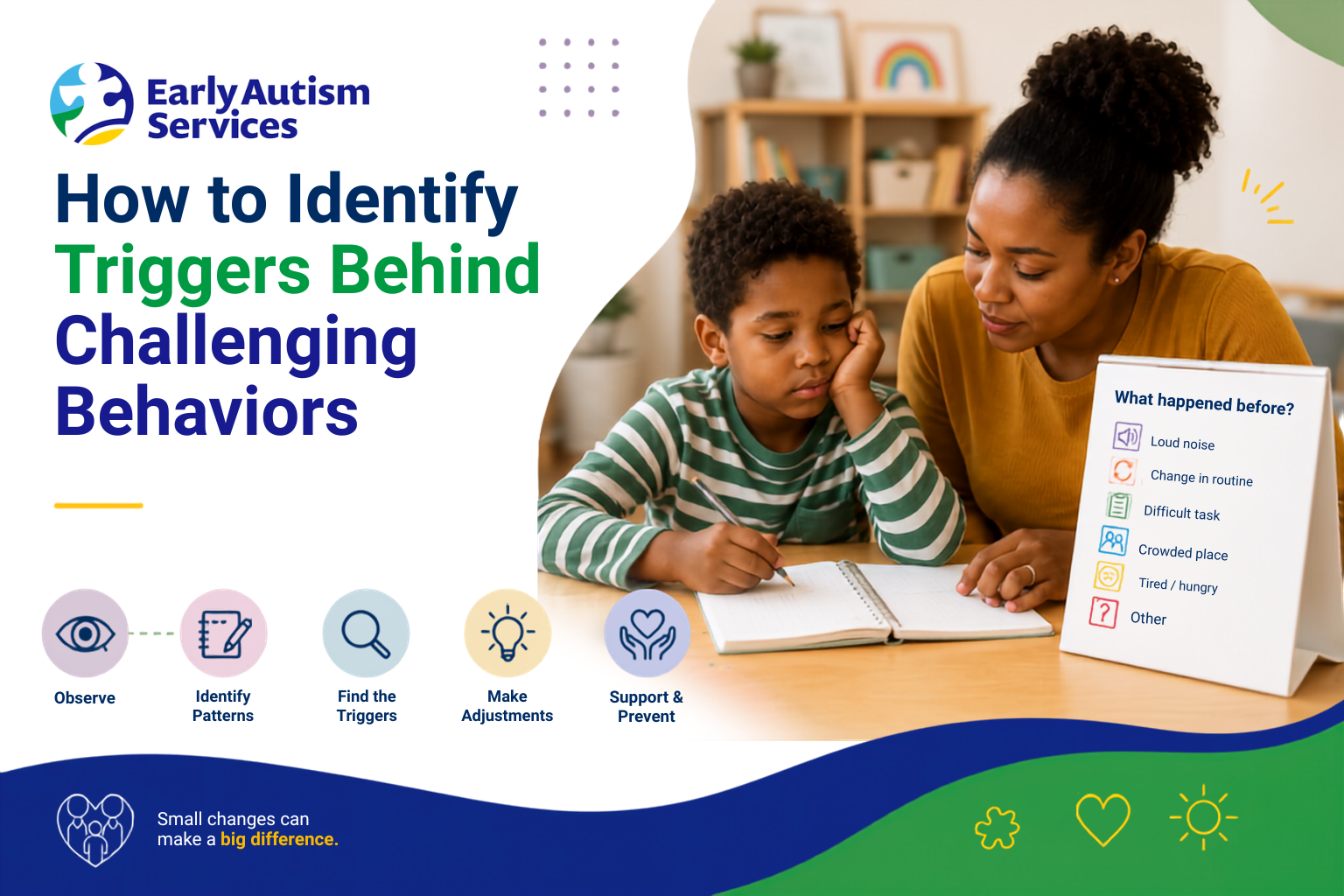
How to Identify Triggers Behind Challenging Behaviors
Challenging behaviors often have a trigger, even when they seem unpredictable. This parent-friendly guide explains how to recognize common autism behavior triggers, use the ABC method to spot patterns, and make supportive adjustments that can reduce stress and help children feel more understood.


