How ABA Therapy Supports Success in the Classroom
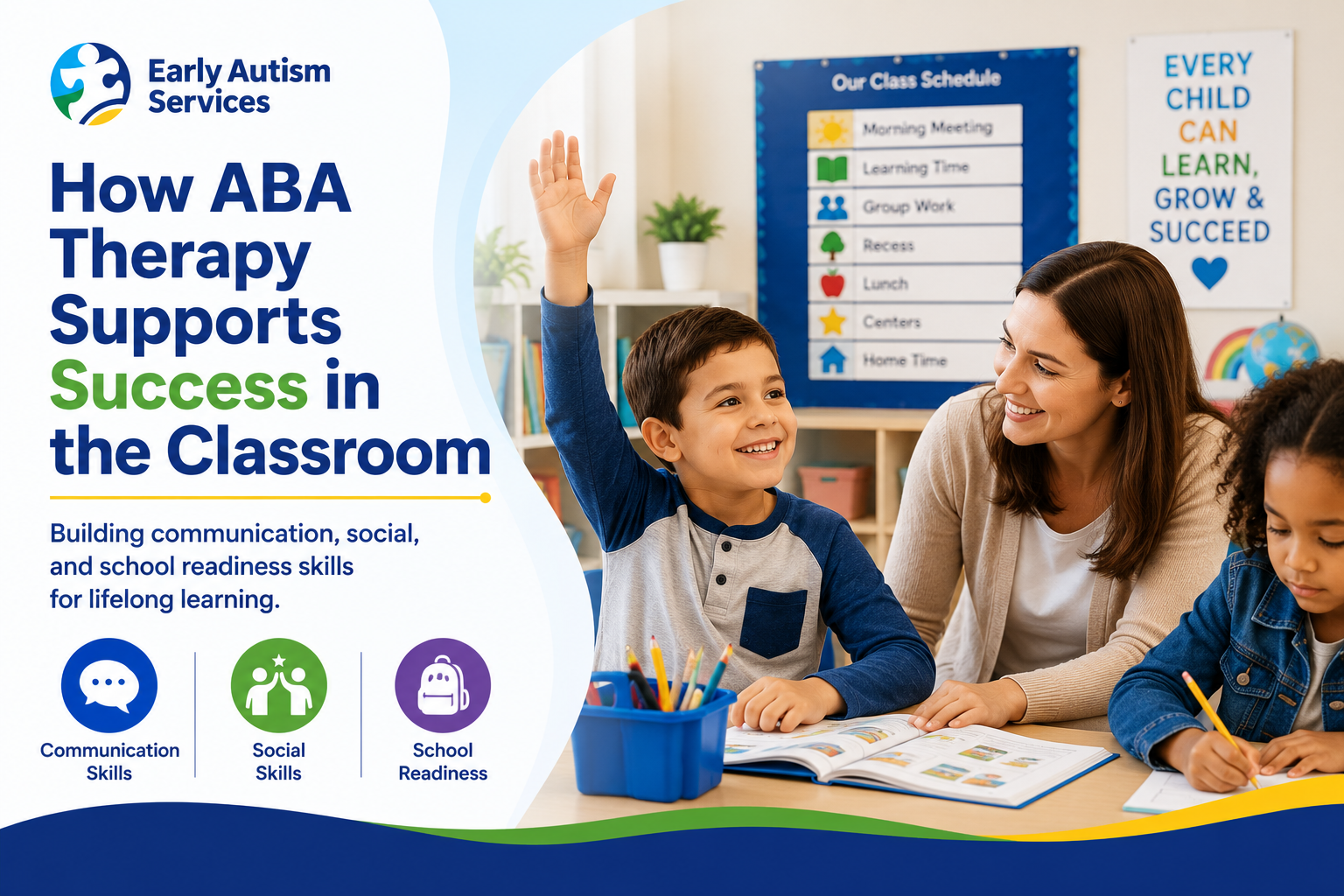
School success involves much more than academic skills. Children need strong communication, social, behavioral, and self regulation skills to participate confidently in the classroom. This blog explores how ABA therapy helps children develop these foundational abilities, including following routines, building friendships, communicating effectively, managing transitions, and staying engaged in learning activities. It also highlights the importance of collaboration between families, teachers, and therapists to create consistency across environments. By supporting school readiness and developmental growth, ABA therapy can help children build the skills they need to thrive both in and out of the classroom.
How ABA Therapy Supports Success in the Classroom
For many parents, school brings a mix of excitement and uncertainty.
You want your child to learn, make friends, follow routines, and feel confident in the classroom. But if your child has autism or developmental differences, you may wonder whether they have the skills they need to thrive in a school environment.
Questions like these are common:
- Will my child be able to follow classroom routines?
- How can they build friendships with peers?
- What if they struggle with communication?
- How can they stay focused and engaged during lessons?
These concerns can feel overwhelming, but families do not have to navigate them alone.
One of the reasons many parents explore ABA therapy is because the skills children learn during therapy often support success not only during therapy sessions but also at school, at home, and in the community.
What Is ABA Therapy?
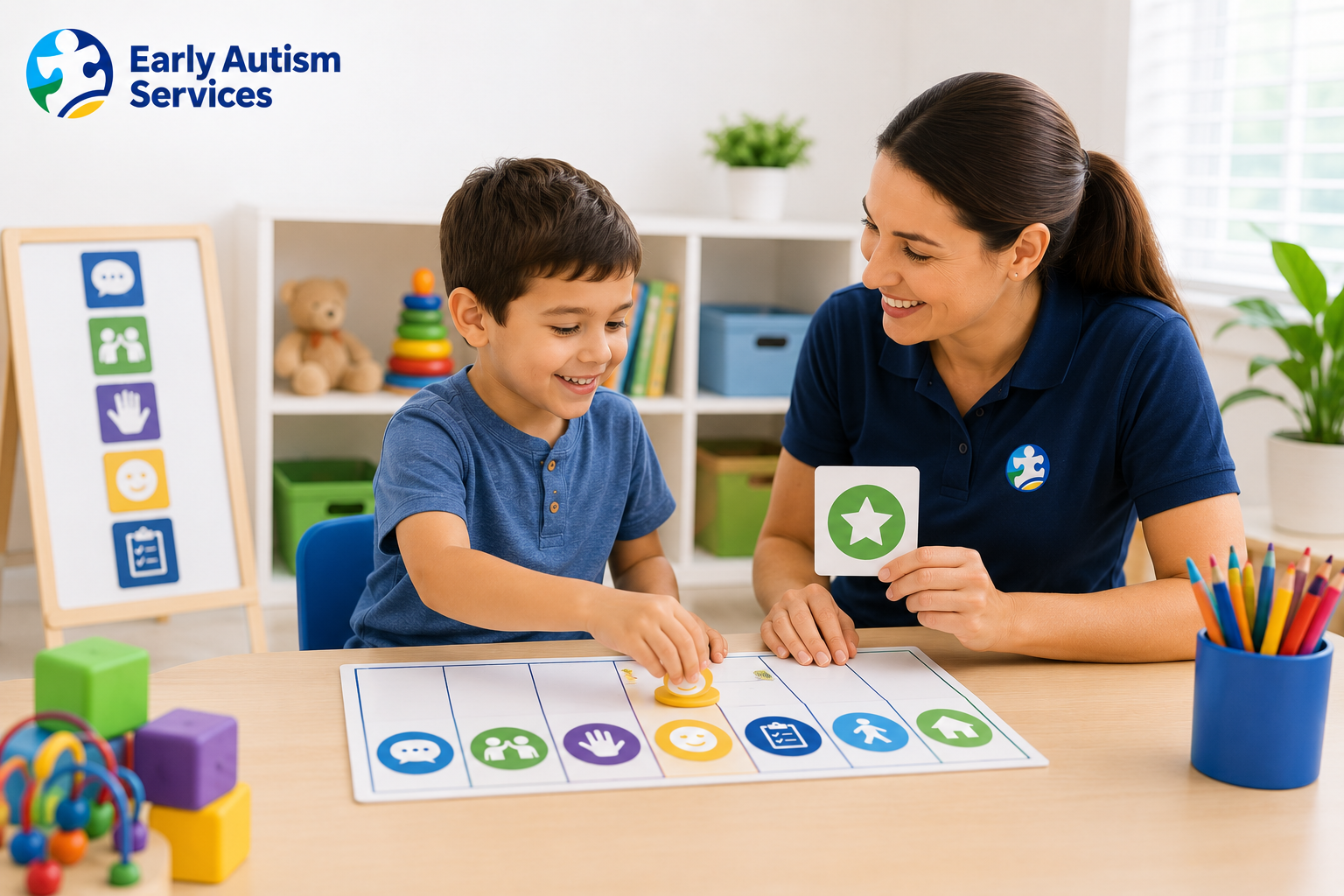
Applied Behavior Analysis (ABA) therapy is an evidence based approach that helps children develop meaningful skills through individualized teaching strategies and positive reinforcement.
Every child's program is tailored to their specific strengths, needs, and goals.
ABA therapy may focus on:
- Communication skills
- Social interaction
- Daily living skills
- Emotional regulation
- Play skills
- Following instructions
- Independence
Many of these same skills are important for success in the classroom.
Why School Success Starts Before Academic Learning
When parents think about school readiness, reading and math often come to mind first.
However, many children need foundational skills before they can fully participate in classroom learning.
These skills include:
- Listening to directions
- Sitting for group activities
- Transitioning between tasks
- Communicating needs
- Interacting with peers
- Managing emotions
For children with autism, these areas can sometimes present challenges.
ABA therapy helps break these skills into manageable steps and teaches them through consistent practice and support.
Parents who are still exploring developmental concerns may also find it helpful to read Developmental Milestones vs Autism: Understanding Early Signs in Toddlers to better understand how developmental differences can impact early learning, social development, and school readiness.
Building Communication Skills for the Classroom
Communication plays a major role in a child's school experience.
Children communicate throughout the day when they:
- Ask questions
- Request help
- Follow directions
- Participate in discussions
- Interact with classmates
Some children may struggle to express their needs, understand instructions, or engage in conversations.
ABA therapy often focuses on strengthening communication skills for children with autism by helping children learn how to:
- Request items or assistance
- Answer questions
- Follow verbal directions
- Initiate interactions
- Engage in conversations with others
Improved communication can help children feel more confident and connected in the classroom environment.
Supporting Social Skills and Peer Relationships
Making friends can be one of the most rewarding and challenging parts of school.
Many children with autism benefit from direct instruction in social skills for children with autism.
ABA therapy may help children learn how to:
- Take turns
- Share materials
- Join group activities
- Understand social cues
- Engage in cooperative play
- Build friendships
These skills can help children participate more comfortably in classroom and playground interactions.
Helping Children Follow Routines and Transitions
School days are filled with transitions.
Students move between:
- Class activities
- Learning centers
- Recess
- Lunch
- Specials
- Dismissal routines
For some children, unexpected changes or transitions can be difficult.
ABA therapy often teaches:
- Flexibility
- Transition strategies
- Following schedules
- Adapting to changes in routine
These skills can help reduce frustration and increase confidence throughout the school day.
Developing Attention and Learning Skills
Classrooms require children to engage with learning activities for extended periods of time.
ABA therapy may support:
- Attending to tasks
- Following multi step directions
- Completing activities
- Remaining engaged during instruction
- Working independently
These foundational skills often contribute to a child's ability to participate successfully in academic learning.
Supporting Emotional Regulation
Every child experiences frustration, disappointment, and big emotions.
School environments can sometimes be overwhelming because of:
- Noise
- Social demands
- Changes in routine
- Academic expectations
ABA therapy can help children develop coping strategies and self regulation skills that support success across settings.
Learning how to manage emotions can help children participate more comfortably and confidently throughout the school day.
How ABA Therapy and Schools Can Work Together
Children often make the greatest progress when the adults in their lives work together.
Collaboration between parents, teachers, and ABA providers can help create consistency across environments.
This may include:
- Sharing goals
- Discussing successful strategies
- Monitoring progress
- Supporting skill generalization
When children experience consistent expectations and support, they often have more opportunities to succeed.
Why Early Support Matters
Research and clinical experience consistently show that early intervention can be beneficial for many children.
The earlier children begin building foundational skills, the more opportunities they have to apply those skills across different environments, including school.
Skills developed through ABA therapy for school readiness may support:
- Communication
- Social interaction
- Independence
- Emotional regulation
- School readiness
Every child develops at their own pace, but early support can help create a strong foundation for future learning.
If you are unsure whether your child is meeting age appropriate milestones, we encourage you to explore our guide on Developmental Milestones vs Autism: Understanding Early Signs in Toddlers, which explains common developmental milestones and when it may be appropriate to seek further evaluation.
How We Support Families
At Early Autism Services, we work with families to help children develop meaningful skills that support success at home, in the community, and in school.
Our individualized ABA therapy for children with autism focuses on each child's unique strengths and developmental needs.
Explore support near you:
ABA Therapy in Richmond
https://www.earlyautismservices.com/locations/richmond
Autism Services in Hoffman Estates
https://www.earlyautismservices.com/locations/hoffman-estates
Early Intervention Services in Georgia
https://www.earlyautismservices.com/locations/duluth
Ready to Learn More?
If you are wondering whether ABA therapy and classroom success could benefit your child, we are here to help.
Contact Early Autism Services today to learn more about our ABA therapy programs and how we support children and families throughout their journey.
Frequently Asked Questions
Can ABA therapy help children succeed in school?
Yes. ABA therapy and classroom success often go hand in hand because therapy can help children build communication, social, behavioral, and learning skills that support participation in school environments.
Does ABA therapy focus only on behavior?
No. ABA therapy often supports a wide range of developmental goals, including communication, social interaction, emotional regulation, independence, and school success for children with autism.
Can ABA therapy help with social skills?
Yes. Many ABA programs include goals related to peer interactions, friendship building, turn taking, and cooperative play.
Is ABA therapy helpful before a child starts school?
Many families pursue ABA therapy for school readiness before preschool or kindergarten to help children build foundational skills and confidence.
Explore More

Behavior Is Communication: Understanding What Your Autistic Child May Be Telling You
Behavior can be an important form of communication, especially when a child cannot easily express their needs in words. This parent-friendly guide explores what an autistic child’s behavior may be communicating, how to recognize possible triggers and patterns, and supportive ways to build functional communication skills.

Positive Behavior Support Strategies for Children with Autism
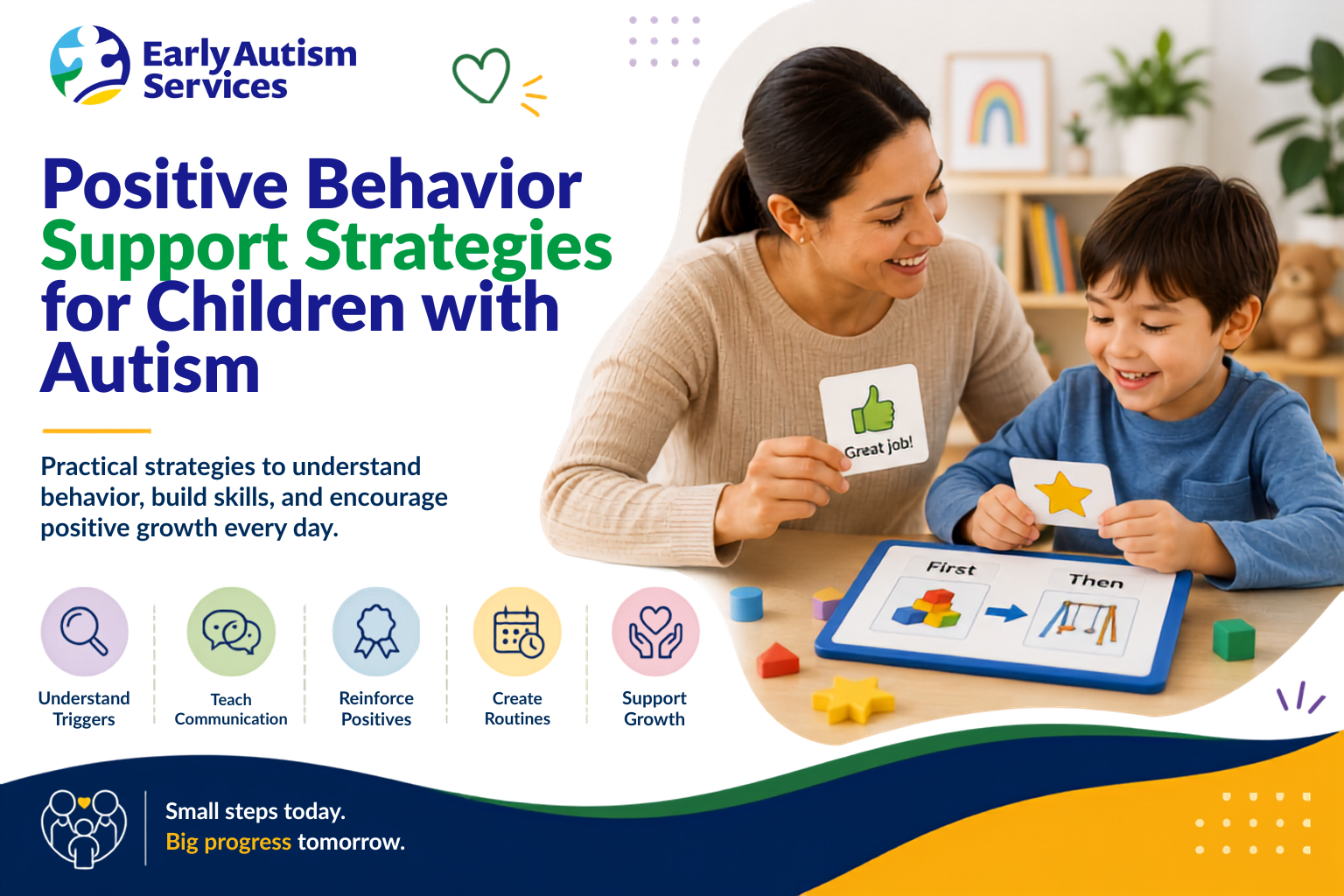
Positive behavior support focuses on understanding why behaviors happen and helping children develop effective ways to communicate their needs. This parent-friendly guide explores practical strategies for identifying triggers, creating predictable routines, reinforcing positive skills, supporting transitions, and encouraging communication at home.
How to Identify Triggers Behind Challenging Behaviors
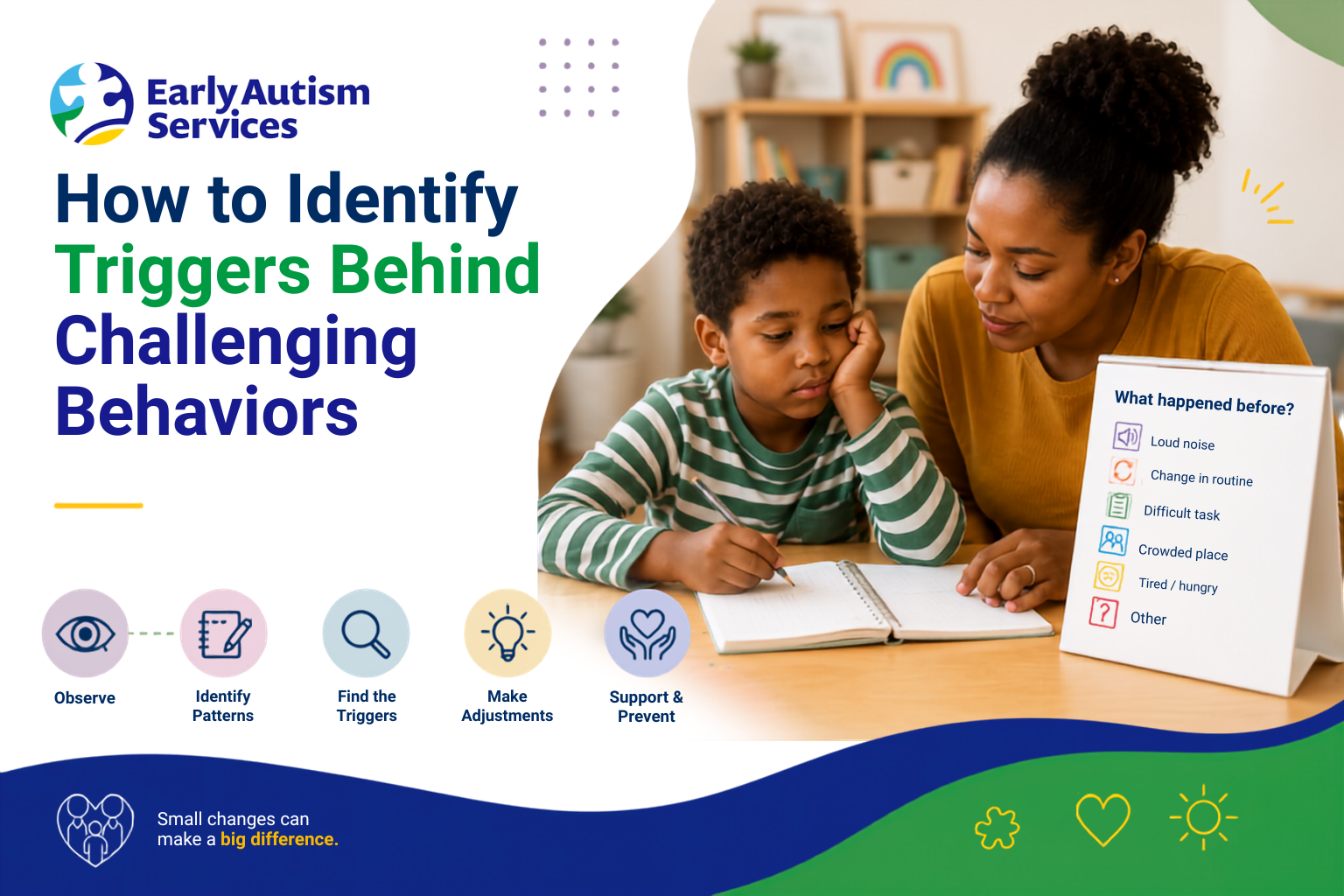
Challenging behaviors often have a trigger, even when they seem unpredictable. This parent-friendly guide explains how to recognize common autism behavior triggers, use the ABC method to spot patterns, and make supportive adjustments that can reduce stress and help children feel more understood.


