Does Insurance Cover ABA Therapy? A Parent’s Guide to Understanding Coverage
Understanding ABA therapy insurance coverage can help families make informed decisions about care. This guide explains what ABA therapy is, how insurance and Medicaid may cover services, factors that affect coverage, and questions to ask providers. Learn how to navigate benefits, authorizations, and access support for your child’s needs.

When families first begin exploring ABA therapy, one question often comes up almost immediately:
“Does insurance cover ABA therapy?”
And behind that question is usually something deeper:
“Can we actually afford the support our child needs?”
If you’ve been wondering the same thing, you’re not alone.
Understanding insurance coverage can feel confusing at first, especially when you’re already navigating evaluations, appointments, and emotions.
The good news is that most insurance plans today do provide coverage for ABA therapy, though the details can vary depending on your provider, state, and policy.
This guide will help you understand the basics in a simple, parent-friendly way.
What Is ABA Therapy?
Applied Behavior Analysis (ABA) therapy is a widely used approach that helps children build important life skills such as:
- Communication
- Social interaction
- Daily routines
- Emotional regulation
- Learning and behavior skills
ABA therapy is often recommended as part of early intervention services for autism because it focuses on individualized support and measurable progress.
So, Does Insurance Cover ABA Therapy?
In most cases, yes.
Most major insurance providers now offer some level of insurance coverage for ABA therapy, especially when it is considered medically necessary.
Coverage may include:
- ABA assessments
- One-on-one therapy sessions
- Parent training
- Treatment planning
However, coverage depends on factors such as:
- Your insurance plan
- State laws
- Provider network requirements
- Diagnosis documentation
Why Coverage Can Differ by State
Autism insurance laws vary across the United States.
Many states, including Michigan, Georgia, Oregon, Maryland, and Virginia, have laws that require certain insurance plans to provide autism-related coverage, including ABA therapy.
Still, each policy may have different:
- Age limits
- Session caps
- Approval requirements
- Copays or deductibles
That’s why families are often encouraged to verify benefits directly with their insurance provider.
What Does “Medically Necessary” Mean?
Insurance companies often require documentation showing that ABA therapy is medically necessary.
This usually includes:
- A formal autism diagnosis
- Developmental evaluations
- Recommendations from healthcare professionals
Once approved, families may receive authorization for ongoing therapy services.
What If Insurance Doesn’t Fully Cover ABA Therapy?
Sometimes plans may only partially cover services.
In those cases, families may explore:
- Out-of-pocket payment options
- Payment plans
- Secondary insurance
- Medicaid eligibility
- Flexible spending accounts (FSA/HSA)
Many providers also help families understand and navigate the insurance process.
Questions Parents Often Ask Insurance Providers
Before starting therapy, it can help to ask:
- Does my plan include ABA therapy insurance coverage?
- Is prior authorization required?
- Are there session limits?
- Do I need an in-network provider?
- What are my out-of-pocket costs?
Having these answers early can make the process feel much less overwhelming.
Why Early Access to Therapy Matters
For many children, early support can make a meaningful difference.
Access to ABA therapy for autism may help children:
- Improve communication skills
- Build independence
- Strengthen social interaction
- Develop everyday routines
That’s why families often begin exploring insurance coverage as soon as developmental concerns arise.
Support for Families Navigating ABA Coverage
At Early Autism Services, we understand that insurance questions can feel overwhelming.
That’s why our team helps families:
- Verify insurance benefits
- Understand coverage options
- Navigate authorizations
- Explore next steps for care
Families across Michigan, Georgia, Oregon, Maryland, and other states often begin with a simple conversation.
Explore support near you:
- ABA therapy in richmond : https://www.earlyautismservices.com/locations/richmond
- Autism services in hoffman estates: https://www.earlyautismservices.com/locations/hoffman-estates
- Early intervention in Georgia: https://www.earlyautismservices.com/locations/duluth
- ABA therapy in Illinois: https://www.earlyautismservices.com/locations/hoffman-estates
Need Help Understanding Your Insurance Benefits?
If you're unsure whether your insurance covers ABA therapy, you don’t have to figure it out alone.
Contact our team for guidance and support:
✔ Insurance verification assistance
✔ Parent-friendly guidance
✔ Clear next steps for families
FAQs
Does Medicaid cover ABA therapy?
In all states, Medicaid covers ABA therapy services for eligible children, though benefits vary by state.
Do all insurance plans cover ABA therapy?
Not all plans provide the same coverage. Benefits depend on your provider, policy, and state regulations.
Do I need an autism diagnosis for ABA therapy coverage?
Most insurance companies require a formal diagnosis and documentation showing medical necessity.
Explore More
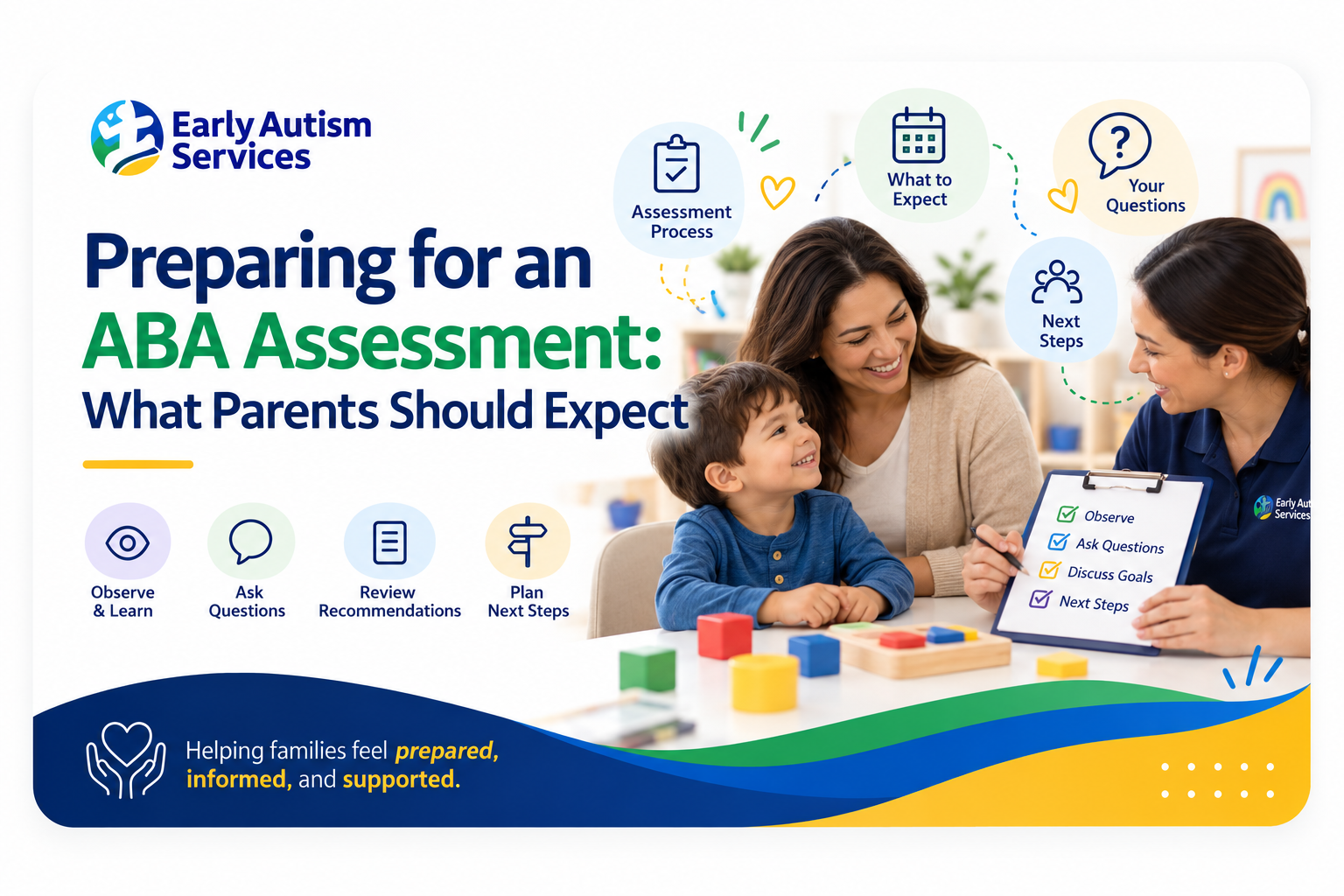
Preparing for an ABA Assessment: What Parents Should Expect
Accessing ABA therapy can feel overwhelming for families, especially when navigating service options, insurance, Medicaid, and the intake process. Early Autism Services works to make ABA therapy more accessible by offering different service settings, supporting families through insurance and intake, and providing individualized care based on each child’s needs.

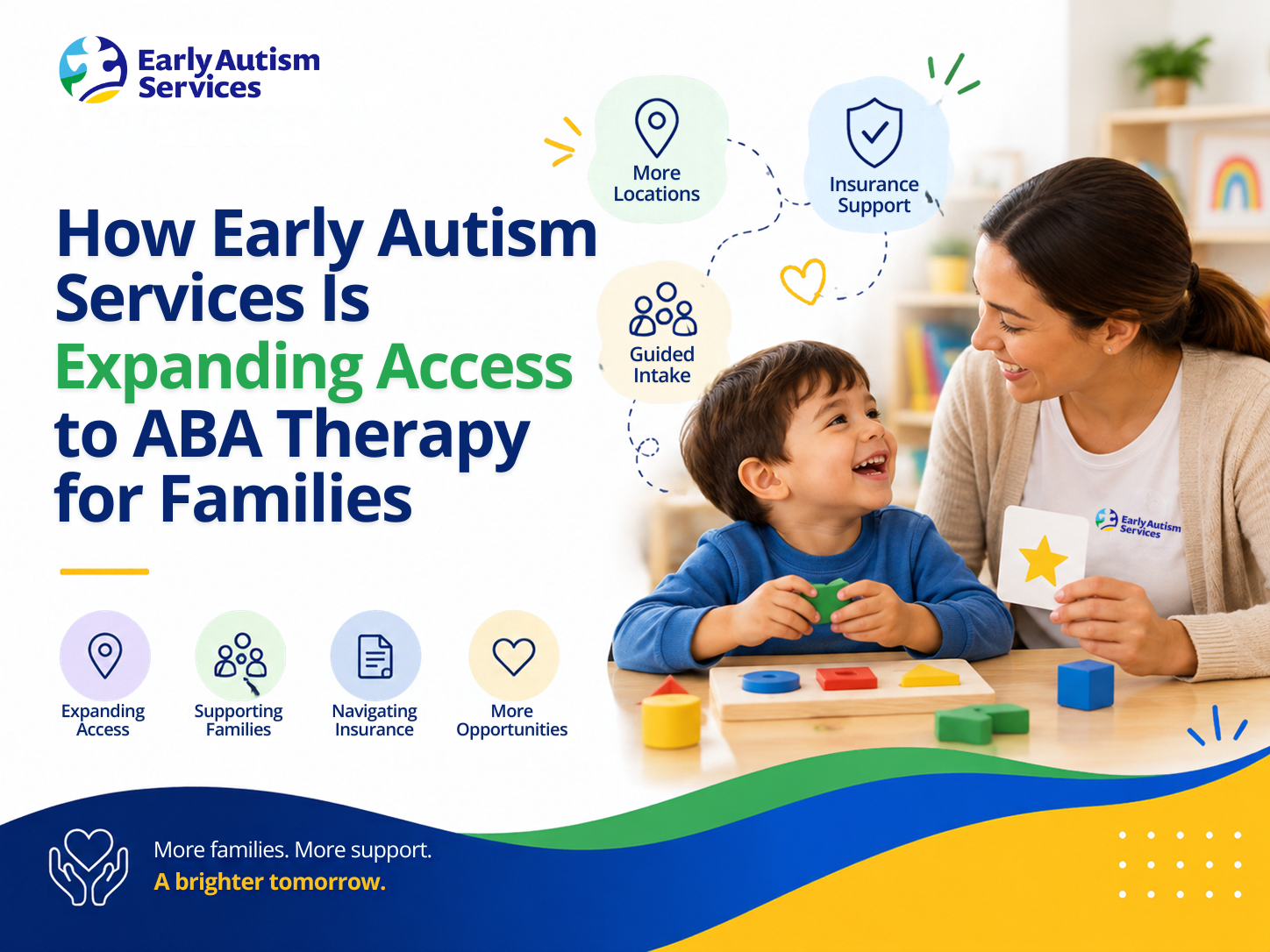
How Early Autism Services Is Expanding Access to ABA Therapy for Families
Accessing ABA therapy can feel overwhelming for families, especially when navigating service options, insurance, Medicaid, and the intake process. Early Autism Services works to make ABA therapy more accessible by offering different service settings, supporting families through insurance and intake, and providing individualized care based on each child’s needs.

Behavior Is Communication: Understanding What Your Autistic Child May Be Telling You
Behavior can be an important form of communication, especially when a child cannot easily express their needs in words. This parent-friendly guide explores what an autistic child’s behavior may be communicating, how to recognize possible triggers and patterns, and supportive ways to build functional communication skills.


