Preparing for an ABA Assessment: What Parents Should Expect
Accessing ABA therapy can feel overwhelming for families, especially when navigating service options, insurance, Medicaid, and the intake process. Early Autism Services works to make ABA therapy more accessible by offering different service settings, supporting families through insurance and intake, and providing individualized care based on each child’s needs.
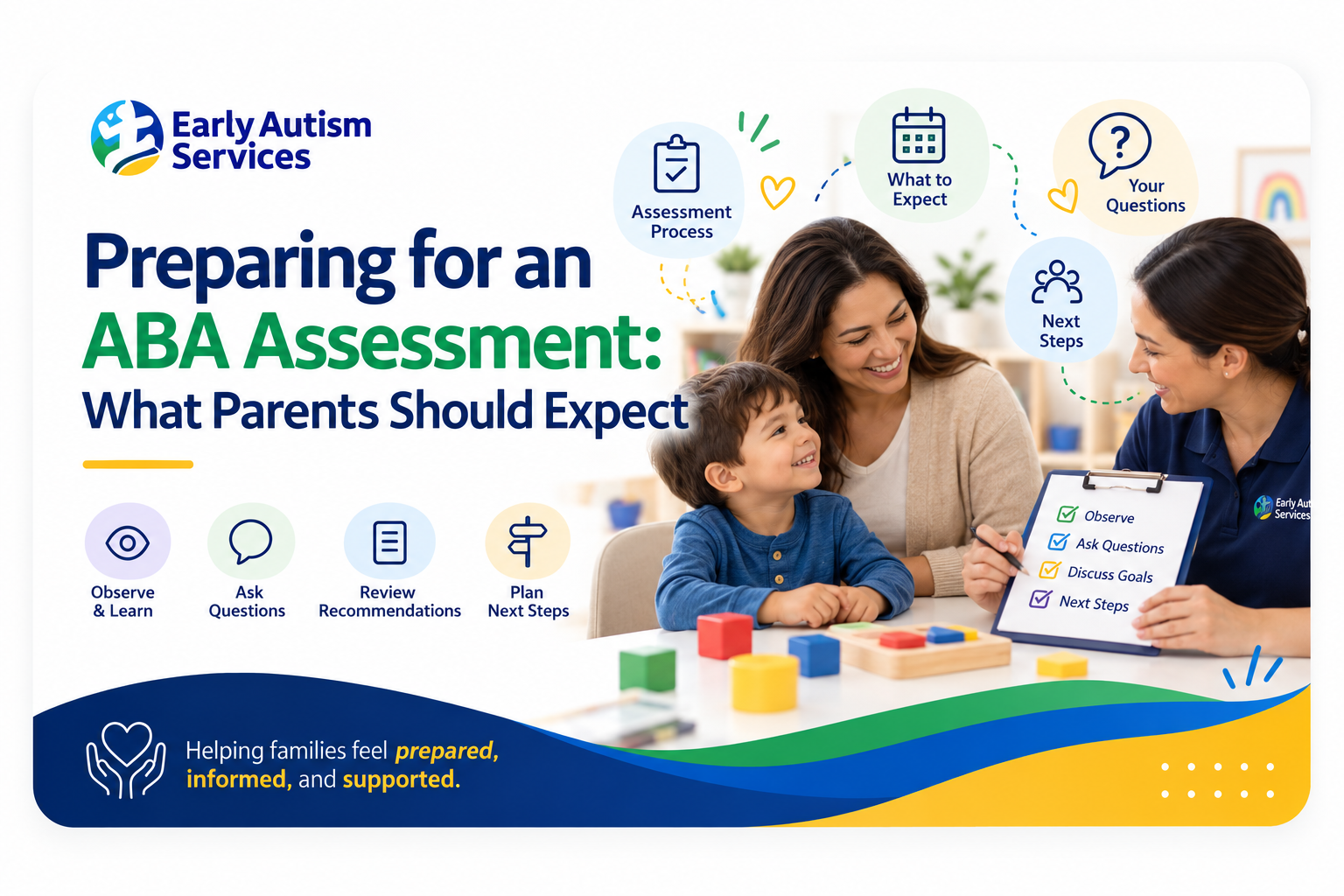
Preparing for an ABA Assessment: What Parents Should Expect
Starting the ABA therapy process can bring a lot of questions for families. One of the first steps is typically an ABA assessment, which helps the clinical team understand your child’s strengths, needs, communication style, daily routines, and areas where additional support may be helpful.
The assessment is not a test your child has to “pass.” Instead, it is an opportunity for the care team to learn more about your child and begin developing an individualized treatment plan.
For families considering services, knowing what to expect can make the process feel more manageable.
What Is an ABA Assessment?
An ABA assessment is a structured evaluation completed before or at the beginning of Applied Behavior Analysis therapy.
A Board Certified Behavior Analyst (BCBA) may gather information about your child’s:
- Communication skills
- Social interactions
- Play skills
- Daily living abilities
- Independence
- Learning skills
- Behavior patterns
- Strengths and interests
- Family routines and priorities
The goal is to understand where your child is currently functioning and identify meaningful areas for support.
Every child is different, so the assessment process should be individualized rather than based on a one-size-fits-all checklist.
What Happens Before the Assessment?
Before meeting with your child, the ABA provider may ask parents or caregivers to complete paperwork and provide background information.
This may include:
- Developmental history
- Medical information
- Previous evaluations
- Autism diagnosis documentation
- School or therapy records
- Current medications
- Insurance information
- Information about behaviors or concerns
- Family priorities and goals
You may also be asked questions about what a typical day looks like for your child.
This can help the BCBA understand routines such as meals, playtime, school, bedtime, transitions, and community activities.
Parents do not need to have all the answers. The assessment process is designed to gather information over time.
Expect a Parent or Caregiver Interview
A caregiver interview is often an important part of the ABA assessment.
The BCBA may ask about your child’s strengths as well as areas that are challenging.
Questions may include:
- How does your child communicate what they want or need?
- What activities do they enjoy?
- How do they respond to transitions?
- Are there situations that commonly lead to frustration?
- How independent are they with everyday routines?
- What behaviors are most concerning for the family?
- What skills would make daily life easier?
- What are your biggest priorities for therapy?
This conversation helps ensure that treatment goals are relevant to your child and family.
It can be helpful to think ahead about the routines or situations you would most like support with.
The BCBA May Observe Your Child
During the assessment, the BCBA may spend time observing and interacting with your child.
This may look like play, conversation, simple activities, or everyday routines rather than a formal test environment.
The clinician may observe how your child:
- Requests preferred items
- Responds to instructions
- Plays with toys
- Communicates
- Interacts with others
- Handles waiting
- Transitions between activities
- Responds when something is difficult
- Completes age-appropriate tasks
The goal is to see your child’s current skills in a natural and supportive setting.
Parents should not feel that they need to prepare their child to “perform well.” Seeing your child’s typical behavior can actually provide more useful information.
Behavior May Be Discussed in More Detail
If challenging behaviors are one of the reasons your family is seeking ABA therapy, the BCBA may ask detailed questions about when and where those behaviors occur.
For example, the clinician may ask:
- What usually happens immediately before the behavior?
- What does the behavior look like?
- How often does it happen?
- How long does it typically last?
- What usually happens afterward?
- Are there common triggers?
- Does the behavior happen more often during certain activities or transitions?
This information can help the BCBA begin identifying patterns and possible reasons behind the behavior.
The purpose is not to blame the child or caregiver. It is to better understand what the child may be communicating or trying to accomplish.
Your Child's Strengths Matter Too
ABA assessments should not focus only on difficulties.
Understanding a child’s strengths, preferences, interests, and existing skills is equally important.
A child may have strong visual skills, enjoy music, show curiosity about numbers, love physical play, or be highly motivated by particular toys or activities.
These interests can be incorporated into therapy and used to make learning more engaging.
Recognizing strengths also helps the treatment team build goals around what the child can already do.
How Treatment Goals Are Developed
After gathering information, the BCBA may identify areas where ABA therapy could provide support.
Depending on your child’s needs, goals may involve:
- Functional communication
- Social skills
- Following everyday routines
- Requesting help or breaks
- Increasing independence
- Managing transitions
- Building play skills
- Improving safety skills
- Developing coping strategies
- Reducing behaviors that interfere with learning or daily life
Goals should be measurable, individualized, and meaningful for your child.
Parents should also have the opportunity to discuss whether the proposed goals align with their priorities.
What Should Parents Bring?
Requirements vary by provider, but families may find it helpful to have:
- Diagnostic reports
- Relevant medical records
- Previous therapy evaluations
- School reports or IEP documents
- Insurance information
- A list of medications
- Notes about behaviors or routines you want to discuss
- Questions for the BCBA
If your child has preferred toys, snacks, communication tools, or an AAC device, bringing those items may also help them feel more comfortable.
Questions Parents Can Ask During the Assessment
The assessment is also your opportunity to learn about the ABA provider.
Consider asking questions such as:
- What will therapy focus on?
- How are goals selected?
- How will progress be measured?
- How often are treatment plans reviewed?
- How are parents involved?
- Who will work directly with my child?
- How is caregiver training provided?
- How are challenging behaviors addressed?
- How do you support communication and independence?
- How many hours of therapy might be recommended?
You should feel comfortable asking for clarification if anything is unclear.
What Happens After the Assessment?
After the assessment, the BCBA typically reviews the information collected and develops recommendations.
This may include a proposed treatment plan outlining:
- Therapy goals
- Recommended service hours
- Strategies that may be used
- Parent or caregiver training goals
- How progress will be measured
Depending on your insurance plan, the treatment plan may also need to be submitted for authorization before services begin.
Your provider should explain the next steps and let you know whether any additional documentation is needed.
How Long Does an ABA Assessment Take?
The length of an assessment can vary depending on your child’s needs, the type of assessment being used, insurance requirements, and the amount of information that needs to be gathered.
Some assessments may take place during one longer appointment, while others may involve multiple meetings, observations, or interviews.
It is normal for the process to look slightly different from one family to another.
How Parents Can Prepare
You do not need to teach your child specific skills before an assessment.
Instead, focus on helping the clinical team see an accurate picture of your child’s everyday needs.
A few simple ways to prepare include:
- Write down your main concerns
- Think about your top priorities for therapy
- Gather relevant records
- Make note of common triggers or difficult routines
- Bring communication supports your child regularly uses
- Ask questions whenever something is unclear
The more information families and clinicians can share with one another, the easier it is to develop meaningful treatment goals.
Looking for ABA Therapy With No Waitlist?
If your family is ready to begin the ABA process, long waitlists can make it harder to access support when you need it.
Early Autism Services currently offers no-waitlist ABA therapy in select locations, including Illinois, Virginia, Michigan, Idaho, and Bend, Oregon.
Availability may vary, so families can contact Early Autism Services to learn more about assessment appointments and current openings in their area.
Closing Thoughts
An ABA assessment is the starting point for understanding your child’s individual needs and building a personalized treatment plan.
Parents should expect a combination of caregiver discussion, observation, skill assessment, and goal planning. Most importantly, the process should be collaborative.
By sharing information about your child’s strengths, challenges, routines, and family priorities, you can help the care team develop goals that support meaningful progress in communication, independence, safety, and everyday life.
Ready to Get Started?
If you are considering ABA therapy for your child, Early Autism Services can help guide your family through the assessment and treatment process.
Contact Early Autism Services today to ask about ABA assessments and no-waitlist availability in select locations.
Explore More
Preparing for an ABA Assessment: What Parents Should Expect
Accessing ABA therapy can feel overwhelming for families, especially when navigating service options, insurance, Medicaid, and the intake process. Early Autism Services works to make ABA therapy more accessible by offering different service settings, supporting families through insurance and intake, and providing individualized care based on each child’s needs.

How Early Autism Services Is Expanding Access to ABA Therapy for Families
Accessing ABA therapy can feel overwhelming for families, especially when navigating service options, insurance, Medicaid, and the intake process. Early Autism Services works to make ABA therapy more accessible by offering different service settings, supporting families through insurance and intake, and providing individualized care based on each child’s needs.

Behavior Is Communication: Understanding What Your Autistic Child May Be Telling You
Behavior can be an important form of communication, especially when a child cannot easily express their needs in words. This parent-friendly guide explores what an autistic child’s behavior may be communicating, how to recognize possible triggers and patterns, and supportive ways to build functional communication skills.


