How Early Autism Services Is Expanding Access to ABA Therapy for Families
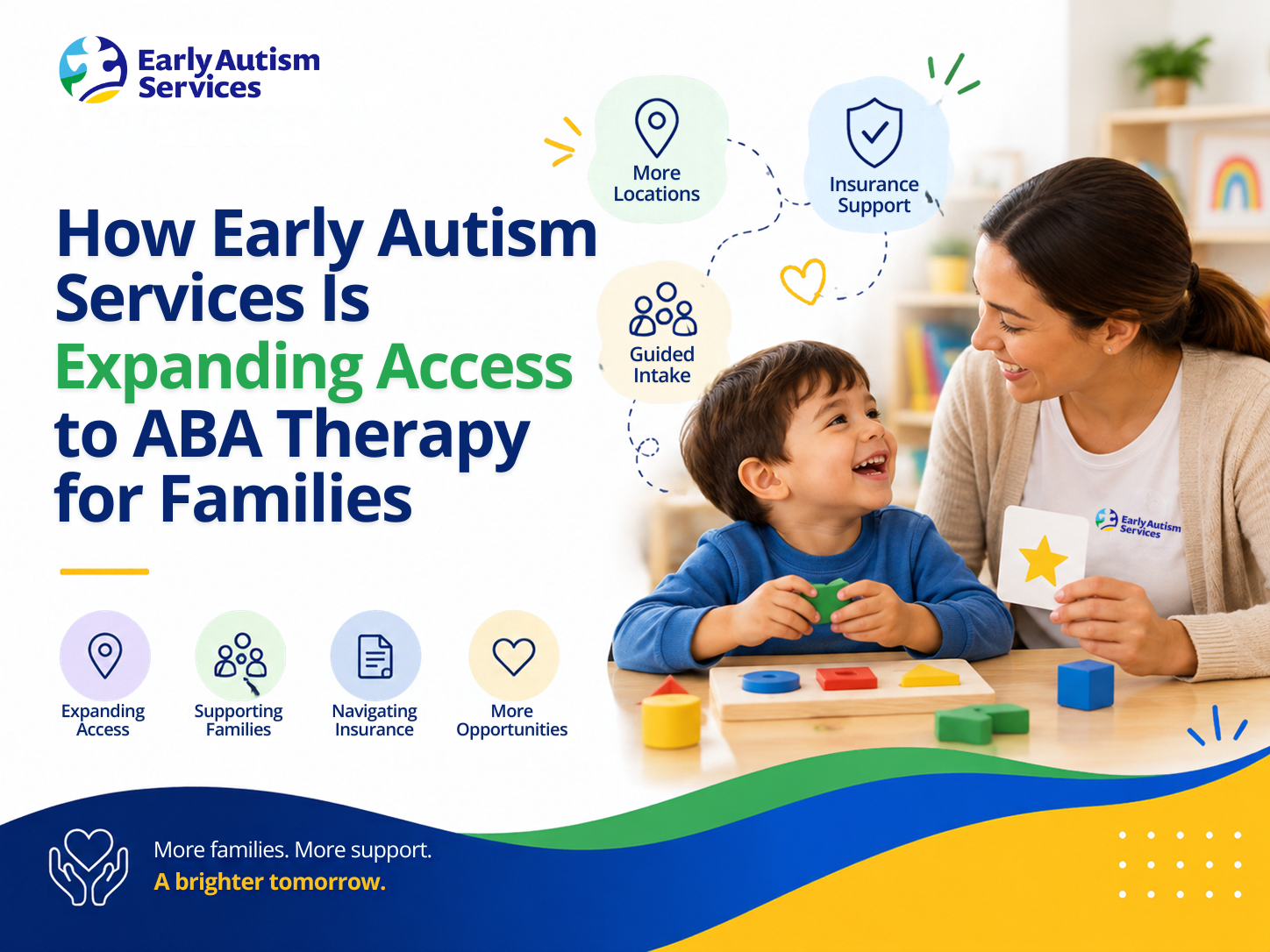
Accessing ABA therapy can feel overwhelming for families, especially when navigating service options, insurance, Medicaid, and the intake process. Early Autism Services works to make ABA therapy more accessible by offering different service settings, supporting families through insurance and intake, and providing individualized care based on each child’s needs.
Finding the right ABA therapy provider is not always simple.
For many families, access depends on more than whether a provider is nearby. Parents may also need to understand which therapy settings are available, whether insurance will cover services, if Medicaid is accepted, what the intake process looks like, and how quickly they can get support.
At Early Autism Services, expanding access to ABA therapy means helping reduce some of those barriers. By offering different service settings, working with insurance providers, participating in Medicaid programs where applicable, and guiding families through intake, EAS aims to make the process of getting started feel clearer and more manageable.
Access Looks Different for Every Family
No two families have the same needs, routines, or circumstances.
For one family, a center-based ABA program may provide the structure and learning environment their child needs. For another, in-home therapy may make more sense because skills can be practiced within everyday routines.
That is why access to ABA therapy should not be limited to one type of setting.
Depending on the location and availability, Early Autism Services provides ABA therapy through different service models, including:
- Center-based ABA therapy
- In-home ABA therapy
- School-based support where available
- Community-based services where available
- Caregiver training and family support
Offering different settings can help families find an option that better fits their child’s needs, schedule, and everyday life.
Bringing ABA Therapy Closer to Families
For families seeking ongoing therapy, distance can make a meaningful difference.
Regular travel to appointments can become difficult when the nearest provider is far from home, especially when therapy is part of a child’s weekly routine.
Early Autism Services continues to grow across communities in several states, helping more families explore ABA therapy closer to where they live.
EAS currently serves families across communities in states including Alabama, Georgia, Idaho, Illinois, Maryland, Michigan, Oregon, and Virginia, with services and availability varying by location.(mention the cities here)
Expansion also includes serving communities beyond the immediate city where a clinic is located. In some areas, in-home and community-based services may help families access support without needing to travel to a center for every session.

Helping Families Navigate Insurance Coverage
Understanding insurance can be one of the most confusing parts of starting ABA therapy.
Families may have questions such as:
- Does my insurance cover ABA therapy?
- Do I need a referral?
- Does my child need an autism diagnosis before services can begin?
- Will I have a copay or deductible?
- What information does the provider need from me?
Families should not have to figure out every step on their own.
The Early Autism Services team can help families understand the insurance verification process and what information may be needed before services begin.
Coverage varies depending on the family's individual insurance plan, location, and eligibility, so confirming benefits is an important part of the intake process.
Expanding Access Through Medicaid Where Available
For many families, Medicaid plays an important role in accessing autism services.
Early Autism Services participates with Medicaid programs in applicable locations, helping more families explore ABA therapy options that may be covered through their benefits.
Medicaid requirements and coverage differ by state, so families are encouraged to speak with the EAS intake team to understand what may be available in their area.
Rather than leaving families to navigate those questions alone, the goal is to provide clear information about coverage and next steps.
Making the Intake Process Easier to Understand
Reaching out for ABA therapy is often only the beginning.
Families may still need to complete paperwork, provide insurance information, share diagnostic documentation, discuss their child's needs, and determine which services are available locally.
That process can feel like a lot, particularly for parents who are already balancing appointments, school, work, and everyday family life.
At Early Autism Services, the intake team helps guide families through those early steps.
The process may include:
- Connecting with an EAS specialist
- Learning more about the child's needs and family goals
- Reviewing available service options
- Verifying insurance or Medicaid coverage
- Completing required intake documentation
- Discussing assessment and next steps
- Preparing for services to begin when appropriate
Families can also ask questions throughout the process so they have a clearer understanding of what to expect.
Providing Care in Settings Where Skills Matter
Expanding access is not only about making therapy available. It is also about providing support in environments where children can develop meaningful skills.
A child may be working on communication, play, independence, transitions, social interaction, or daily living skills.
Depending on their treatment goals and service model, those skills may be practiced in a therapy center, at home, in school, or within the community.
For example, in-home ABA therapy may provide opportunities to work on routines such as getting dressed, brushing teeth, mealtime, transitions, or communication within the family's everyday environment.
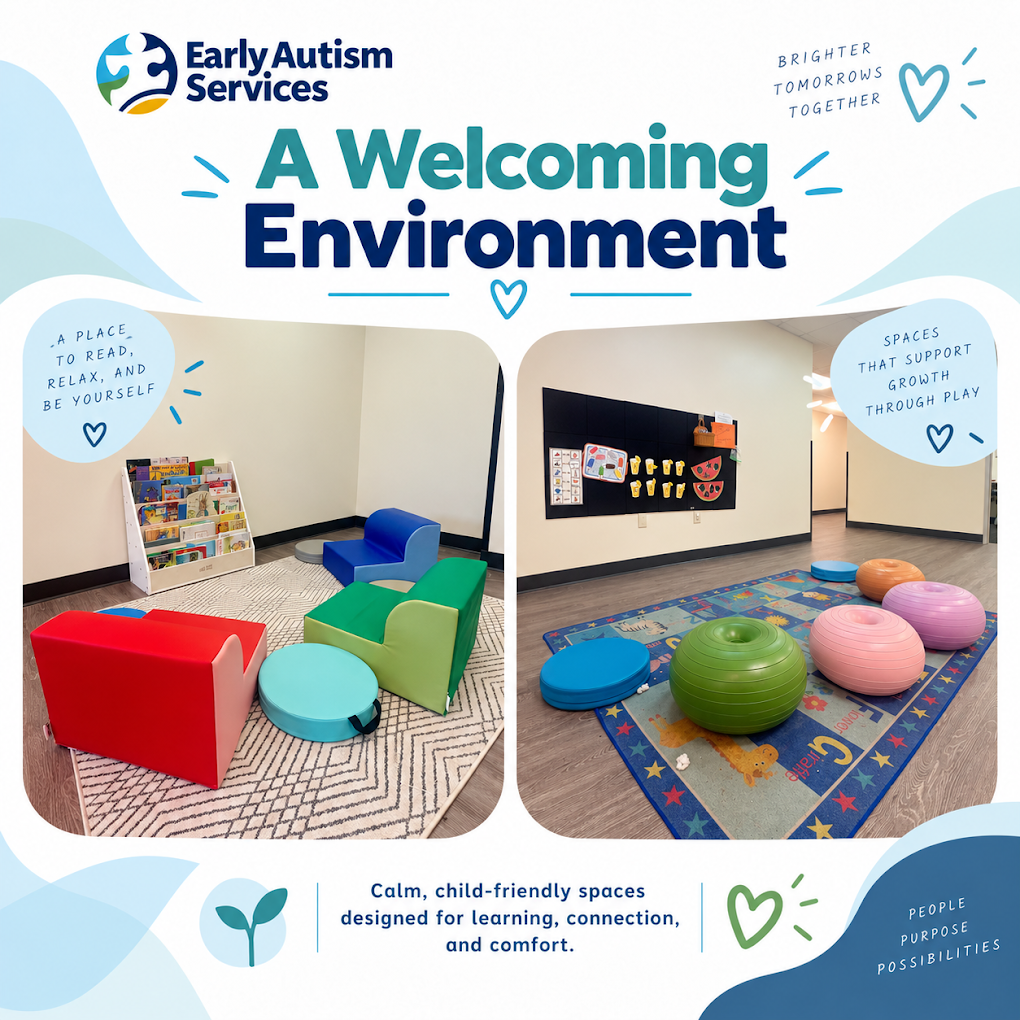
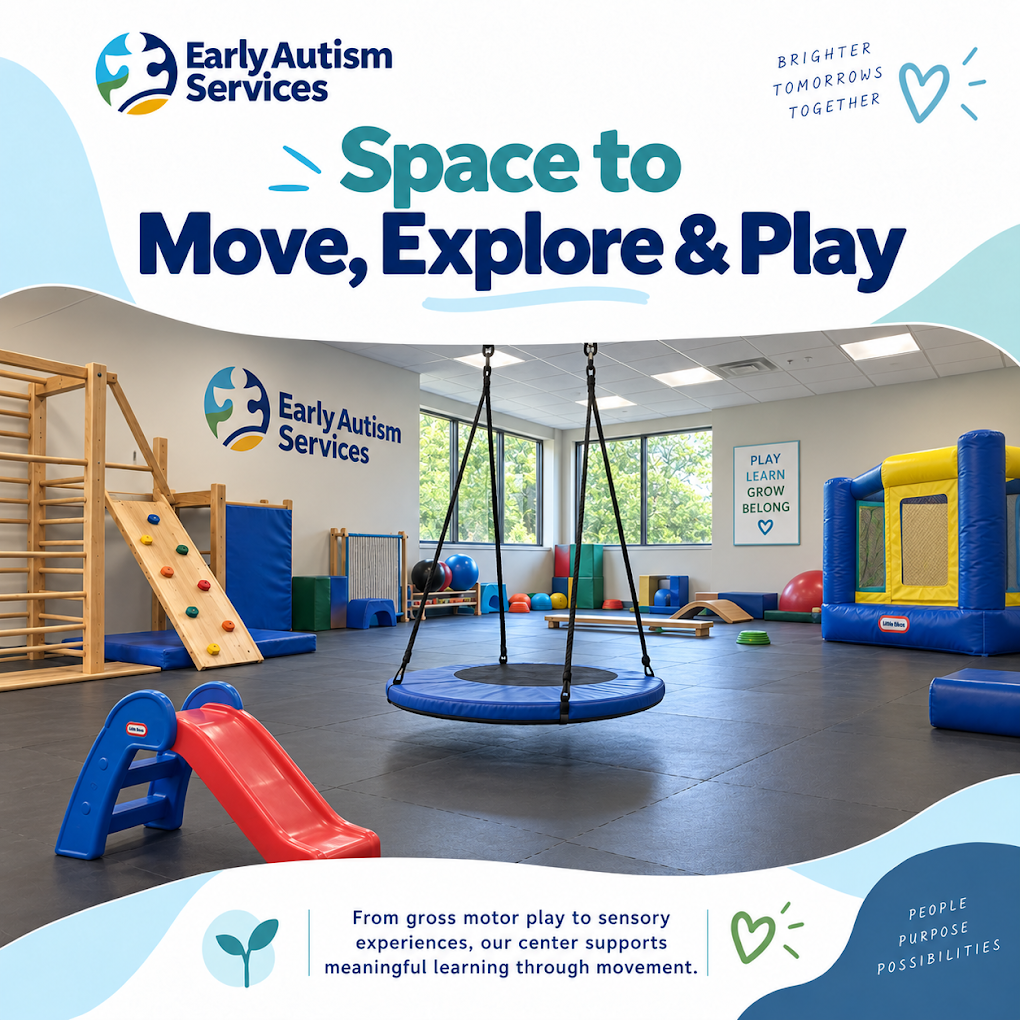
Center-based therapy may provide a structured setting for individualized instruction, play, peer interaction, and skill development.
The most appropriate setting depends on the child's individual needs and the services available in their area.
Keeping ABA Therapy Individualized as EAS Grows
Growth should never mean making care less personal.
ABA therapy at Early Autism Services is based on individualized goals rather than a single program that looks the same for every child.
Treatment may focus on areas such as:
- Communication skills
- Social interaction
- Play skills
- Daily living skills
- Independence
- School readiness
- Emotional regulation
- Reducing behaviors that interfere with learning or everyday activities
Families are also an important part of the process.
Caregiver training and collaboration can help parents understand strategies being used during therapy and find practical ways to support skills at home.
Supporting Families Beyond the Therapy Session
Families often have questions that go beyond what happens during an ABA session.
They may want to understand how to support communication at home, manage transitions, build routines, prepare their child for school, or encourage greater independence.
Providing access to ABA therapy therefore includes helping families feel involved and informed.
At EAS, caregiver collaboration is designed to connect therapy goals with everyday family life so that parents and caregivers can better understand how skills are being developed and how they may be supported outside of therapy.
What Expanding Access Really Means
When we talk about expanding access to ABA therapy, it is not simply about opening another clinic.
For families, access can mean:
- Having ABA therapy available closer to home
- Being able to choose from different service settings
- Understanding insurance coverage
- Having Medicaid options where available
- Receiving support during the intake process
- Knowing who to contact when questions come up
- Finding services that fit their child's individual needs
These practical factors can make a meaningful difference when a family is trying to decide what comes next.
Looking for ABA Therapy for Your Child?
If you are considering ABA therapy, you do not have to understand every part of the process before reaching out.
Early Autism Services can help you learn more about the services available in your community, explore insurance or Medicaid options where applicable, and understand the next steps in the intake process.
Explore Early Autism Services locations near you or connect with an EAS specialist to learn more about ABA therapy for your child.
Explore More
How Early Autism Services Is Expanding Access to ABA Therapy for Families
Accessing ABA therapy can feel overwhelming for families, especially when navigating service options, insurance, Medicaid, and the intake process. Early Autism Services works to make ABA therapy more accessible by offering different service settings, supporting families through insurance and intake, and providing individualized care based on each child’s needs.


Behavior Is Communication: Understanding What Your Autistic Child May Be Telling You
Behavior can be an important form of communication, especially when a child cannot easily express their needs in words. This parent-friendly guide explores what an autistic child’s behavior may be communicating, how to recognize possible triggers and patterns, and supportive ways to build functional communication skills.
Positive Behavior Support Strategies for Children with Autism
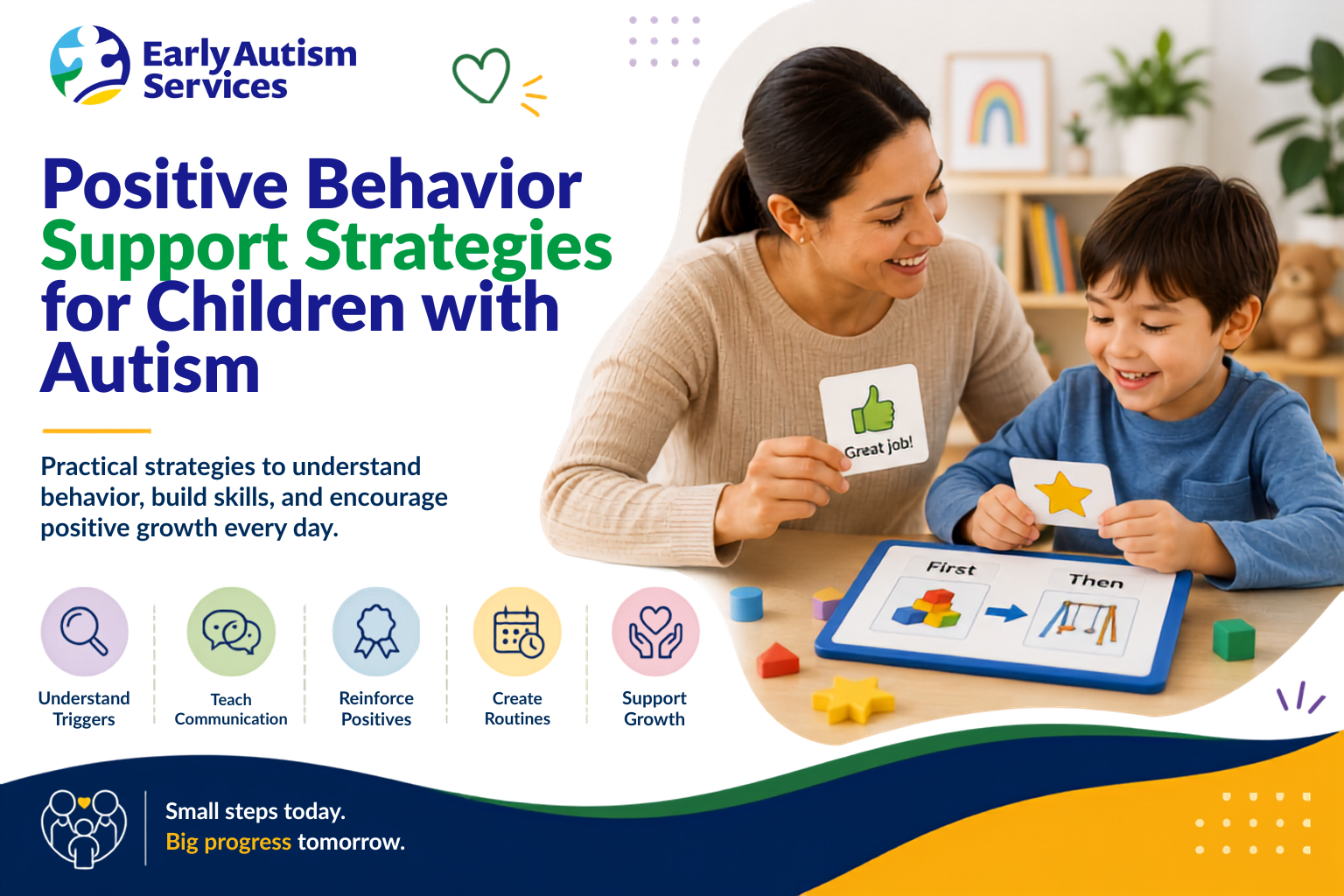
Positive behavior support focuses on understanding why behaviors happen and helping children develop effective ways to communicate their needs. This parent-friendly guide explores practical strategies for identifying triggers, creating predictable routines, reinforcing positive skills, supporting transitions, and encouraging communication at home.


