Positive Behavior Support Strategies for Children with Autism
Positive behavior support focuses on understanding why behaviors happen and helping children develop effective ways to communicate their needs. This parent-friendly guide explores practical strategies for identifying triggers, creating predictable routines, reinforcing positive skills, supporting transitions, and encouraging communication at home.
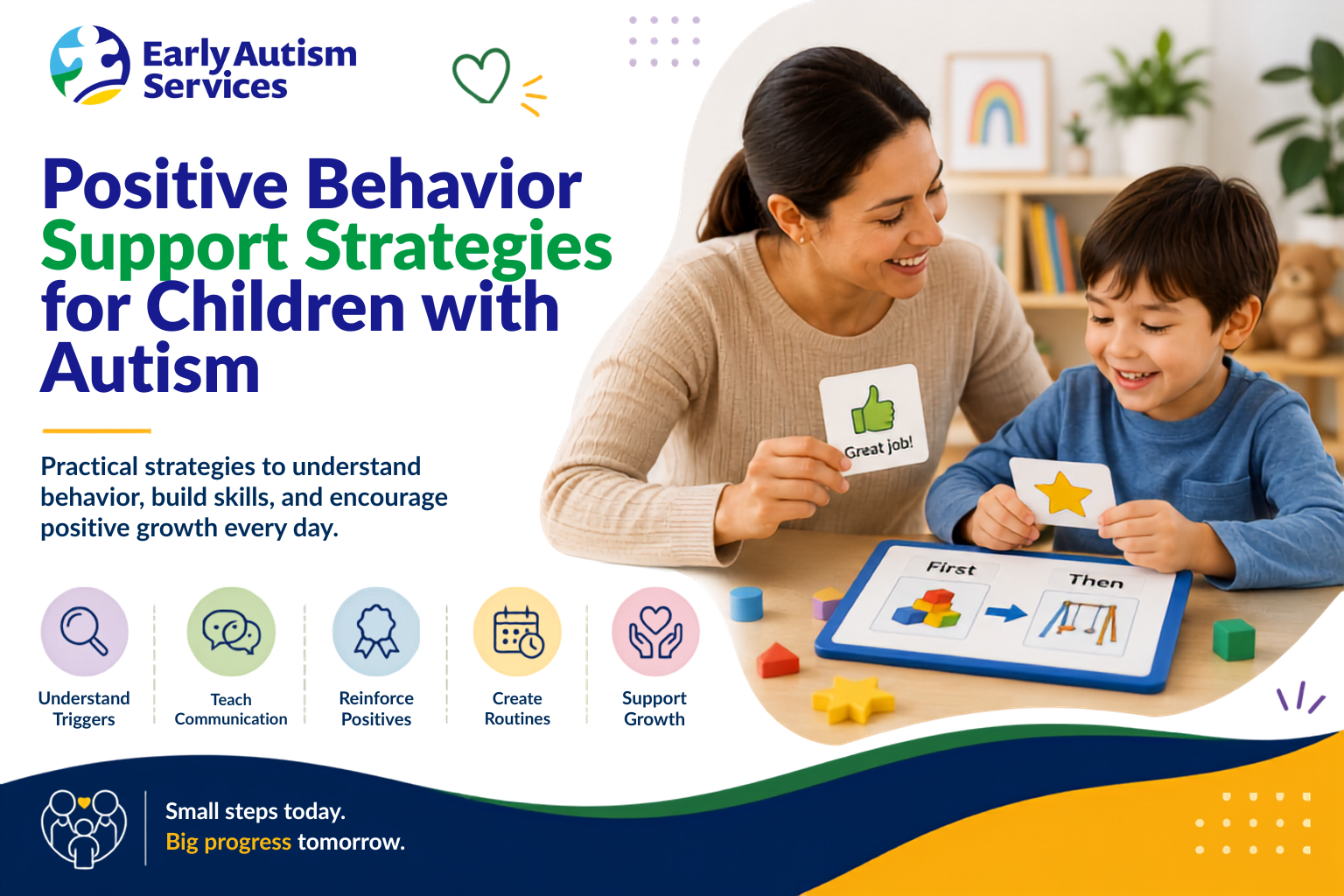
Every behavior communicates something. When an autistic child becomes upset, avoids a task, or struggles with a transition, the behavior may be connected to communication difficulties, sensory needs, discomfort, or an attempt to access or avoid something.
Positive behavior support focuses on understanding why a behavior happens and helping children develop safer, more effective skills to meet their needs. Rather than simply trying to stop challenging behaviors, parents and caregivers can create supportive environments that encourage communication, emotional regulation, independence, and learning.
In this article, we’ll explore:
- What positive behavior support means
- Why understanding the reason behind behavior matters
- Positive behavior strategies parents can use at home
- How ABA therapy can support positive behavior
What Is Positive Behavior Support?
Positive behavior support is an approach that considers what happens before and after a behavior and what purpose that behavior may serve.
For example, a child who cries when playtime ends may not simply be “refusing” to cooperate. They may have difficulty transitioning away from a preferred activity or understanding what will happen next.
Instead of focusing only on the behavior itself, caregivers can ask:
- What happened immediately before the behavior?
- What might the child be trying to communicate?
- Is the child tired, hungry, uncomfortable, or overwhelmed?
- Is the task too difficult or unclear?
- What happens immediately after the behavior?
Understanding these patterns can help caregivers respond more effectively.
Positive Behavior Support Strategies Parents Can Use
1. Identify Triggers Behind the Behavior
Pay attention to patterns. Behaviors may occur more often during particular activities, environments, or times of day.
Consider keeping simple notes about what happened before, during, and after the behavior. This can help identify possible triggers and guide appropriate support.
2. Create Predictable Routines
Predictability can make everyday activities easier for some autistic children.
Parents can:
- Maintain consistent morning and bedtime routines
- Use visual schedules
- Give advance notice before transitions
- Use “first-then” language, such as “First shoes, then playground”
When children know what to expect, transitions may become more manageable.
3. Use Clear and Simple Communication
Long or unclear instructions can be difficult to process.
Instead of saying, “Can you clean everything up because we're going to leave soon?” try:
“Put the blocks in the box.”
Give the child enough time to process the instruction before repeating or changing it.
4. Reinforce Skills You Want to Encourage
Positive reinforcement involves providing a meaningful consequence after a behavior that makes that behavior more likely to occur again.
Reinforcement can include:
- Specific praise
- Access to a preferred activity
- Stickers or tokens
- A favorite toy
- Extra playtime
Rather than simply saying “Good job,” tell the child exactly what they did well:
“Great job asking for a break.”
The most effective reinforcers differ from child to child, so support should always be individualized.
5. Teach Alternative Communication Skills
Sometimes challenging behavior occurs because a child does not yet have an effective way to communicate a need.
Depending on the child's communication abilities, caregivers may teach them to request:
- “Help”
- “Break”
- “More”
- “All done”
- A preferred item or activity
Communication may involve spoken language, gestures, pictures, or an augmentative and alternative communication (AAC) system.
The goal is to give the child an effective way to communicate rather than expecting them simply to stop the behavior.
6. Support Transitions
Moving from one activity to another can be difficult, particularly when a preferred activity is ending.
Helpful strategies can include:
- Visual timers
- Countdown warnings
- Visual schedules
- Transition objects
- First-then boards
For example: “Five more minutes of trains, then it's time for dinner.”
Consistency between parents, caregivers, and teachers can make these strategies more predictable for the child.
How ABA Therapy Can Support Positive Behavior
Applied Behavior Analysis (ABA) uses principles of learning and behavior to understand why behaviors occur and teach meaningful skills.
A qualified ABA professional may assess patterns surrounding a behavior and develop individualized strategies based on the child's needs.
Depending on the child, ABA programs may focus on skills such as:
- Functional communication
- Following everyday routines
- Requesting help or breaks
- Tolerating transitions
- Developing independence
- Building social and play skills
- Learning safety skills
Positive reinforcement is commonly used within ABA, but effective ABA support should be individualized rather than taking a one-size-fits-all approach.
Consistency Matters, but So Does Individualization
A strategy that works well for one autistic child may not work for another. Preferences, sensory needs, communication abilities, developmental levels, and family circumstances all influence behavior.
Parents can collaborate with teachers, caregivers, BCBAs, and other professionals so that important skills are supported consistently across environments.
The goal isn't to make an autistic child behave like everyone else. Support should focus on skills that improve the child's communication, safety, independence, participation, and quality of life.
Closing Thoughts
Positive behavior support starts with understanding rather than punishment. By identifying triggers, creating predictable routines, communicating clearly, reinforcing useful skills, and teaching alternative ways to express needs, parents can make everyday situations more manageable for their children.
Small changes can lead to meaningful progress when strategies are individualized and practiced consistently. When behaviors significantly affect a child's safety, learning, communication, or everyday life, professional support can help families better understand the behavior and develop appropriate strategies.
Explore More
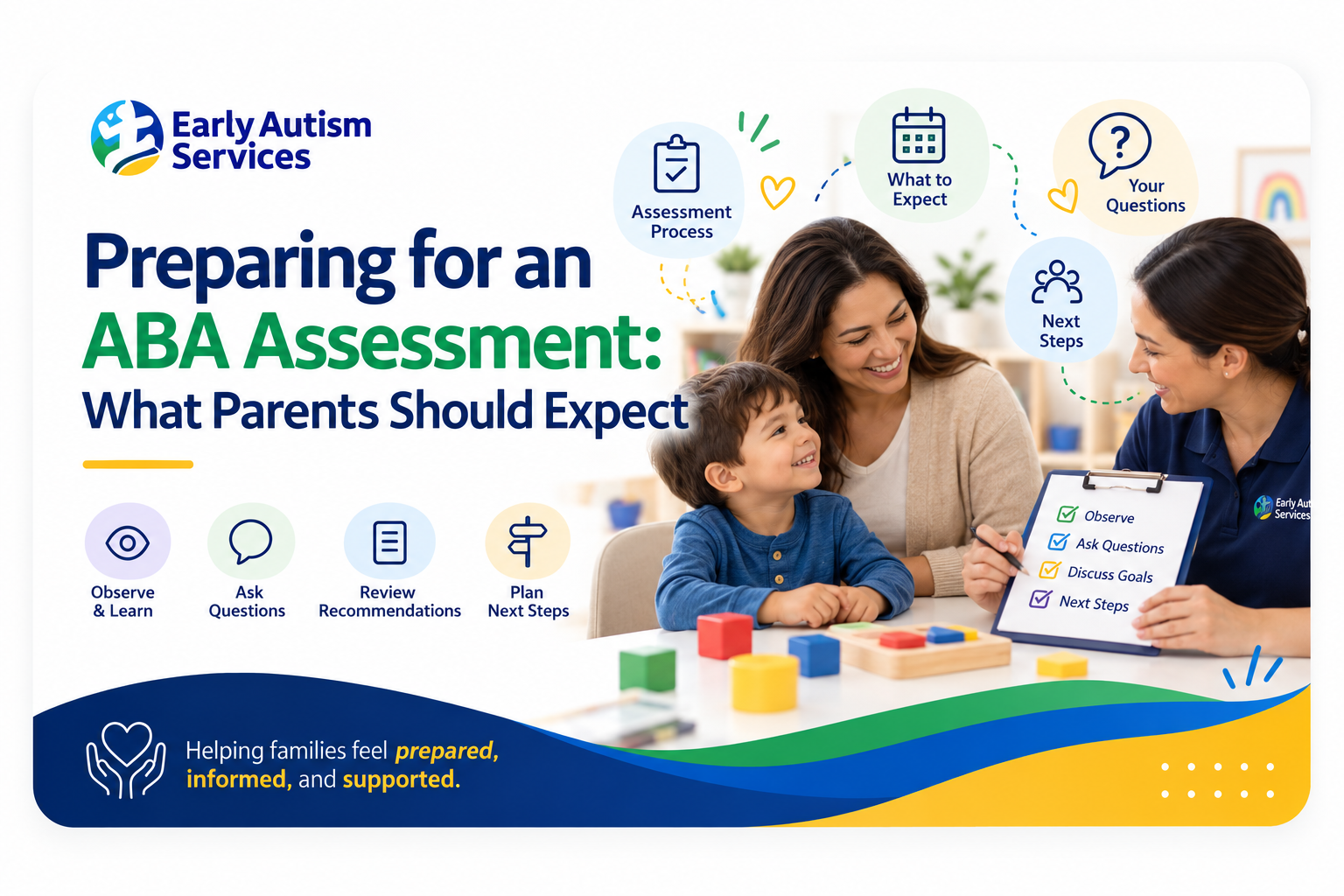
Preparing for an ABA Assessment: What Parents Should Expect
Accessing ABA therapy can feel overwhelming for families, especially when navigating service options, insurance, Medicaid, and the intake process. Early Autism Services works to make ABA therapy more accessible by offering different service settings, supporting families through insurance and intake, and providing individualized care based on each child’s needs.

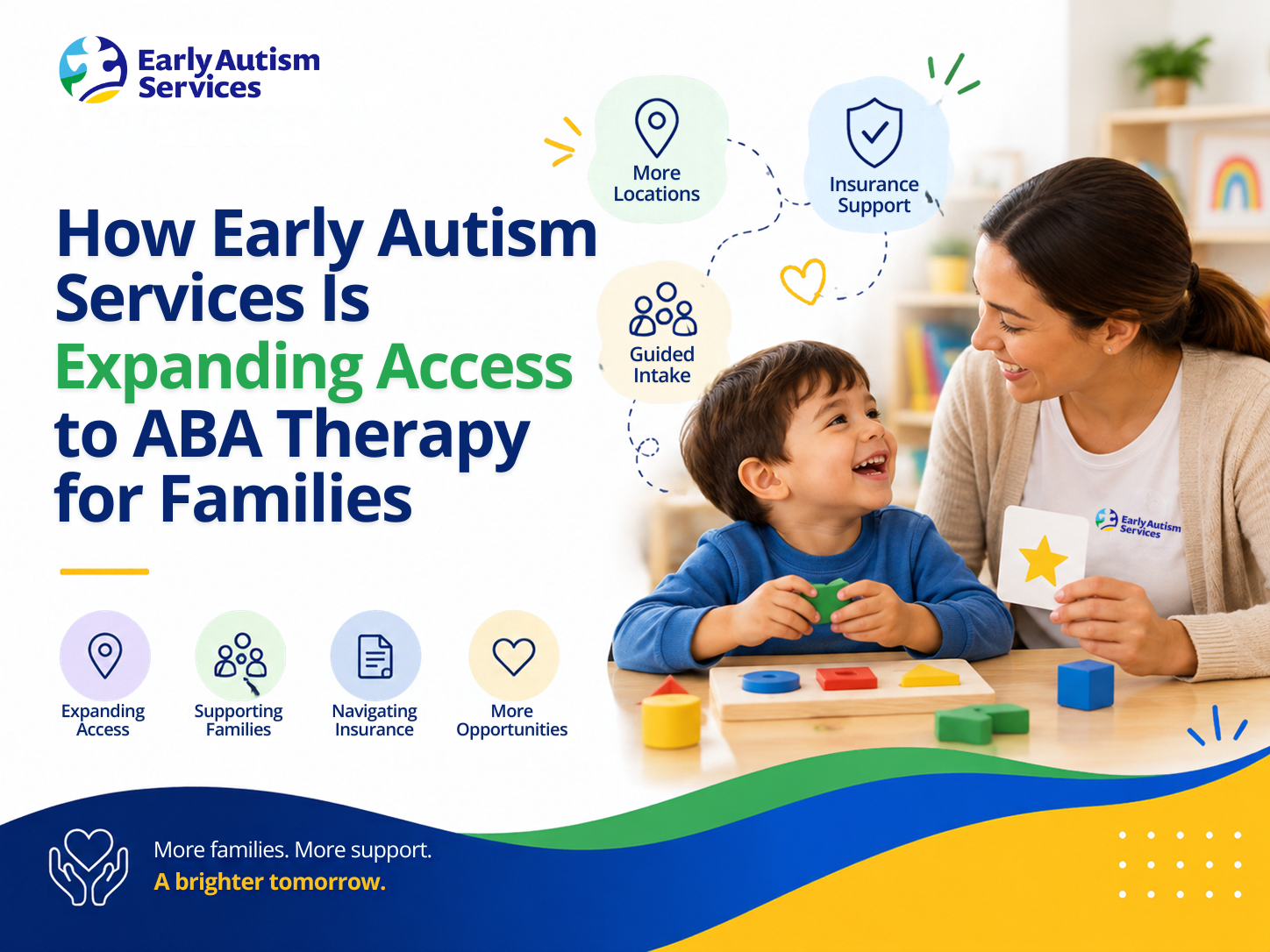
How Early Autism Services Is Expanding Access to ABA Therapy for Families
Accessing ABA therapy can feel overwhelming for families, especially when navigating service options, insurance, Medicaid, and the intake process. Early Autism Services works to make ABA therapy more accessible by offering different service settings, supporting families through insurance and intake, and providing individualized care based on each child’s needs.

Behavior Is Communication: Understanding What Your Autistic Child May Be Telling You
Behavior can be an important form of communication, especially when a child cannot easily express their needs in words. This parent-friendly guide explores what an autistic child’s behavior may be communicating, how to recognize possible triggers and patterns, and supportive ways to build functional communication skills.


