How Parents Can Respond to Challenging Behaviors
Challenging behaviors can be difficult for both children with autism and their families. This parent-friendly guide explores practical ways to respond calmly, identify possible triggers, teach alternative communication, reinforce positive behaviors, and create predictable routines that support your child’s needs.

Challenging behaviors are often a child’s way of communicating a need, feeling, or discomfort. This guide helps parents respond with greater understanding by identifying triggers, staying calm, building communication skills, reinforcing positive behaviors, and creating predictable routines that support their child’s well-being and development.
Stay Calm
Children often mirror the emotions of the adults around them.
Speaking calmly and using a reassuring tone can help reduce escalation.
Look for the Trigger
Ask yourself:
- What happened just before the behavior?
- Was the environment noisy or crowded?
- Was the child tired or hungry?
- Was there a sudden change in routine?
- Were communication demands too high?
Identifying patterns is the first step toward prevention.
Teach Alternative Communication
When children learn safer ways to express their needs, challenging behaviors often decrease.
This might include:
- Using words
- Picture communication systems
- Gestures
- Communication devices
- Sign language (when appropriate)
The goal is to help children communicate successfully in ways that work for them.
Reinforce Positive Behaviors
Notice and praise the behaviors you want to see more often. For example:
- Waiting patiently
- Asking for help
- Using calming strategies
- Following directions
Positive reinforcement helps children understand which behaviors are effective.
Create Predictable Routines
Visual schedules and consistent routines help many autistic children feel more secure. Whenever possible:
- Prepare children for changes.
- Give countdowns before transitions.
- Use visual timers.
- Maintain predictable daily routines.
Small adjustments can significantly reduce anxiety.
Strategies to Prevent Challenging Behaviors
While it's not possible to prevent every difficult moment, these proactive strategies can help.
Build Communication Skills
Encourage your child to express:
- Feelings
- Needs
- Choices
- Preferences
Communication reduces frustration and promotes independence.
Support Sensory Needs
Some children benefit from:
- Quiet spaces
- Noise-cancelling headphones
- Sensory breaks
- Movement activities
- Fidget tools (when appropriate)
Every child has different sensory preferences, so individualized support is important.
Teach Emotional Regulation
Children often need help learning to identify and manage emotions. Simple strategies include:
- Deep breathing
- Visual emotion charts
- Calm-down routines
- Taking breaks
- Asking for help
These skills take time and repeated practice.
Work With Professionals
If behaviors are frequent or interfere with daily life, professional guidance can help. Support may include:
- Behavior assessments
- Speech-language therapy
- Occupational therapy
- Parent coaching
- Positive behavior support plans
- ABA therapy when appropriate and aligned with the family's goals
A collaborative approach often leads to the best outcomes.
When Should Parents Seek Professional Help?
Consider seeking support if behaviors:
- Put the child or others at risk
- Occur frequently
- Interfere with school or family life
- Continue despite consistent strategies
- Involve self-injury
- Suddenly increase or change
A professional evaluation can help identify underlying causes and recommend individualized support.
Supporting the Whole Family
Challenging behaviors can affect the entire family. Parents and caregivers should also remember to:
- Share responsibilities when possible
- Celebrate small successes
- Seek support from professionals or parent groups
- Practice self-care
- Focus on progress rather than perfection
Supporting a child is easier when caregivers feel supported too.
Final Thoughts
Understanding challenging behaviors in children with autism begins with recognizing that behavior is often a form of communication. Rather than asking, "How do I stop this behavior?" it can be more helpful to ask, "What is my child trying to tell me?"
By identifying triggers, strengthening communication, creating supportive routines, and responding with patience and consistency, families can help reduce challenging behaviors while building trust and confidence.
Every autistic child has unique strengths, needs, and ways of communicating. With understanding, individualized support, and a compassionate approach, children can develop the skills they need to navigate daily life more successfully.
Explore More
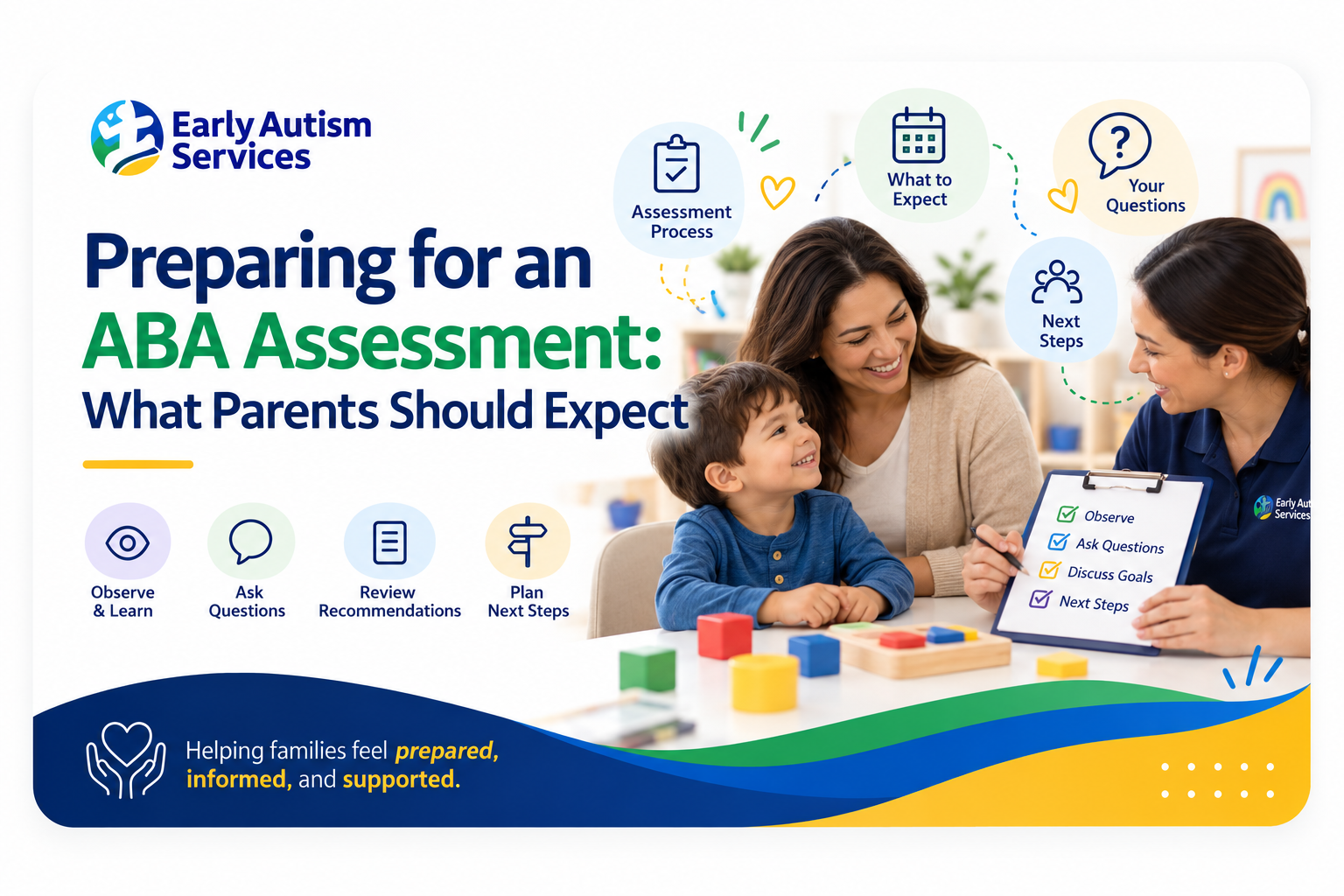
Preparing for an ABA Assessment: What Parents Should Expect
Accessing ABA therapy can feel overwhelming for families, especially when navigating service options, insurance, Medicaid, and the intake process. Early Autism Services works to make ABA therapy more accessible by offering different service settings, supporting families through insurance and intake, and providing individualized care based on each child’s needs.

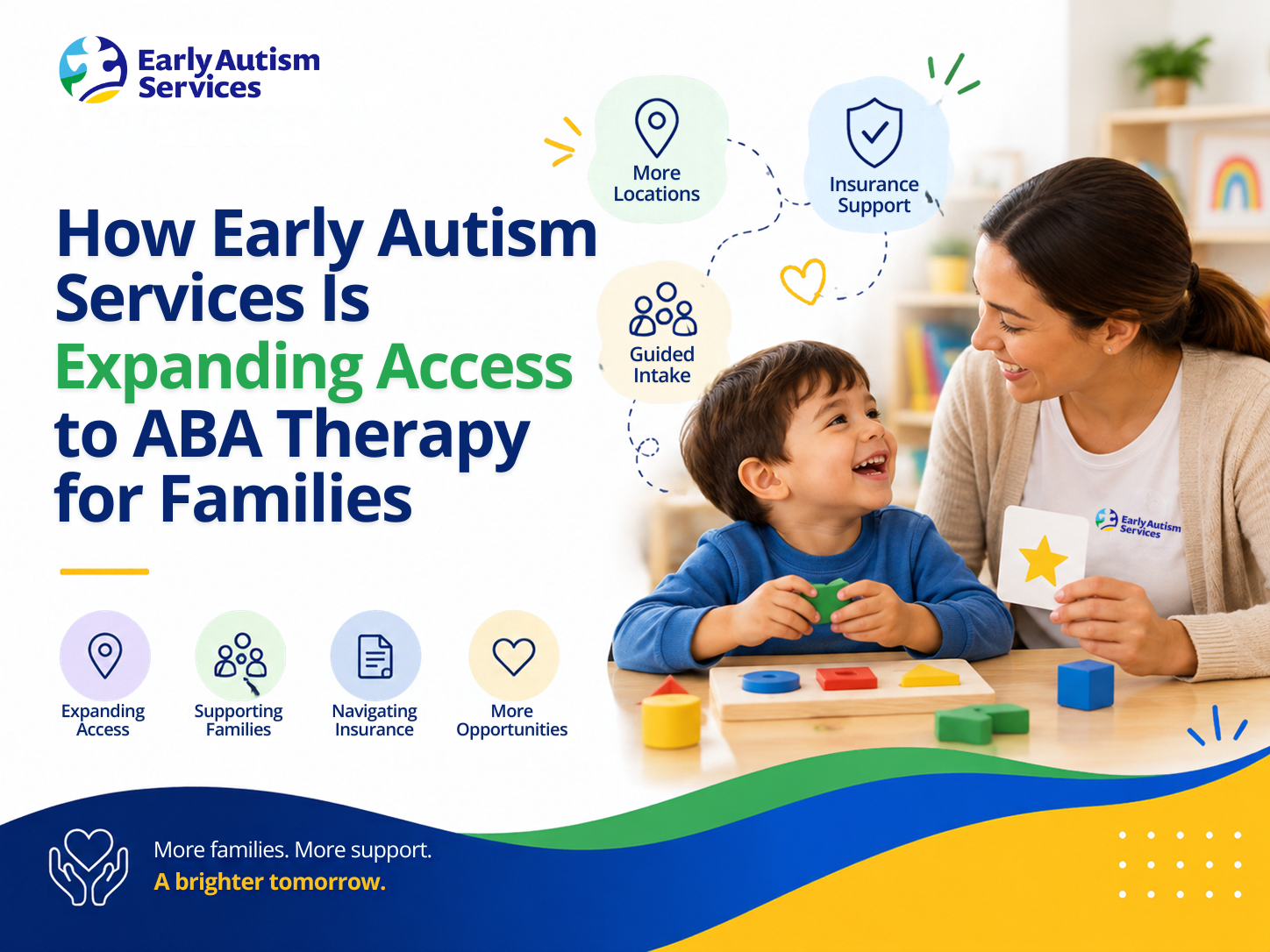
How Early Autism Services Is Expanding Access to ABA Therapy for Families
Accessing ABA therapy can feel overwhelming for families, especially when navigating service options, insurance, Medicaid, and the intake process. Early Autism Services works to make ABA therapy more accessible by offering different service settings, supporting families through insurance and intake, and providing individualized care based on each child’s needs.

Behavior Is Communication: Understanding What Your Autistic Child May Be Telling You
Behavior can be an important form of communication, especially when a child cannot easily express their needs in words. This parent-friendly guide explores what an autistic child’s behavior may be communicating, how to recognize possible triggers and patterns, and supportive ways to build functional communication skills.


