Finding the Right Autism Support for Children in Leeds, Alabama: Why ABA Therapy Works
ABA therapy is a proven approach that helps children with autism build essential skills, gain independence, and thrive. In this blog, we explore how families in Leeds, AL, can access ABA therapy, the role of major insurance providers, and how Early Autism Services supports parents in starting the right care for their child.

Introduction
Are you a parent in Leeds, Alabama, searching for the right support to help your child thrive? Navigating the world of autism therapies can feel overwhelming, especially when you’re unsure which options truly make a difference. That’s why this blog is here to guide you through the essentials of autism support, explain what ABA therapy is and why it works, and highlight how major insurance providers in Leeds can help you access services. By the end, you’ll have a clear understanding of how Early Autism Services can support your family and how to take the first step toward care.
Understanding Autism Support in Leeds, AL
Families in Leeds are not alone in their search for effective autism support. With growing awareness and increasing demand for services, parents want to ensure their children receive care that is both effective and compassionate. Early intervention has been proven to make a significant difference in developmental outcomes, which is why finding the right therapy matters. For many families, Applied Behavior Analysis (ABA) therapy has become the gold standard, offering structured support and measurable progress.
What is ABA Therapy and Why Does it Work?

ABA therapy, or Applied Behavior Analysis, is an evidence-based approach designed to improve behavior, communication, and social skills in children with autism. It works by breaking down complex skills into small, manageable steps and reinforcing positive behaviors. Over time, children gain confidence and independence as they learn and apply new skills in real-life situations.
Parents often find ABA therapy effective because it is personalized, no two programs look the same. Instead, therapy plans are built around each child’s unique needs, strengths, and goals. Whether your child struggles with language, routines, or social interaction, ABA therapy provides practical strategies that create long-term success.
Benefits of ABA Therapy for Children
The impact of ABA therapy can be seen in many areas of a child’s life:
- Improved communication skills: Helping children express themselves more clearly, whether through speech, gestures, or alternative methods.
- Stronger social connections: Building the skills to form friendships and engage in group activities.
- Independence in daily routines: From brushing teeth to getting dressed, children gain confidence in self-care.
- Reduction in challenging behaviors: Providing parents with tools to manage difficult moments more effectively.
- Tailored programs: Each therapy plan is built specifically for the child, ensuring measurable progress.
These benefits not only support the child but also bring peace of mind to parents, knowing their child is moving forward with meaningful progress.
Role of Major Insurance Providers in Leeds, AL
One of the biggest concerns for families considering autism therapy is cost. Fortunately, many major insurance providers in Alabama recognize the importance of ABA therapy and offer coverage to make services more accessible. In the Leeds area, common insurance providers such as Alabama Medicaid, Blue Cross Blue Shield of Alabama, UnitedHealthcare, Cigna, and Aetna often include ABA therapy within their benefits.
This means parents don’t have to carry the financial burden alone. By verifying coverage, families can focus on what truly matters, their child’s development and progress. At Early Autism Services, our intake specialists work directly with families to confirm insurance eligibility and guide them through the process of starting services.
How Parents in Leeds Can Get Started

Taking the first step toward therapy can feel intimidating, but it doesn’t have to be. At Early Autism Services, the process is simple and supportive:
- Initial Contact: Parents can reach out through our Leeds location page or call our intake team directly.
- Consultation: An Intake Specialist will walk you through services, answer questions, and explain how ABA therapy can help your child.
- Assessment: A Board Certified Behavior Analyst (BCBA) conducts a thorough evaluation to understand your child’s unique needs.
- Personalized Plan: A customized therapy program is created with clear goals.
- Start Therapy: Families begin their ABA journey with support and guidance every step of the way.
With clinic-based services available in Leeds, families can feel confident knowing they have access to trusted professionals right in their community.
Conclusion
Finding the right autism support doesn’t have to feel overwhelming. With ABA therapy, children in Leeds, AL, can build essential skills, gain independence, and thrive both at home and in the community. Early Autism Services is here to guide parents every step of the way.
Contact our Leeds clinic today to schedule a consultation and learn how ABA therapy can make a lasting difference for your child.
FAQs
1. What age group does ABA therapy help?
ABA therapy can support children as young as 1 year old through school-age, depending on their individual needs.
2. Does insurance cover ABA therapy in Leeds, AL?
Yes, many major providers like Blue Cross Blue Shield, Cigna, Aetna, and UnitedHealthcare often cover ABA therapy.
3. How soon can I start services after contacting EAS?
Once insurance is verified and an assessment is completed, services can begin quickly, our intake team will guide you through the timeline.
4. Is ABA therapy only for children with autism?
While primarily designed for children with autism, ABA therapy techniques can also benefit children with developmental delays or behavioral challenges.
5. Can therapy be personalized for my child’s needs?
Absolutely. Each child’s therapy plan is tailored to their strengths, challenges, and family goals.
Explore More
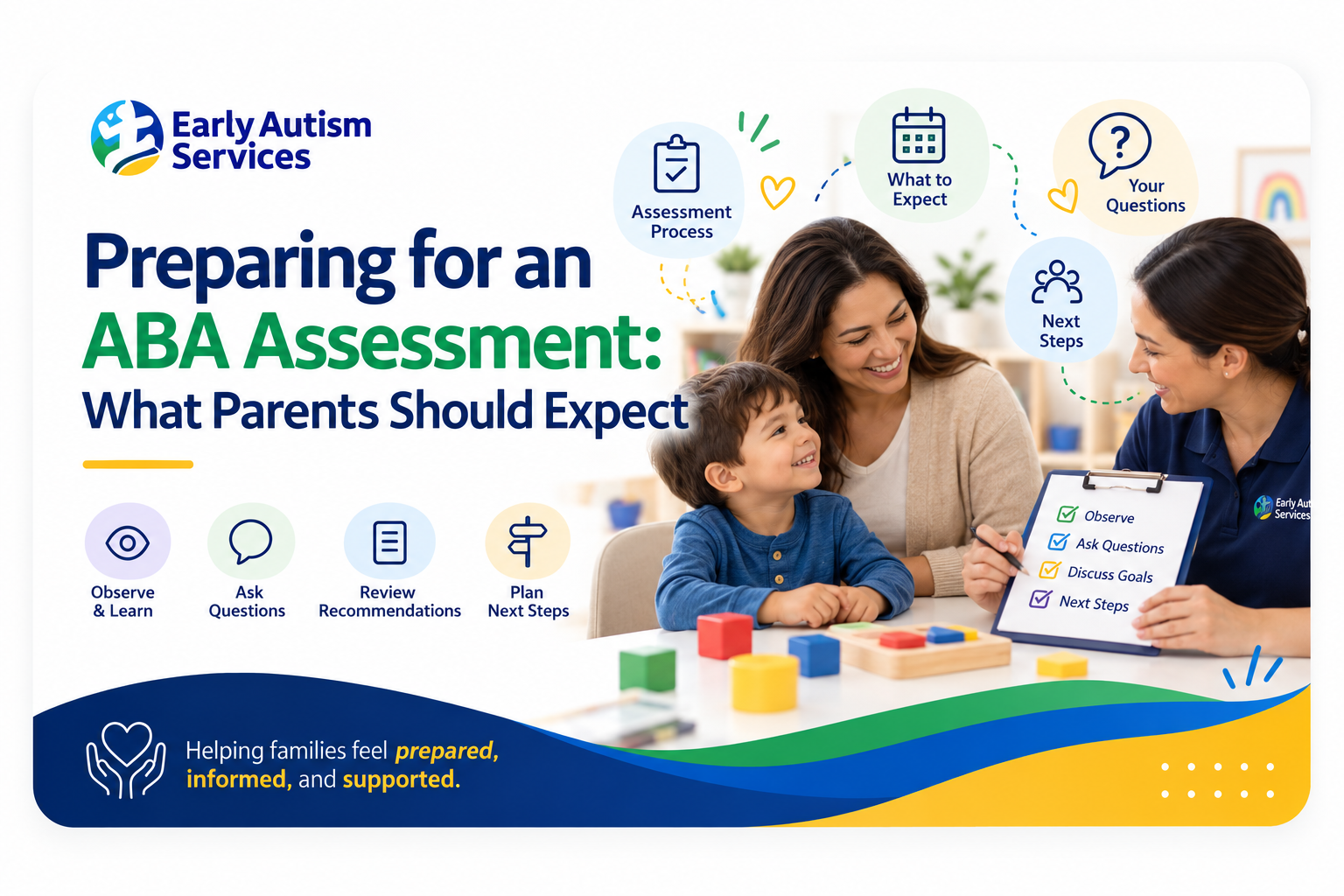
Preparing for an ABA Assessment: What Parents Should Expect
Accessing ABA therapy can feel overwhelming for families, especially when navigating service options, insurance, Medicaid, and the intake process. Early Autism Services works to make ABA therapy more accessible by offering different service settings, supporting families through insurance and intake, and providing individualized care based on each child’s needs.

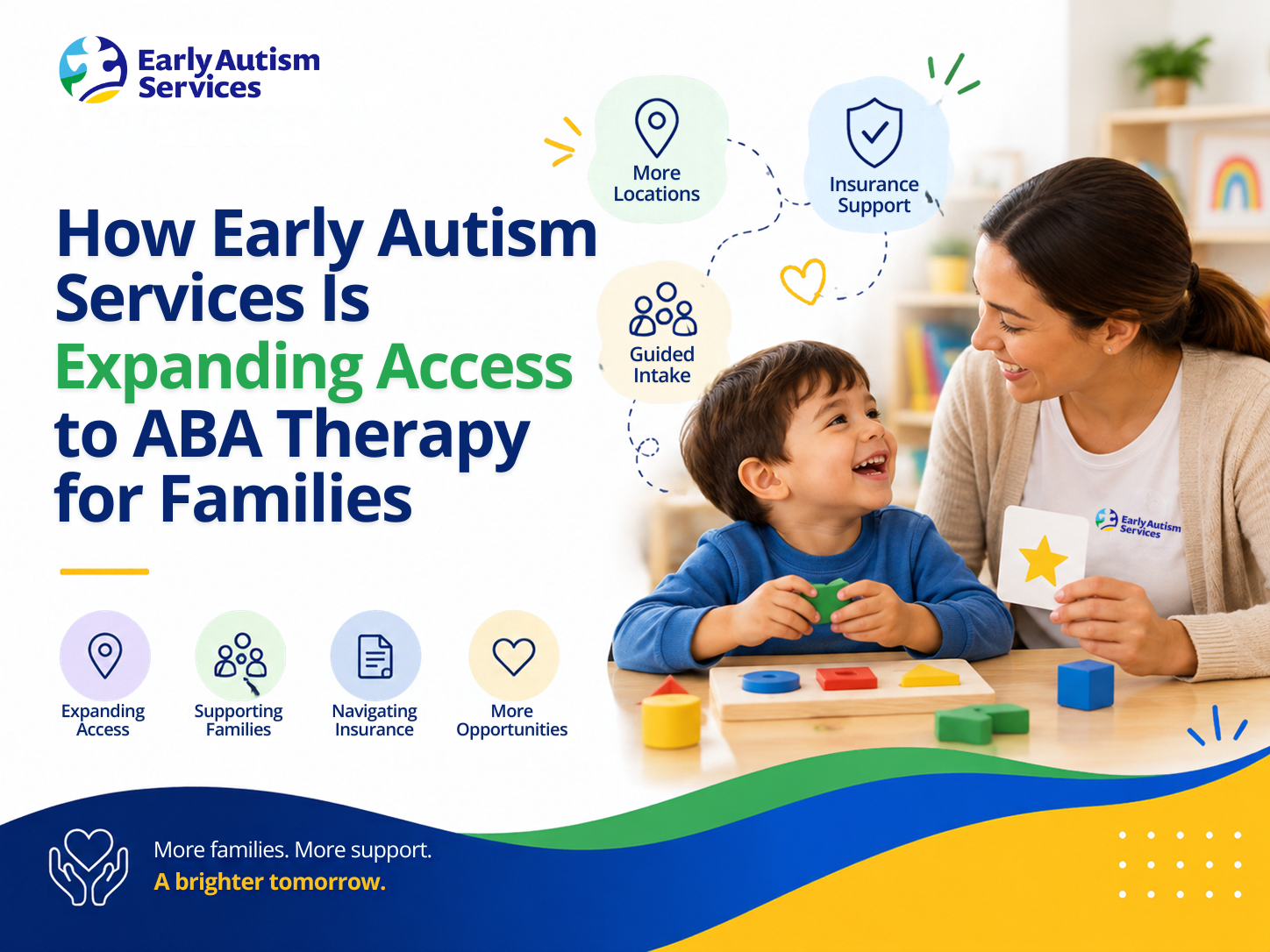
How Early Autism Services Is Expanding Access to ABA Therapy for Families
Accessing ABA therapy can feel overwhelming for families, especially when navigating service options, insurance, Medicaid, and the intake process. Early Autism Services works to make ABA therapy more accessible by offering different service settings, supporting families through insurance and intake, and providing individualized care based on each child’s needs.

Behavior Is Communication: Understanding What Your Autistic Child May Be Telling You
Behavior can be an important form of communication, especially when a child cannot easily express their needs in words. This parent-friendly guide explores what an autistic child’s behavior may be communicating, how to recognize possible triggers and patterns, and supportive ways to build functional communication skills.


